 AfriqueUnie
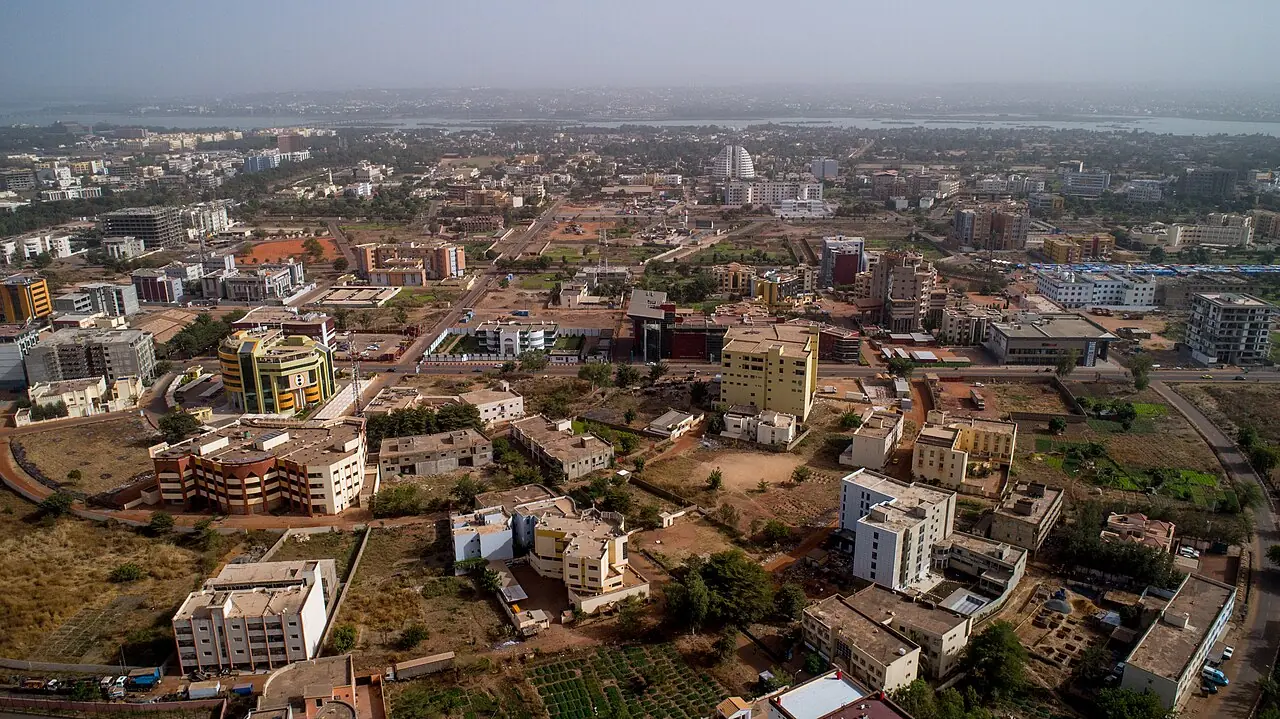 Photo: Mark Fischer · CC BY-SA 4.0
Published by Adama Doumbia, founder of Afrique Unie · updated 16 November 2026 · our method and sources
Bambara (Bamanankan) is the most widely spoken language in Mali. It is the mother tongue of the Bambara people and also the common language of a large share of Malians, in Bamako as well as in markets and on public transport. It is one of the country's thirteen national languages, which the 2023 Constitution made official languages, with French remaining the working language.
Bambara belongs to the Manding languages. It is close to Dioula, spoken in Côte d'Ivoire and Burkina Faso, and to the Malinké of Guinea, so a Bambara speaker can often make themselves understood in parts of those countries. It is written in the Latin alphabet with a few extra letters (ɛ, ɔ, ɲ, ŋ), and also in the N'Ko script, created in 1949 by Souleymane Kanté for the Manding languages.
European foreign ministries currently advise against all travel to Mali because of insecurity: check your government's official advice before even considering a trip. This phrasebook is mainly for the diaspora and for anyone who lives or works alongside Malians, wherever they are.
Where it is spoken : Mali.
Pronunciation tips
- "ɛ" sounds like the "e" in "bed", and "ɔ" like the "o" in "pot": kɛnɛ → keh-neh, tɔgɔ → toh-goh.
- "ɲ" sounds like the "ny" in "canyon", and "ŋ" like the "ng" in "sing".
- "c" sounds like "ch" in "church" and "j" as in "jam": i ni ce → ee nee cheh, ji → jee. "u" sounds like "oo" and "e" like the "ay" in "say".
- A doubled vowel is held longer: dɔɔnin, tɔɔrɔ. Bambara is a tonal language, but greetings are easy to understand.
Greetings
| Bambara | English |
|---|---|
| I ni ce | Hello (all-purpose greeting) / thank you |
| I ni sogoma | Good morning |
| I ni tile | Good afternoon (early afternoon) |
| I ni wula | Good evening (late afternoon) |
| I ni su | Good evening (at night) |
| N ba (un homme répond) / N se (une femme répond) | Reply to a greeting (N ba: a man replies / N se: a woman replies) |
| I ka kɛnɛ wa? | Are you well? |
| Tɔɔrɔ si tɛ | Fine, no problem |
| I bisimila | Welcome |
| K'an bɛn | Goodbye, see you later |
| K'an bɛn sini | See you tomorrow |
| Ka su here caya | Good night |
Being polite
| Bambara | English |
|---|---|
| I ni ce kosɛbɛ | Thank you very much |
| Ɔwɔ | Yes |
| Ayi | No |
| Hakɛto | Sorry, excuse me |
| Dɔɔnin dɔɔnin | Slowly, little by little |
Getting to know people
| Bambara | English |
|---|---|
| N tɔgɔ ye … ye | My name is … |
| I tɔgɔ ye di? | What is your name? |
| N bɛ bɔ Faransi / Itali | I come from France / Italy |
| N bɛ bamanankan fɔ dɔɔnin | I speak a little Bambara |
| N t'a faamu | I don't understand |
At the market
| Bambara | English |
|---|---|
| A sɔngɔ ye joli ye? | How much is it? |
| A ka gɛlɛn kosɛbɛ | It's too expensive |
| A nɔgɔya n ye | Lower the price for me |
Getting around
| Bambara | English |
|---|---|
| … bɛ min? | Where is …? |
Food
| Bambara | English |
|---|---|
| Ji | Water |
| Dumuni | Food, meal |
| Malo | Rice |
| Jɛgɛ / Sogo | Fish / Meat |
Emergencies
| Bambara | English |
|---|---|
| N dɛmɛ! | Help me! |
| N man kɛnɛ | I am ill |
Numbers
| Bambara | English |
|---|---|
| Kelen, fila, saba, naani, duuru | 1, 2, 3, 4, 5 |
| Wɔɔrɔ, wolonwula, segin, kɔnɔntɔn, tan | 6, 7, 8, 9, 10 |
The phrases on this page were checked by Adama Doumbia, founder of Afrique Unie, whose mother tongue is Bambara. Who am I?
34 everyday expressions, in simple spelling. Regional accents vary: don't hesitate to ask people to repeat, it is always appreciated.
Frequently asked questions
How do you say thank you in Bambara?
You say "i ni ce" (ee nee cheh), and "i ni ce kosɛbɛ" for thank you very much. The same phrase is also used as a greeting: it expresses both hello and gratitude.
How do you say hello in Bambara?
"I ni ce" is the all-purpose greeting. Depending on the time of day, you say "i ni sogoma" in the morning, "i ni tile" in the early afternoon, "i ni wula" in the late afternoon and "i ni su" at night. A man replies "n ba", a woman "n se".
How do you ask "how are you?" in Bambara?
You ask "i ka kɛnɛ wa?" (are you well?), and a typical reply is "tɔɔrɔ si tɛ" (fine, no problem). Greetings in Mali are long: people also ask after your family, and cutting them short would be rude.
Where is Bambara spoken?
Mainly in Mali, where it is the most widely spoken language, and across the Malian diaspora, particularly in France. Being close to Dioula and Malinké, it often lets you make yourself understood in parts of Côte d'Ivoire, Burkina Faso and Guinea.