 AfriqueUnie
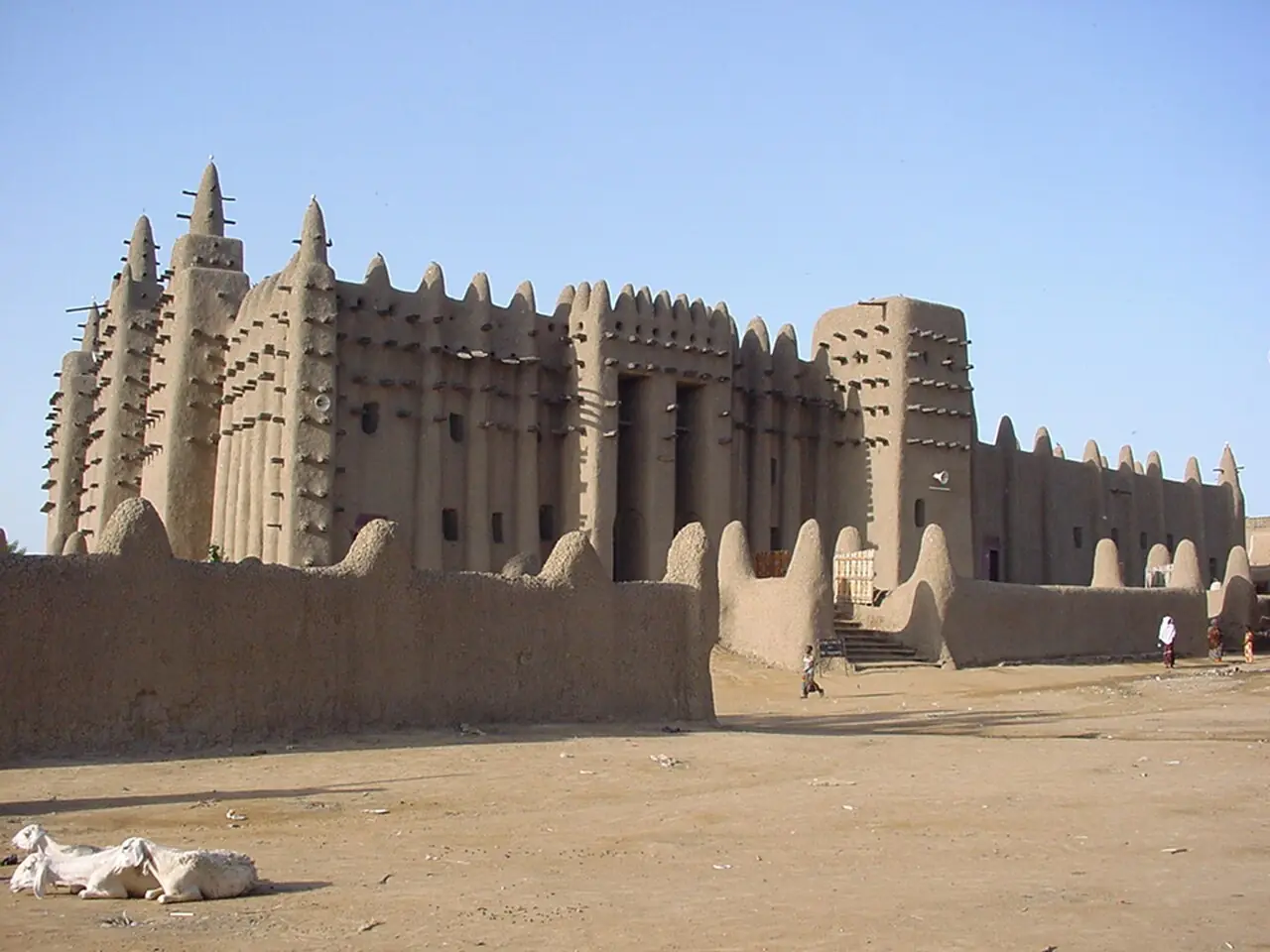 Photo: Andy Gilham · CC BY-SA 3.0
 Mali
Published by Adama Doumbia, founder of Afrique Unie · updated 28 November 2026 · our method and sources
Why go to Mali
It needs to be said clearly from the outset: Mali is currently a destination where all travel is advised against by European foreign ministries, because of insecurity affecting most of the country, including the roads around Bamako. Kidnappings and attacks by armed groups are a real threat. Check your government's official travel advice before even thinking about a trip. The lines that follow describe what Mali offers the world, for the day when it is once again possible to travel through it.
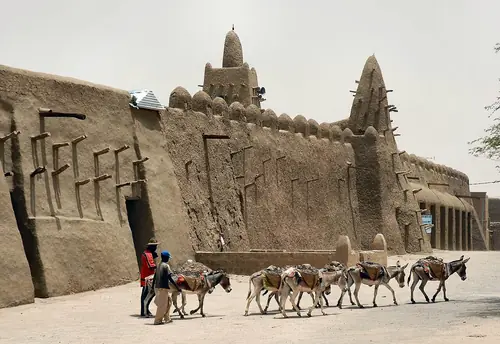
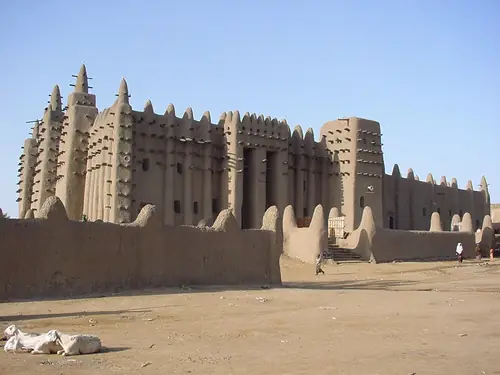
Few countries in Africa carry such a dense history. The Ghana, Mali and Songhai empires followed one another here, and their rulers, such as the famous Mansa Musa, left their mark on medieval chronicles with their wealth in gold. From that grandeur survive earthen cities that rank among humanity's most extraordinary architectural creations: Djenné and its great mosque, replastered by hand every year by the entire population, Timbuktu and its manuscript libraries, and the mud-brick mosques bristling with wooden stakes that punctuate the Niger valley.
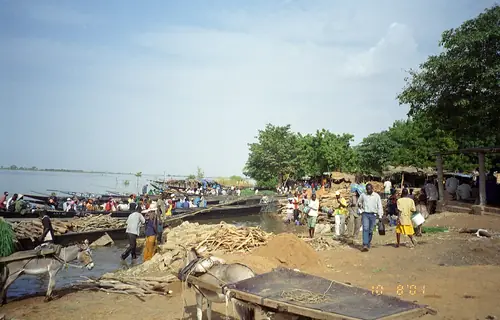
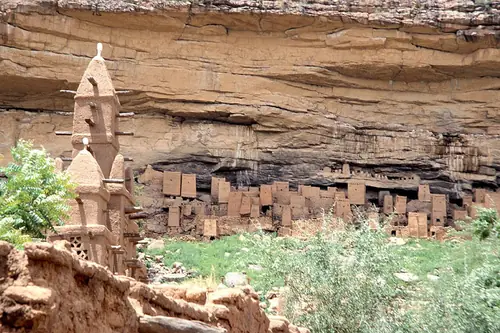
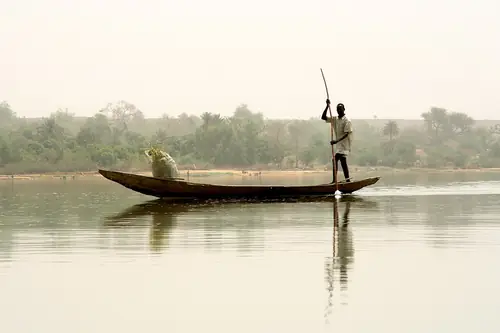
Mali is also a river. The Niger crosses the country in a great arc, spreads out into an inland delta home to Bozo fishermen, Fulani herders and rice farmers, and sets the rhythm of life in Bamako, Ségou and Mopti. It is the Bandiagara Escarpment too, where the Dogon built their villages, their thatch-capped granaries and a cosmology of fascinating richness. And above all it is music: the kora of the Mandinka griots, desert blues, the voices of Salif Keita and Oumou Sangaré, which have made Mali one of the world's great musical nations. This culture, at least, travels without restriction: listen to it, read about it, and keep the country on your horizon.
History and culture
The inland Niger Delta is home to one of the oldest urban centres in sub-Saharan Africa, Djenné-Djeno, occupied from the last centuries BC. In the 13th century Sundiata Keita founded the Mali Empire, whose epic is still sung by griots; in the 14th century, Mansa Musa's pilgrimage to Mecca made his fortune famous as far away as Europe. The Songhai Empire of Gao succeeded it, before being defeated by a Moroccan army in 1591. Then came the Bambara kingdoms of Ségou and Kaarta, followed by the Fulani empire of Massina.
Conquered by France at the end of the 19th century and incorporated into French Sudan, the country became independent in 1960 under President Modibo Keïta. After a long period of military rule and then a democratic transition in the 1990s, the north fell under the control of rebel and jihadist groups in 2012. Since then, despite international interventions and changes of power in Bamako, insecurity has spread to the centre and south of the country.
8 experiences not to miss in Mali
- 01Listen to Mandinka musicDiscover the kora, the n'goni and the songs of the griots, in concert when that becomes possible, or right now through the great Malian albums.
- 02Witness the replastering of DjennéOne day, watch the whole town climb back up the great mosque to apply a fresh coat of mud, amid a festive atmosphere.
- 03Sail in a pinasseGlide down the Niger in a long wooden boat, past Bozo fishing villages and herds swimming across the river.
- 04Trek through Dogon countryFollow the paths at the foot of the Bandiagara Escarpment from village to village, sleeping on rooftops under the stars.
- 05Discover bogolanWatch the making of this mud cloth, cotton dyed with mud and plant decoctions and covered in symbolic patterns.
- 06Explore the National MuseumBrowse one of West Africa's finest collections in Bamako, from antique textiles to Dogon and Bambara masks.
- 07Read the Timbuktu manuscriptsThrough exhibitions and books, grasp the immense scholarly output of the Sahelian scholars of the past.
- 08Share teaTake part in the ritual of three glasses of very sweet green tea, an excuse for long conversations in the shade.
When to go to Mali
The mildest period runs from November to February, when nights are cool and the dry air makes the days bearable; it is also the season of the big cultural gatherings and the replastering of Djenné. From March to June the heat becomes extreme, often above 40 °C, especially in the north. The rains arrive between June and September, flooding the inland delta and transforming the landscape, while the Niger's flood then allows boats to navigate part of the river until early in the new year. These pointers, however, only make sense once the security situation allows travel again.
Getting around
Before the crisis, you got around Mali by coach between Bamako, Ségou, Mopti and Dogon country, by bush taxi on minor routes and by pinasse or riverboat on the Niger, while Timbuktu was reached by river or by plane. Today the roads, including some close to the capital, are exposed to attacks and blockades, and all travel outside Bamako is advised against. Any presence in the country would mean following your embassy's instructions and your government's constantly updated official travel advice to the letter.
Etiquette and customs
In Mali, greeting is a long ritual exchange: you ask after the family, the household, people's health, and the reply is “tôrô t'a la”, “there is no harm”. The system of sinankunya, joking kinship, allows affectionate teasing between certain family names or ethnic groups and defuses a great deal of tension. Elders and religious figures are deeply respected, most of the population is Muslim, and modest clothing is appreciated. People eat with the right hand from a shared dish. In Dogon country, some places are off limits to visitors: only approach them with the explicit agreement of the inhabitants.
Food and drink in Mali
Tiguadèguè, a creamy peanut-butter sauce served with rice and meat, is probably Mali's most emblematic dish. Riz au gras, rice cooked in a tomato and meat broth, accompanies celebrations, while tô made from millet or sorghum remains the staple food in the countryside. On the banks of the Niger, capitaine, a large white-fleshed fish (Nile perch), is eaten grilled or in a sauce with onions and chilli. You can also try fakoye, a leaf sauce typical of the north, millet fritters, fonio and, to drink, ginger juice, bissap or dégué, made from millet and curdled milk.
 Benin
 Burkina Faso
 Cape Verde
 Côte d'Ivoire
 Ghana
 Guinea
 Guinea-Bissau
 Liberia
 Mauritania
 Niger
 Nigeria
 Senegal
 Sierra Leone
 The Gambia
 Togo