 AfriqueUnie
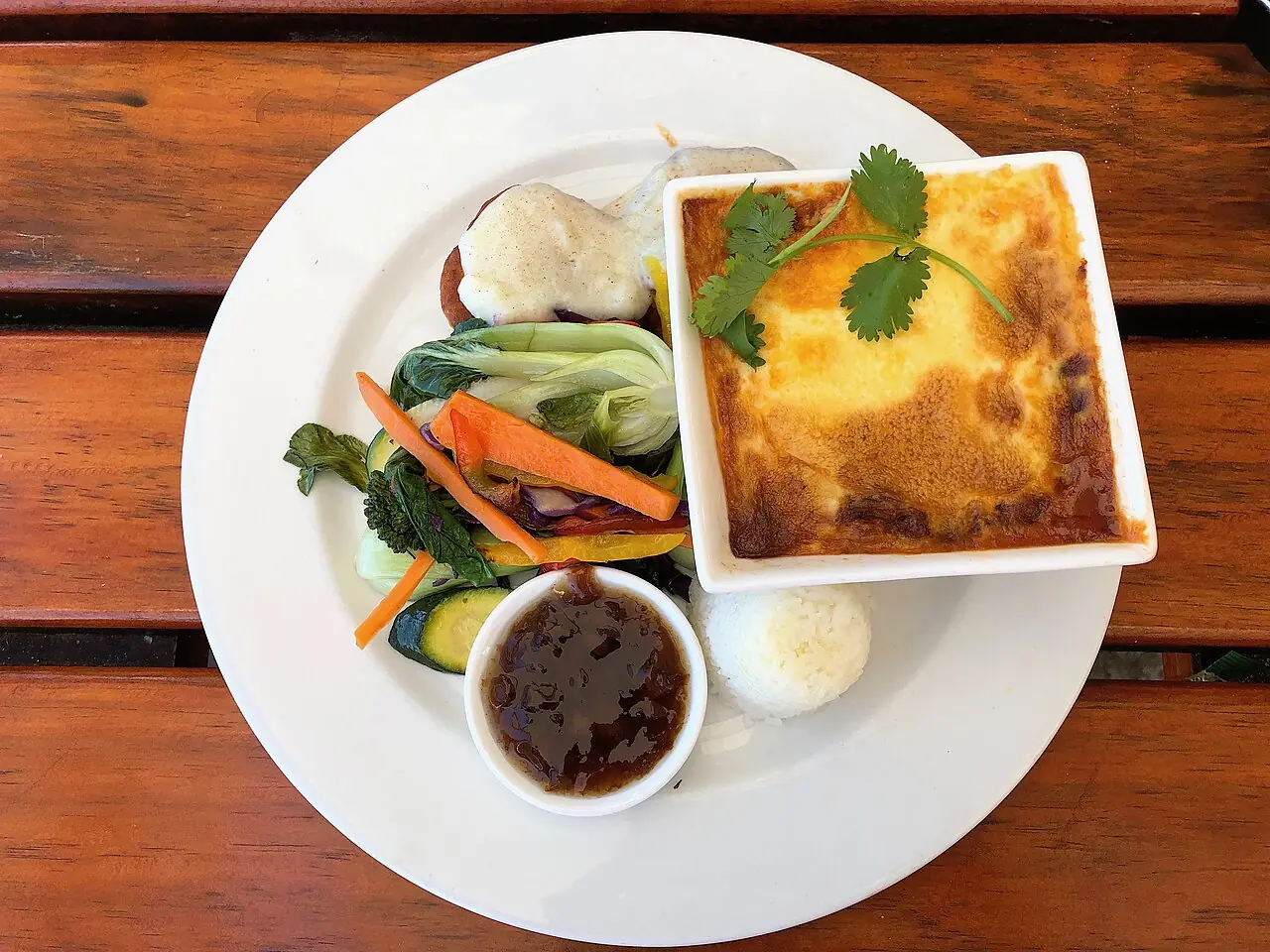 Photo: Olga Ernst · CC BY-SA 4.0
Published by Adama Doumbia, founder of Afrique Unie · updated 28 November 2026 · our method and sources
Bobotie (say 'buh-boo-tee') is probably South Africa's best-known dish. The country has no official national dish, but this bake of minced meat flavoured with mild curry, sweetened with dried fruit and topped with an egg custard appears in almost every South African cookbook and on many a family Sunday table.
It probably came from the Dutch colonies of Batavia (today's Jakarta): a first recipe appeared in a Dutch cookbook as early as 1609. Known in the Cape since the seventeenth century, it was adopted there by the Cape Malay communities, descended from people brought from South-East Asia, many of them enslaved by the Dutch East India Company, who seasoned it with their spices. The origin of the word is debated: it is often linked to a Malay term for spices.
The result is sweet and savoury, gentle and comforting, more fragrant than hot. It is traditionally served with yellow rice flavoured with turmeric and raisins, fruit chutney and sambals, small fresh salads. Afrikaner settlers took it as far as Botswana, Zimbabwe, Kenya and even Argentine Patagonia.
Ingredients
For the meat
- 1 kg (2 lb 4 oz) beef mince (or lamb mince, or a mix of both)
- 2 thick slices of day-old white bread, crusts removed
- 250 ml (9 fl oz) milk
- 2 tablespoons oil or 30 g (1 oz) butter
- 2 onions, chopped
- 2 garlic cloves, chopped
- 1 tablespoon grated fresh ginger
- 2 tablespoons mild curry powder
- 1 teaspoon turmeric
- 1/2 teaspoon ground cumin
- 3 tablespoons mango or apricot chutney
- 60 g (2 oz) raisins
- 50 g (2 oz) dried apricots, chopped
- 2 tablespoons lemon juice
- 1 egg
- 1 teaspoon salt and black pepper
- 30 g (1 oz) flaked almonds (optional)
For the egg custard
- 2 eggs
- The milk squeezed from the bread, topped up to 250 ml (9 fl oz)
- 1 pinch of salt and 1 pinch of turmeric
- 4 to 6 bay leaves (or lemon leaves)
For the yellow rice
- 400 g (14 oz) long-grain rice
- 1 teaspoon turmeric
- 1 cinnamon stick
- 60 g (2 oz) raisins
- 1 tablespoon sugar and a knob of butter
Method
- Preheat the oven to 180 °C (160 °C fan, gas 4). Soak the bread in the milk for 10 minutes, then squeeze it out well. Keep the milk for the custard.
- Heat the oil or butter in a large frying pan. Fry the onions for 6 to 8 minutes until soft and golden. Add the garlic, ginger, curry powder, turmeric and cumin and fry for 1 minute, stirring.
- Add the mince and brown it for 8 to 10 minutes, breaking it up with a spoon, until no pink remains. Drain off excess fat if needed.
- Off the heat, stir in the squeezed bread, chutney, raisins, apricots, lemon juice, salt and pepper. Leave to cool for 5 minutes, then mix in 1 beaten egg. Taste the mixture: it should be sweet, tangy and fragrant all at once.
- Spread the meat in a buttered baking dish of about 30 × 20 cm (12 × 8 in) and smooth the top. Scatter over the flaked almonds, if using.
- Beat the 2 eggs with the reserved milk (topped up to 250 ml), salt and turmeric. Pour it gently over the meat, then push the bay leaves upright into the surface.
- Bake for 35 to 40 minutes, until the custard is set and golden. The centre should no longer wobble when you shake the dish.
- While it bakes, make the yellow rice: rinse the rice and cook it in 800 ml (1 1/2 pints) salted water with the turmeric, cinnamon, raisins and sugar, covered, over a low heat for 15 minutes. Leave to stand for 5 minutes, add the butter and fluff up with a fork.
- Let the bobotie rest for 10 minutes before cutting it into portions. Serve with the yellow rice, chutney and a tomato and onion salad.
Tips and variations
- Fruit chutney is essential for the sweet and savoury flavour. If you have none, mix 2 tablespoons of apricot jam with 1 tablespoon of vinegar.
- Bay leaves are the usual garnish; some families use lemon leaves instead. Remove them before eating.
- For a version closer to the old recipes, replace some of the beef with mutton or pork, and add a little lemon zest and a pinch of marjoram.
- Bobotie can be made the day before: it keeps for 3 days in the fridge and freezes well. Reheat for 20 minutes at 160 °C (140 °C fan, gas 3), covered with foil.
- Leftovers make excellent sandwiches or little pies, a popular idea in South Africa.
To serve with it: Serve with yellow raisin rice, fruit chutney and tomato and onion sambals, and often a dry Cape white wine for the adults.
Have you tried this recipe?
Be the first to rate it.
Thank you for your rating!
Frequently asked questions
Is bobotie spicy?
No, it is fragrant rather than hot. The mild curry, dried fruit and chutney give it a sweet and savoury taste. For more heat, add a pinch of chilli or use a hot curry powder.
What meat is best for bobotie?
Beef mince is the most common today; lamb gives a more traditional version. The earliest Cape recipes mixed mutton and pork. There are also fish versions and vegetarian ones made with lentils.
Is bobotie South Africa's national dish?
South Africa has no official national dish. Bobotie is one of the dishes most often named, alongside braai (barbecue), Durban's bunny chow and chakalaka.
Can I freeze bobotie?
Yes, once cooked and cooled. It keeps for 2 to 3 months in the freezer. Thaw it overnight in the fridge before reheating.