 AfriqueUnie
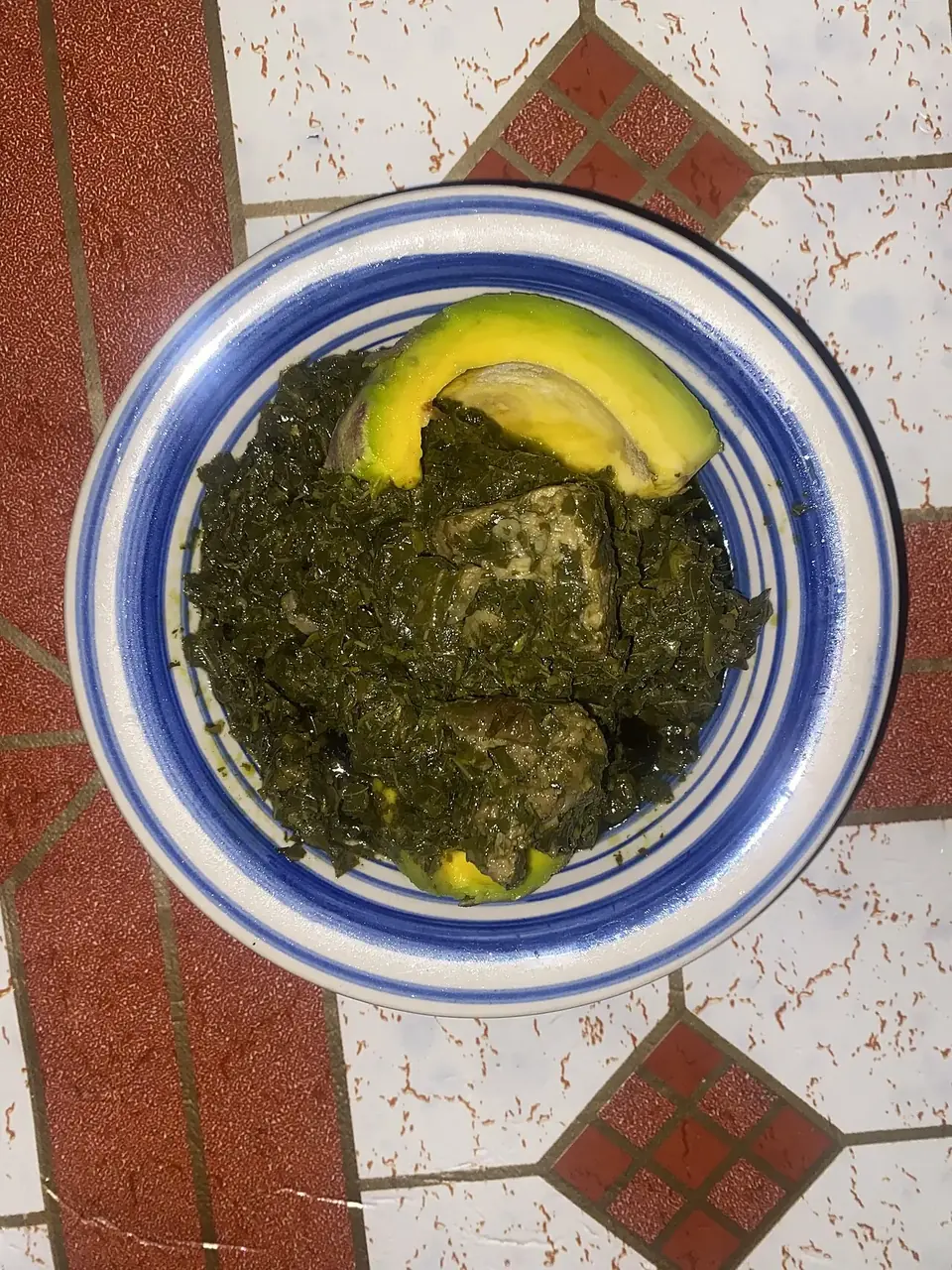 Photo: BalukuBrian · CC BY-SA 4.0
Published by Adama Doumbia, founder of Afrique Unie · updated 28 November 2026 · our method and sources
In Sierra Leone, rice comes with almost every meal, so much so that many people feel a meal without rice is not complete. And to go with that rice, no dish is loved more than cassava leaves, a stew of finely pounded cassava leaves cooked in red palm oil with meat and smoked fish. It is often described as the country's national dish.
Making it takes patience: the most tender leaves are picked, pounded very finely in a mortar, then left to simmer for a long time. Some cooks, especially among the Krio, add ogiri, a strong-smelling paste of fermented seeds that gives the dish its very distinctive taste.
The dish is cooked every day as well as for special occasions, and the diaspora makes it all over the world with frozen leaves. Some families swap the palm oil for coconut oil for a more delicate flavour.
Ingredients
For the meat
- 700 g (1 lb 9 oz) stewing beef, cubed
- 600 g (1 lb 5 oz) bone-in chicken thighs
- 1 onion, chopped
- 1 stock cube
- Salt and pepper
- 1.2 litres (2 pints) water
For the stew
- 1 kg (2 lb 4 oz) frozen pounded cassava leaves, thawed
- 200 ml (7 fl oz) red palm oil
- 1 onion
- 1 to 2 Scotch bonnet or habanero chillies
- 250 g (9 oz) smoked fish (mackerel or bonga), skinned and boned
- 2 tablespoons ground dried shrimp
- 1 tablespoon ogiri, optional
- 1 stock cube
To serve
- 600 g (1 lb 5 oz) white rice
Method
- Put the beef in a large pot with the chopped onion, one crumbled stock cube, salt and pepper. Cover and let it sweat for 10 minutes over a medium heat, stirring now and then.
- Pour in 1.2 litres (2 pints) of water, bring to the boil, then cover and simmer for 30 minutes. Add the chicken and cook for another 15 minutes.
- Meanwhile, blend the second onion with the chilli or chillies into a purée.
- Add the cassava leaves and their thawing juices to the pot and stir well. Cook for 40 minutes over a low heat, half covered, stirring regularly.
- Add the palm oil, the onion and chilli purée, the flaked smoked fish, the dried shrimp, the ogiri and the second stock cube. Simmer for another 30 minutes, stirring often.
- The stew is ready when the leaves are very tender, the sauce has thickened, the red oil rises to the surface and the chicken is cooked through, with no pink near the bone. Add a little hot water if it starts to catch.
- While it cooks, rinse the rice and boil or steam it.
- Taste, adjust the salt and serve the cassava leaves piping hot, spooned over the white rice.
Tips and variations
- Frozen pounded cassava leaves are sold in African grocers. Fresh leaves must be pounded very finely and cooked for at least 1 hour 30 minutes, as they are toxic when raw.
- Ogiri is sold in some African grocers. If you cannot find it, the dish is still delicious without it.
- Some families stir in 2 tablespoons of peanut paste towards the end for a creamier sauce.
- For a lighter version, replace some of the palm oil with coconut oil.
- Cassava leaves keep for 3 days in the fridge and freeze very well in portions.
To serve with it: Serve with homemade ginger beer, the fresh ginger drink that is hugely popular in Sierra Leone.
Have you tried this recipe?
Be the first to rate it.
Thank you for your rating!
Frequently asked questions
How is it different from Guinean leaf sauce?
The two dishes are very close. In Guinea, peanut paste and okra are often added, while in Sierra Leone the focus is more on palm oil, smoked fish and sometimes ogiri. But every family has its own recipe.
Are raw cassava leaves toxic?
Yes, they contain compounds that can release cyanide. Pounding and long cooking make them safe, which is why the leaves cook for more than an hour.
What is ogiri?
It is a seasoning made from fermented seeds, with a powerful smell and taste, a bit like a strong mature cheese. A small amount is used to add depth to the stew.
Can I use spinach instead?
Yes, in a pinch: it makes a milder stew that is ready in 30 minutes. It is not quite the same dish, but the method stays the same.