 AfriqueUnie
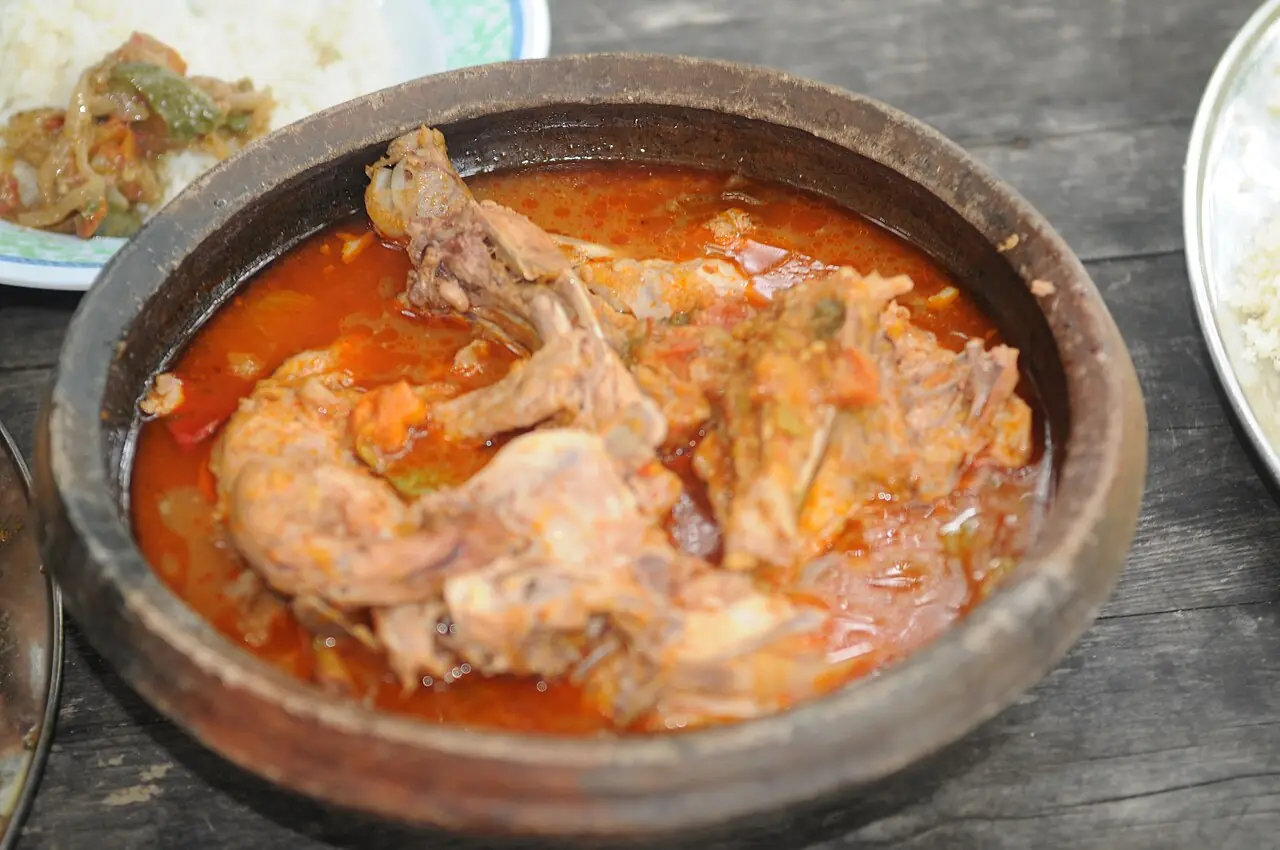 Photo: African Hope · CC BY-SA 4.0
Published by Adama Doumbia, founder of Afrique Unie · updated 28 November 2026 · our method and sources
Kedjenou is one of the best-known dishes of Côte d'Ivoire. It is associated with the Akan peoples, especially the Baoulé of the centre of the country: in Baoulé, kedjenou means 'shake', a reference to what you do while it cooks, shaking the pot rather than stirring it.
Traditionally it is cooked in a canari, a clay pot, set over embers and sealed with banana leaves. The chicken simmers in its own juices and those of the vegetables, with almost no water. The result is very tender meat and a rich, concentrated sauce.
It is made for family meals and celebrations, and it is served in many maquis (open-air eateries) in Abidjan. It is eaten with attieke or plain rice. At home, a tightly closed cast-iron casserole works beautifully.
Ingredients
For the chicken
- 1 free-range chicken of about 1.5 kg (3 lb 5 oz), cut into 8 pieces
- 1 lime
- Salt and pepper
For the vegetables and aromatics
- 2 onions, sliced
- 4 ripe tomatoes, diced
- 1 aubergine (or 4 small African garden eggs), cut into chunks
- 4 garlic cloves, crushed
- A 3 cm (1 1/4 in) piece of fresh ginger, grated
- 1 whole Scotch bonnet chilli (or half for less heat)
- 2 bay leaves
- 2 sprigs of thyme
- 1 tablespoon oil (optional)
- 1 stock cube, crumbled (optional)
Method
- Rub the chicken pieces with the lime juice, then pat them dry with kitchen paper.
- In a large bowl, mix the chicken with the garlic, ginger, salt, pepper and stock cube. Leave to rest for 15 minutes.
- Put the chicken in a cast-iron casserole, then add the onions, tomatoes, aubergine, whole chilli, bay leaves and thyme. Add the oil if you like, but no water.
- Seal the casserole tightly. If the lid does not fit snugly, place a sheet of baking paper or foil between the pot and the lid.
- Set the casserole over a medium heat. As soon as you hear it bubbling (about 10 minutes), turn the heat down to the lowest setting.
- Cook for 60 minutes without opening. Every 10 minutes, hold the casserole with oven gloves and gently shake it in a circular motion so nothing sticks.
- Check that it is done: the meat should come away easily from the bone and the juices should run clear, with no trace of pink. Taste the sauce and adjust the salt.
- Remove the chilli and bay leaves, then serve piping hot with attieke or plain rice.
Tips and variations
- A free-range chicken or a boiling hen gives the most authentic flavour; with a hen, allow an extra 30 minutes of cooking.
- No African garden eggs? An ordinary aubergine or a few okra pods are fine instead.
- Guinea fowl is a much-loved variation: cook it in exactly the same way.
- Kedjenou keeps for 2 days in the fridge and is often even better reheated, covered, over a low heat.
To serve with it: Serve it with attieke and a glass of chilled ginger juice or bissap.
Have you tried this recipe?
Be the first to rate it.
Thank you for your rating!
Frequently asked questions
Why should I not open the pot?
Kedjenou is steam-braised: the trapped steam cooks the chicken in its own juices. Opening it too often lets the liquid escape, and the meat may stick and burn.
Can I add water?
Ideally not. If your casserole does not seal well and the bottom starts to catch, add half a glass of hot water at most.
What is attieke?
It is a fermented cassava couscous, typical of Côte d'Ivoire. You can buy it fresh or dried in African grocers; it just needs reheating in a steamer.
Can I cook it in the oven?
Yes. After the first 10 minutes on the hob, put the sealed casserole in the oven at 160 °C (320 °F, gas mark 3) for about 1 hour, shaking it two or three times.