With the Abidjan skyline, the beaches of Assinie and Grand-Bassam, the mountains around Man and the basilica of Yamoussoukro, Côte d'Ivoire wins visitors over with its joie de vivre and its food.
Côte d'Ivoire has a welcome all of its own: a big laugh, a plate of alloco and an invitation to stay “just a little longer”. Over the past fifteen years or so the country has rediscovered an infectious energy, and you feel it the moment you leave the airport in Abidjan. People here love a party, music, good food and the invented words of nouchi, Abidjan's street slang, and never take too seriously anything that can be sorted out over grilled fish at a maquis.
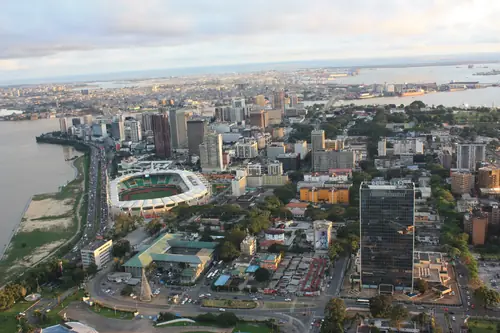
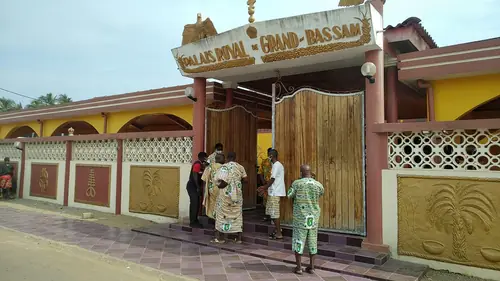
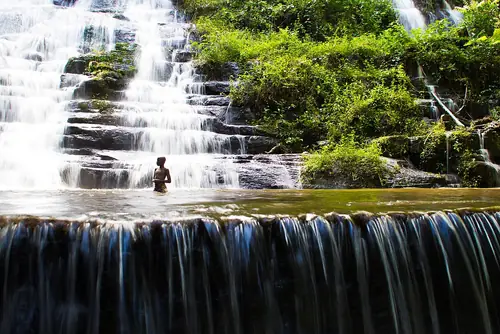
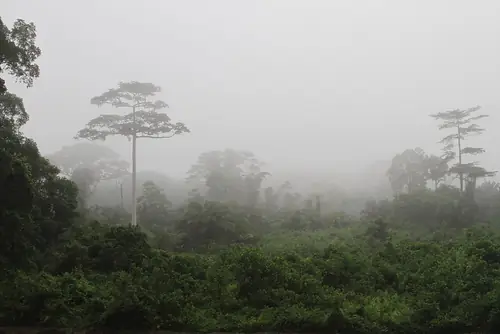
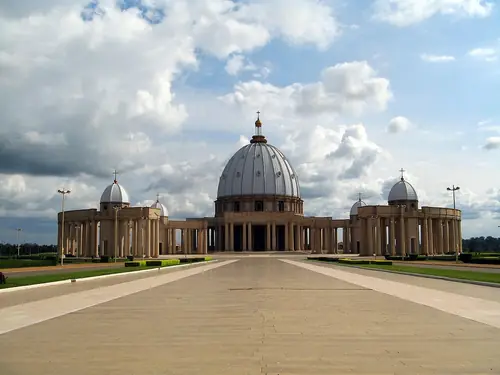
Abidjan is the gateway. The towers of Le Plateau are mirrored in the Ébrié Lagoon, and its bridges connect districts that are each a world of their own: residential Cocody, working-class Treichville, Marcory and Zone 4 for going out, Yopougon for nights of zouglou and coupé-décalé. But the country is far more than its metropolis. An hour to the east, Grand-Bassam and its listed colonial houses face the ocean, and Assinie stretches its spit of sand between lagoon and surf. In the centre, Yamoussoukro astonishes with its outsized basilica set down in the middle of the savannah. In the west, the Man region lines up mountains, waterfalls, liana bridges and Dan mask dances, while the Taï forest is home to some of the most closely studied chimpanzees in the world.
Travelling in Côte d'Ivoire also means enjoying a well-equipped country, with roads that are often good between the main cities, a delightful food scene and people who are proud to share their culture. International tourism remains modest: you will often be the only foreign visitor in a village in the west or on a beach midweek. This is a country to explore with curiosity, taking time for encounters and accepting that plans may change at the drop of an invitation.
History and culture
Ivorian soil gave rise to very diverse societies: Akan kingdoms in the east and centre, such as those of the Agni and the Baoulé, whose founding legend tells of the sacrifice of Queen Abla Pokou; Kru and Mande peoples in the west; the Senufo and the trading city of Kong in the north, a crossroads of commerce and Islam. Europeans frequented the coast from the 15th century in search of ivory, which gave the country its name. France imposed a protectorate at the end of the 19th century; Grand-Bassam, then Bingerville and Abidjan, each served in turn as capital.
Independent in 1960 under Félix Houphouët-Boigny, Côte d'Ivoire became a cocoa and coffee powerhouse, long held up as a “miracle”. After his death in 1993 the country went through a decade of political and military crises lasting until 2011. Since then growth has been strong and peace has taken root; winning the 2024 Africa Cup of Nations on home soil gave the nation an unforgettable moment of togetherness.
8 experiences not to miss in Côte d'Ivoire
Photo : Leturk · CC BY-SA 4.001An evening at a maquisSettle in at a maquis in Marcory or Yopougon with grilled fish, attiéké and an ice-cold beer, to the beat of coupé-décalé.
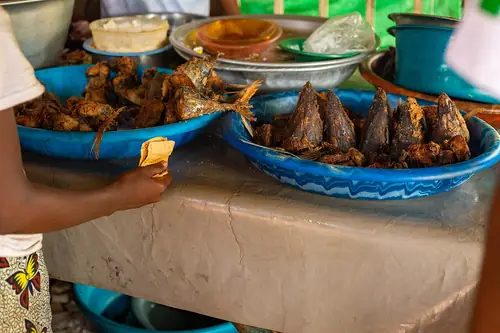
Photo : BorisAhonon · CC BY-SA 4.002Garba first thingDo as Abidjan does: attiéké and fried tuna pepped up with chilli and onion, served in a bag at a neighbourhood garbadrome.
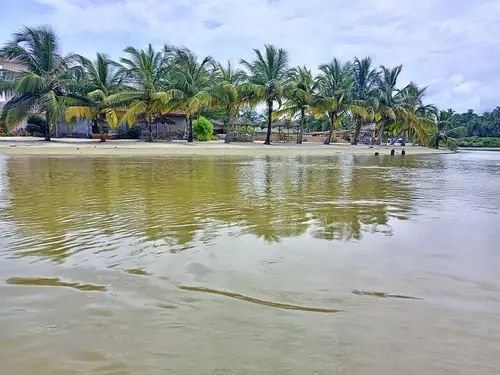
Photo : Dadrik · CC BY-SA 4.003A weekend in AssinieHead for the sandspit at the end of the week and alternate between swimming on the lagoon side and long walks on the ocean side.
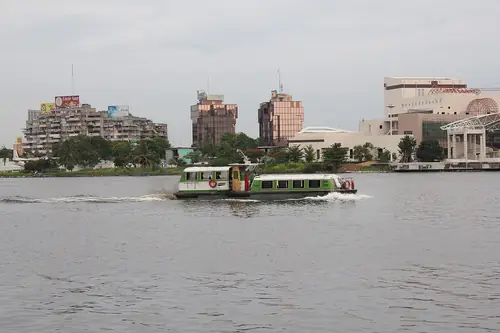
Photo : Cyriac Gbogou · CC BY-SA 4.004The lagoon by boatCross the Ébrié Lagoon by water bus to see the skyline of Le Plateau from the water at sunset.
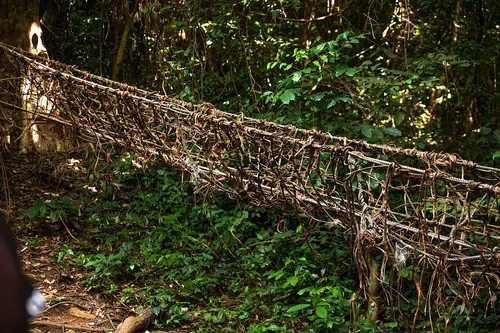
Photo : HAMIEN NGORAN YANICK · CC BY-SA 4.005Liana bridgeIn the Man region, cross a bridge woven from lianas above a river, a traditional structure bound up with local beliefs.
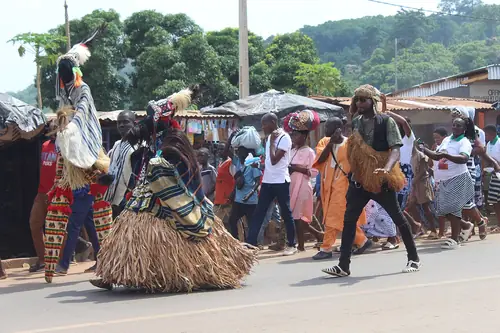
Photo : Dadrik · CC BY-SA 4.006Mask dancesIf the chance arises, watch Dan masks come out or the stilt dancers perform in the west of the country.
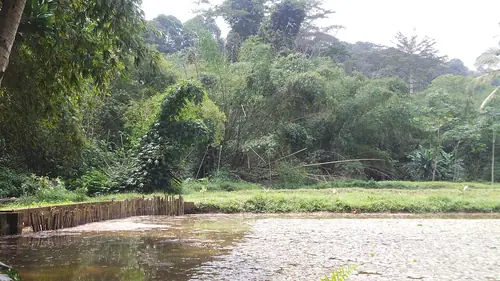
Photo : Emmanuel Grebo · CC BY-SA 4.007Banco ForestWalk through this forest park right in the middle of Abidjan, then watch the fanicos, the washermen, scrubbing laundry in the river at its edge.
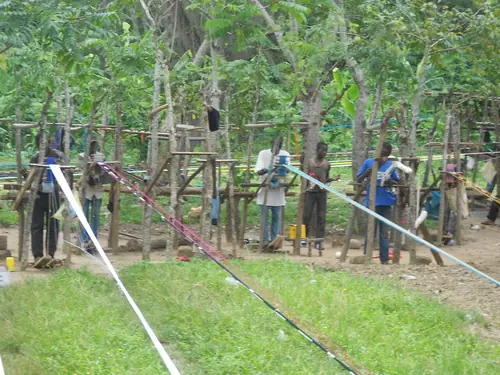
Photo : Pagnebaoule · CC BY-SA 4.008Cloth and weaversLook out for Baoulé and Senufo cloth, or kita, woven in colourful strips in the Akan villages of the centre-east.
When to go to Côte d'Ivoire
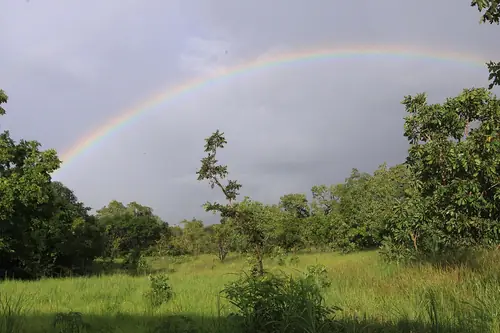
The climate is humid tropical in the south and drier in the north. The most pleasant time is from November to March: little rain, bearable heat, and in the north sometimes the harmattan between December and February, which hazes over the sky. On the coast, the main rainy season runs roughly from April or May to July, with heavy downpours that can bring Abidjan to a standstill; a shorter rainy season returns in October and November. August and September are often drier and cooler along the coast. The north has a single rainy season, from June to September. For the national parks, choose the dry season, when the tracks are passable.
Getting around
Félix Houphouët-Boigny International Airport, in Port-Bouët, is the only air gateway for most travellers. Abidjan is navigated by orange metered taxis, woro-woros (shared taxis on fixed routes), gbakas (minibuses) and water buses on the lagoon; ride-hailing apps are well established. Between cities, numerous coach companies serve the whole country from the bus stations of Adjamé and Abidjan. The northern motorway links Abidjan to Yamoussoukro in about three hours. For the west and north, allow for full days on the road or take domestic flights. Hiring a car with a driver is common and often less stressful.
Etiquette and customs
Greetings matter: take time to ask “Ça va un peu?” (“doing alright?”) and reply in the same easy-going tone. Give and receive with your right hand. Ivorians have a gift for a turn of phrase and for laughing at themselves: join in the game, but never mock. In villages it is customary to introduce yourself to the chief and offer a small symbolic gift before looking around. Masks and some sacred groves must not be photographed without permission, and certain ceremonies are closed to the uninitiated. Dress properly in government offices and churches, and always carry your ID, as checks are frequent.
Food and drink in Côte d'Ivoire
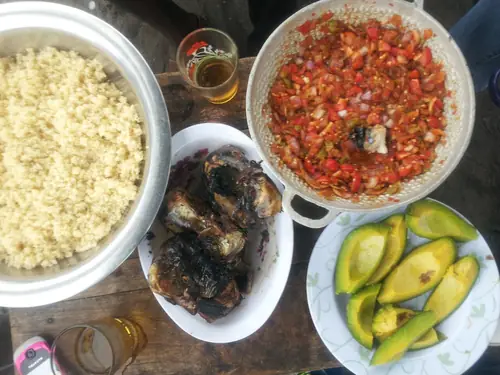
Attiéké, a lightly tangy fermented cassava couscous, goes with almost everything: grilled fish, chicken, or fried tuna in the famous garba. Alloco, fried plantain served with chilli and onion, is eaten at any hour. Try kedjenou, chicken slow-cooked in its own juices in a clay canari pot, palm-nut sauce graine, peanut sauce, foutou made from plantain or yam, and placali. At the maquis, poulet bicyclette, grilled free-range chicken, is an institution. To drink, try bandji or bangui, palm wine, gnamankoudji ginger juice, bissap and, of course, chocolate from the world's leading cocoa producer.
How much should I budget for a trip to Côte d'Ivoire?
Mid-range: around €60–120 per person per day, excluding flights. This is only a guide and depends above all on the accommodation and activities you choose.
What currency and languages are used in Côte d'Ivoire?
Currency: West African CFA franc (XOF). Languages: French.
How do I get to Côte d'Ivoire?
The main international airport has the code ABJ. Compare flights with the ‘Flights’ button on this page.
Do I need a visa to visit Côte d'Ivoire?
Entry requirements depend on your nationality and change regularly. Check them on the country's official website or with your foreign ministry before booking, and make sure your passport is valid.
What should I eat in Côte d'Ivoire?
Dishes to try while you're there: Garba, alloco, attiéké with grilled fish.
Map
Côte d'Ivoire on the map
Cities Places to see · Approximate positions
On the ground
Getting around and staying healthy
Getting around
Air Côte d'Ivoire flies from Abidjan to several inland cities, including San-Pédro, Korhogo and Man. The Sitarail train currently carries no passengers on the Ivorian side, so to reach Yamoussoukro, Bouaké or the west you travel by coach, with many companies departing from Adjamé, or by bush taxi. In Abidjan, gbakas (minibuses) and woro-woros (shared taxis) are everywhere, water buses cross the lagoon, and you can book rides with Yango or Heetch (Uber pulled out in 2025). Hiring a car with driver is common; driving is on the right.
Health and safety
Yellow fever
Vaccination certificate required on entry for all travellers (from 9 months); vaccine recommended for the whole country (from 9 months).
Malaria
Present throughout the country: ask a doctor about preventive medication and protect yourself from mosquitoes.
Water and food
Unless your accommodation says otherwise, drink sealed bottled or filtered water, and wash your hands often.
Source: US CDC, November 2026. Rules change: see a travel health clinic before you leave, and the UK Foreign Office travel advice for safety.
Useful numbers
Local emergency numbers
Police: 110 or 111 or 170 Ambulance: 185 Fire: 180 Abidjan SAMU (emergency medical service): 185 or +225 27 22 44 53 53. France Diplomatie lists 110 as the free hotline for road harassment.
Affiliate cookiesWe would like to load a script from our partner Travelpayouts. It may set cookies so that we receive a commission when you book through our links, at no extra cost to you. If you decline, the site works in exactly the same way. Find out more
 AfriqueUnie
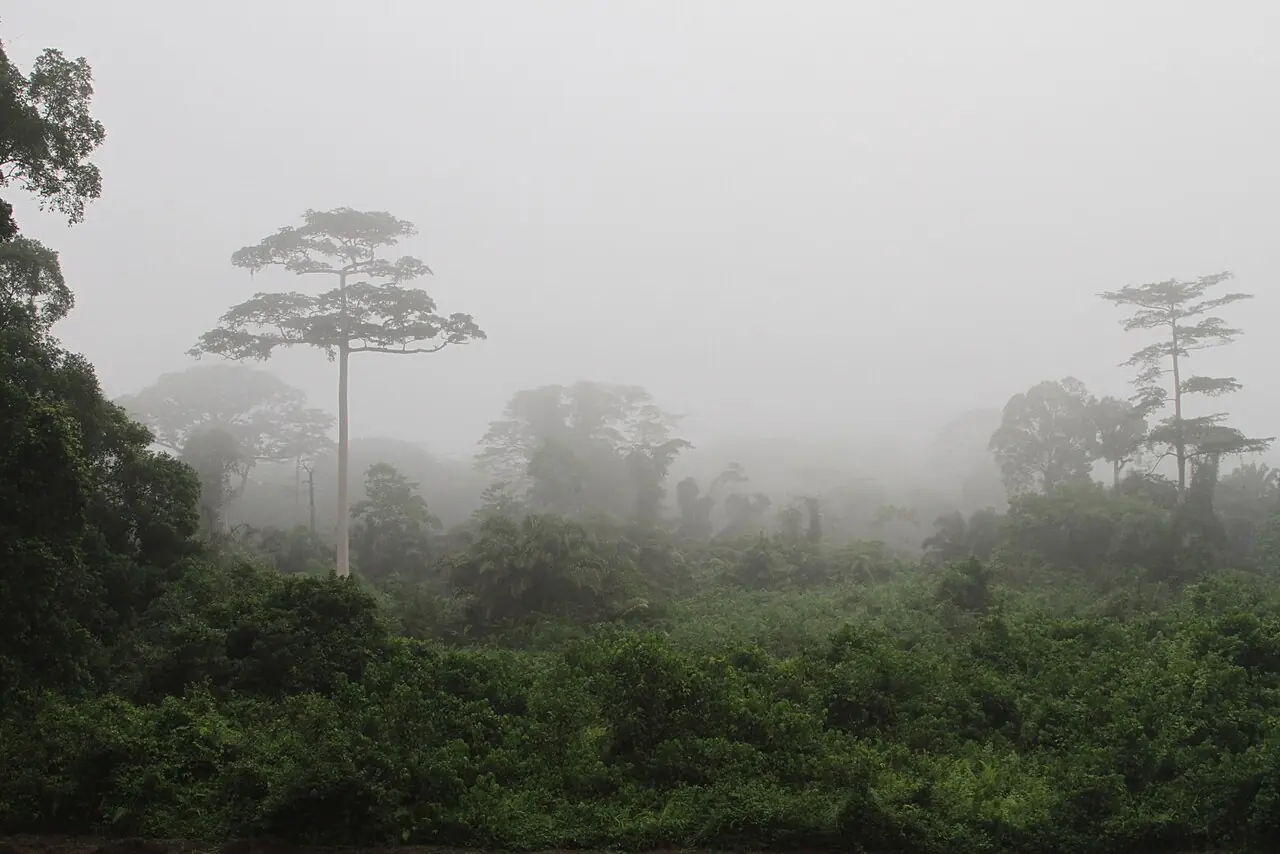 Photo: yakovlev.alexey from Moscow, Russia · CC BY-SA 2.0
 Côte d'Ivoire
 Côte d'Ivoire or Ghana
 Côte d'Ivoire or Senegal
 Benin
 Burkina Faso
 Cape Verde
 Guinea
 Guinea-Bissau
 Liberia
 Mali
 Mauritania
 Niger
 Nigeria
 Sierra Leone
 The Gambia
 Togo