 AfriqueUnie
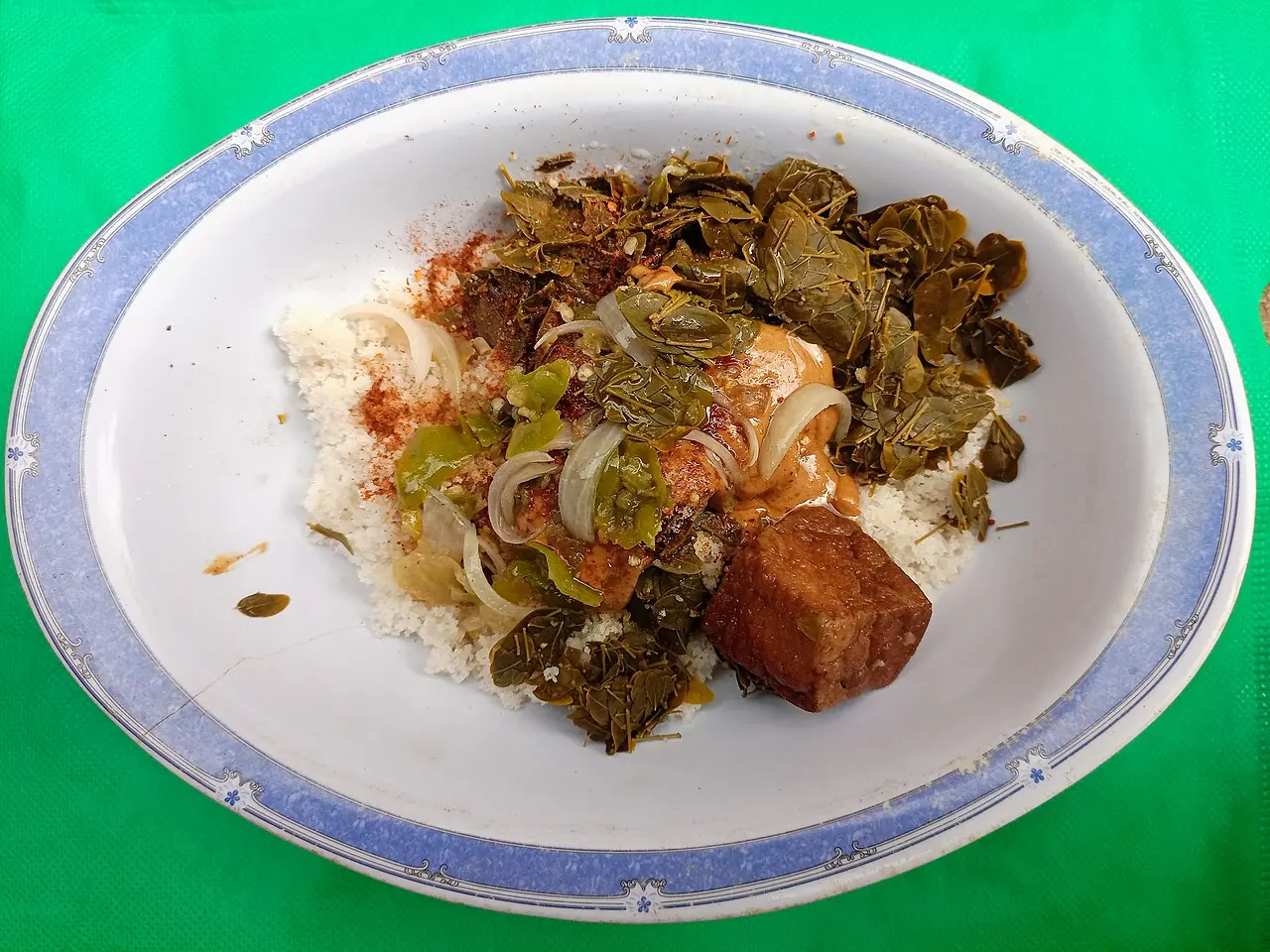 Photo: Saliousoft · CC BY-SA 4.0
Published by Adama Doumbia, founder of Afrique Unie · updated 28 November 2026 · our method and sources
Dambou is a dish from Niger, especially from the Zarma and Songhai people of the south-west of the country. It is a kind of couscous: a cereal semolina steamed and then mixed with moringa leaves, onion, chilli and oil.
People eat it at any time of day, but it has a special place at celebrations such as naming ceremonies and weddings. It is also found in northern Benin among the Dendi people, and in many markets where women sell it ready to eat.
Moringa is widely grown in Niger and valued for its nutritious leaves. Dambou can be made with wheat semolina, rice flour, millet couscous or maize couscous: every cook has her own way. It goes well with grilled meat, fish or black-eyed beans.
Ingredients
For the dambou
- 500 g (1 lb 2 oz) millet couscous or fine wheat couscous
- 200 g (7 oz) fresh or frozen moringa leaves (or 300 g / 10 oz baby spinach)
- 2 onions, 1 thinly sliced and 1 finely chopped
- 1 to 2 fresh chillies, chopped
- 6 tablespoons groundnut oil
- 1 stock cube, crumbled
- 1 teaspoon salt
- About 300 ml (10 fl oz) warm water
To serve
- 100 g (3 1/2 oz) unsalted roasted peanuts, roughly crushed
- 2 tomatoes, diced
- 1 lime
Method
- Put the couscous in a large bowl. Sprinkle it with 150 ml (5 fl oz) of warm salted water and a tablespoon of oil, then rub it between your palms to separate the grains. Leave to swell for 10 minutes.
- Meanwhile, wash the moringa leaves and remove the toughest stalks. Blanch them for 3 minutes in a pan of boiling salted water, drain, rinse under cold water and squeeze out the liquid.
- Bring water to the boil in the bottom of a couscous steamer (or a large pan topped with a colander). Tip the couscous into the basket and steam it, covered, for 15 minutes.
- Tip the couscous back into the bowl, sprinkle it with the rest of the warm water and separate the grains with a fork or oiled hands, taking care as it is hot.
- Gently mix the couscous with the moringa leaves, chopped onion, chilli and stock cube. Return everything to the basket and steam for another 10 minutes.
- Meanwhile, heat the remaining oil in a frying pan and cook the sliced onion for 5 minutes, until soft and lightly golden.
- Spoon the dambou onto a large platter, pour over the onion oil and mix. Taste and adjust the salt.
- Scatter with the crushed peanuts and diced tomato, and serve with lime wedges.
Tips and variations
- Fresh or frozen moringa leaves are sold in Indian and African grocery shops, sometimes as "drumstick leaves". If you cannot find them, use 2 tablespoons of moringa powder mixed with spinach.
- Millet couscous is sold in African grocery shops. Fine wheat couscous, which is easier to find, gives a lighter dambou.
- No couscous steamer? A metal colander set over a pan and covered with a tea towel and a lid works very well.
- For a complete meal, serve dambou with well-grilled mutton skewers or a black-eyed bean stew. It keeps for 2 days in the fridge and reheats well over steam.
To serve with it: Serve it with grilled meat and a glass of chilled bissap or ginger juice.
Have you tried this recipe?
Be the first to rate it.
Thank you for your rating!
Frequently asked questions
Is dambou a vegetarian dish?
Dambou itself contains no meat if you use a vegetable stock cube. It is often served with meat or fish, but it is a satisfying meal on its own with peanuts and black-eyed beans.
Can dambou be made with rice?
Yes, in Niger cooks often use rice flour or ground broken rice, steamed like couscous. The method stays the same.
What can I use instead of moringa leaves?
Baby spinach, chard leaves or a mix of spinach and moringa powder are the best substitutes.
Is dambou eaten hot or cold?
It is mostly eaten hot or warm, straight after cooking, but it is still very good at room temperature.