 AfriqueUnie
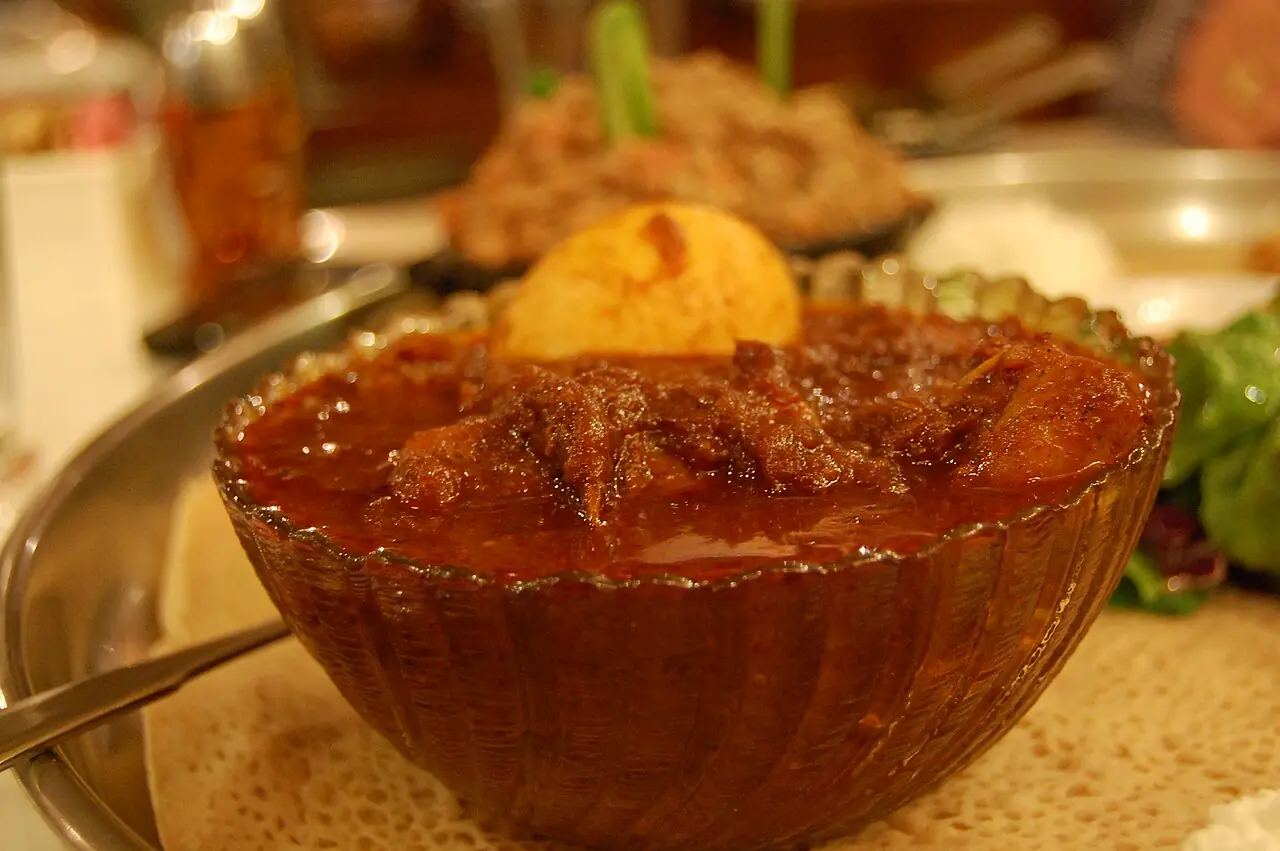 Photo: stu spivack · CC BY-SA 2.0
Published by Adama Doumbia, founder of Afrique Unie · updated 28 November 2026 · our method and sources
Doro wat is Ethiopia's great celebration dish, shared with Eritrea, where it is called tsebhi derho. In Amharic, doro means chicken and wat is a thick, spicy stew. It is often described as the national dish: it is what families cook for guests, weddings and the big religious feasts.
Its deep red colour comes from berbere, a blend of dried chillies and spices (fenugreek, coriander, cardamom, ginger, cloves and more) that runs through Ethiopian cooking. The secret is a unique technique: a large quantity of onions is first cooked down in a dry pot, with no fat at all, until it turns into a jammy paste. Only then come the niter kibbeh, a spiced clarified butter, the chicken and the hard-boiled eggs.
Doro wat is eaten with your hands, on injera, a large, soft and slightly sour flatbread made from teff, a tiny grain grown in the highlands. For Orthodox Christians, tradition has it that doro wat breaks the long fast of Fasika (Easter), and it often appears at Genna (Christmas) too, shared by the whole family from one large platter.
Ingredients
For the chicken
- 1.5 kg (3 lb 5 oz) skinless chicken legs and thighs, cut into pieces
- 1 lemon (juice)
- 1 tablespoon salt (for rinsing)
- 6 eggs
For the stew
- 1 kg (2 lb 4 oz) red onions, very finely chopped
- 120 g (4 oz) niter kibbeh (or clarified butter, see tips)
- 4 to 6 tablespoons berbere, to taste
- 1 tablespoon tomato purée (optional)
- 5 garlic cloves, crushed
- 4 cm (1 1/2 in) piece of fresh ginger, grated
- 500 ml (18 fl oz) hot water or chicken stock
- 1/2 teaspoon ground cardamom
- Salt
To serve
- 6 to 8 injera (from Ethiopian or African grocers)
- Ayib fresh cheese or ricotta (optional)
Method
- Prepare the chicken: remove the skin and excess fat and make a few shallow cuts in each piece. Soak for 15 minutes in cold water with the lemon juice and salt, then rinse and drain, and clean the sink and worktop straight away. This lemon rinse is a traditional step that gives a cleaner-tasting meat.
- Boil the eggs for 10 minutes, cool them in cold water and peel. Make four or five shallow slits in each one so they soak up the sauce. Set aside.
- Put the chopped onions in a large heavy-based casserole with no fat at all. Cook over a medium-low heat for 30 to 40 minutes, stirring often. They should release their water, shrink by half and become a soft brown paste. If they catch, add a spoonful of water.
- Add half the niter kibbeh and let it melt. Stir in the berbere and tomato purée and fry for 5 minutes, stirring constantly: the spices should cook in the butter without burning.
- Add the garlic and ginger, stir for 2 minutes, then pour in the hot water a little at a time. Simmer uncovered for 10 minutes until the sauce is thick and glossy.
- Add the chicken pieces, coat them well in the sauce, cover and simmer gently for 40 to 45 minutes. Stir from time to time and add a splash of water if the sauce gets too thick.
- Add the rest of the niter kibbeh, the cardamom and the eggs. Simmer, covered, for another 10 minutes. The chicken is done when the meat comes away easily from the bone and the juices run clear, with no trace of pink.
- Taste and add salt if needed. Leave to rest off the heat for 10 minutes so the sauce thickens and the flavours come together.
- To serve, lay one injera on a large platter, spoon the doro wat into the centre and place the whole eggs on top. Serve the remaining injera rolled up on the side: tear off a piece to scoop up the sauce and chicken. A little ayib softens the heat.
Tips and variations
- Homemade berbere: dry-toast for 2 minutes 1 teaspoon fenugreek seeds, 1 teaspoon coriander seeds, 1/2 teaspoon black peppercorns, 4 cloves and the seeds from 4 cardamom pods. Grind them with 8 deseeded dried red chillies (or 4 tablespoons of mixed mild and hot chilli powder), 4 tablespoons paprika, 1 teaspoon ground ginger, 1 teaspoon garlic powder, 1/2 teaspoon cinnamon and 1 teaspoon salt. It keeps for three months in a sealed jar, away from the light.
- Quick niter kibbeh: melt 250 g (9 oz) unsalted butter over a very low heat with 1/2 chopped onion, 2 garlic cloves, 1 teaspoon grated ginger, 1/2 teaspoon fenugreek, 1/2 teaspoon cumin, 3 crushed cardamom pods and 1/2 teaspoon turmeric. Let it barely simmer for 30 minutes without stirring, then strain through muslin. It keeps for a month in the fridge.
- No injera? Serve doro wat with flatbread, rice or buckwheat pancakes, which echo its soft texture. Injera can be found in Ethiopian shops and freezes very well.
- Doro wat tastes even better the next day. It keeps for 3 days in the fridge; reheat it gently, covered, with a splash of water.
- The Beta Israel (Ethiopian Jewish) version, sanbat wat, is made for the Sabbath with spiced oil instead of butter.
To serve with it: Serve it with injera and, on feast days, with tej, an Ethiopian honey wine, or coffee from the traditional coffee ceremony.
Have you tried this recipe?
Be the first to rate it.
Thank you for your rating!
Frequently asked questions
Is doro wat very spicy?
It has a kick, but you control the heat with the amount of berbere: start with 4 tablespoons and add more at the end if you like. Ayib cheese on the side mellows every mouthful.
Why are the onions cooked without fat?
It is the defining technique of Ethiopian wats. The onions lose their water, break down and thicken the sauce without any flour. This long step gives doro wat its rich texture and deep flavour.
Where can I buy berbere and injera in the UK or Europe?
In Ethiopian and Eritrean grocers in larger cities, and sometimes in African or Middle Eastern shops. Berbere is also easy to make at home with everyday spices.
Can I make doro wat in advance?
Yes, and it is even recommended: made the day before, it gains in flavour. Add the eggs when you reheat it so they stay tender.