Never colonised, Ethiopia has its own calendar, its own alphabet and a unique heritage: the rock-hewn churches of Lalibela, the castles of Gondar and the Simien Mountains. Some regions remain unstable: check the situation before you travel.
Ethiopia is like no other country in Africa, or anywhere else for that matter. It has its own script, Ge'ez, whose rounded characters you see on every shop sign; its own calendar, with thirteen months and running a few years behind ours; its own way of counting the hours, starting from sunrise; and an Orthodox Church that is among the oldest in the world, whose rites, chants and festivals still set the rhythm of life for millions of people. Never lastingly colonised, despite the Italian occupation from 1936 to 1941, it has kept an identity of rare strength.
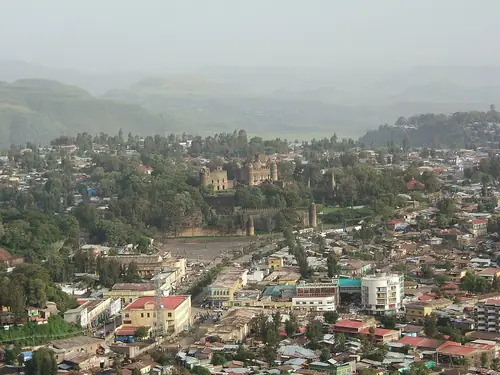
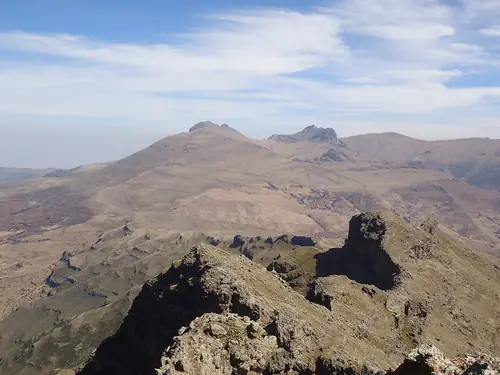
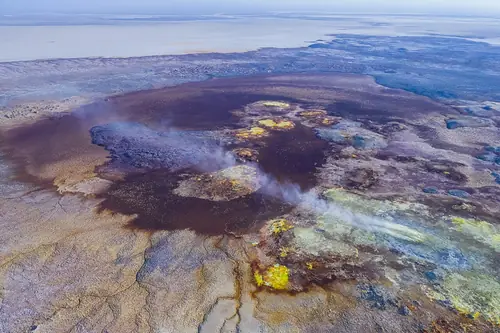
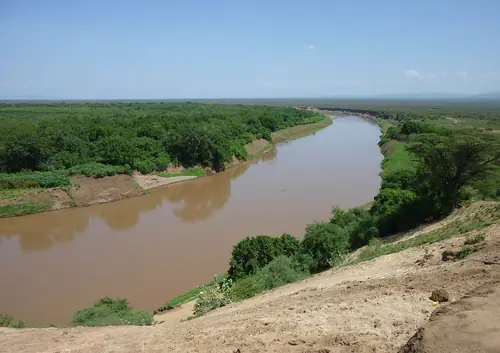
Its heritage is breathtaking. At Lalibela, entire churches were carved out of volcanic rock eight centuries ago. At Gondar, imperial castles recall the lavish courts of the 17th century. At Aksum, gigantic stelae bear witness to a kingdom that traded with Rome. And in the highlands, the Simien Mountains raise cliffs more than a thousand metres high, home to gelada baboons. In the north-east, the Danakil Depression offers otherworldly landscapes, and in the south, the Omo Valley is home to peoples whose traditions are very much alive.
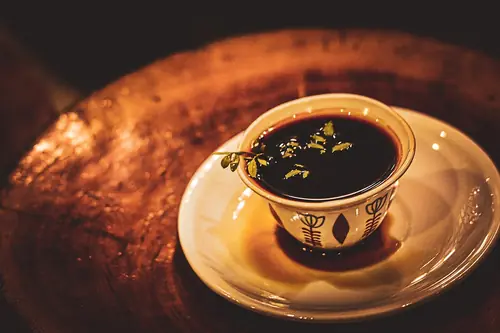
It is also the land of coffee, which is said to have originated here, and of the ceremony that surrounds it, a moment of sharing and hospitality. Travelling in Ethiopia requires preparation, as some regions are affected by unrest, including areas of great heritage interest: always check your government's official travel advice before you leave and follow the news during your stay. But the country rewards you with a cultural depth unrivalled on the continent.
History and culture
The fossils discovered in the Awash Valley, including the famous skeleton of Lucy, some 3.2 million years old, have made Ethiopia one of the cradles of humankind. In antiquity, the Kingdom of Aksum in the north was a great trading power that minted its own coins and adopted Christianity in the 4th century. According to tradition, the Ark of the Covenant rests in a chapel in Aksum, and the Solomonic dynasty claimed descent from King Solomon and the Queen of Sheba.
In the Middle Ages, the Zagwe dynasty had the churches of Lalibela carved, then in the 17th century the emperors established their capital at Gondar. In 1896 the army of Emperor Menelik II defeated Italy at the Battle of Adwa, a victory that became a symbol for the whole of Africa. The reign of Haile Selassie, the last emperor, ended in 1974 with the revolution and the military regime of the Derg, marked by terror and famine. Since the 1990s the country has been organised into ethnic-federal regions, and in recent years it has experienced several internal conflicts, notably in Tigray between 2020 and 2022, and then in Amhara.
8 experiences not to miss in Ethiopia
Photo : ProtoplasmaKid · CC BY-SA 4.001A coffee ceremonyShare the ritual of roasting, pounding and three successive cups, amid the scent of incense.
Photo : Ji-Elle · CC BY-SA 3.002Lalibela's churches at dawnWhen the situation allows, witness the morning prayers of white-robed worshippers in the rock-hewn churches.
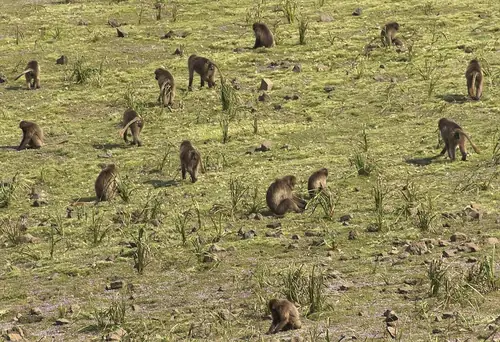
Photo : A. Davey · CC BY 2.003The geladas of the SimienSit in the middle of a troop of gelada baboons grazing on the grass at the cliff edge.
04An azmari betSpend an evening in a traditional cabaret where singers improvise mischievous verses about the customers.
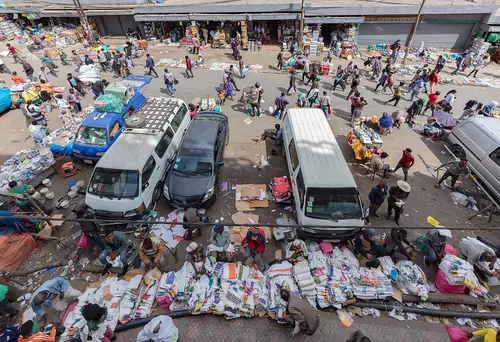
Photo : Diego Delso · CC BY-SA 4.005The MerkatoLose yourself in one of Africa's biggest markets, organised into districts by product, in Addis Ababa.
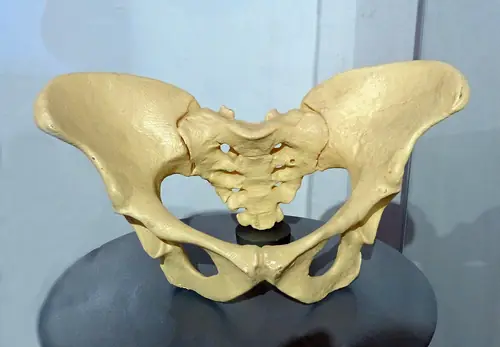
Photo : Ji-Elle · CC BY-SA 3.006Lucy at the museumSee the replica and fragments of the australopithecine Lucy, known as Dinknesh in Amharic, in Addis Ababa.
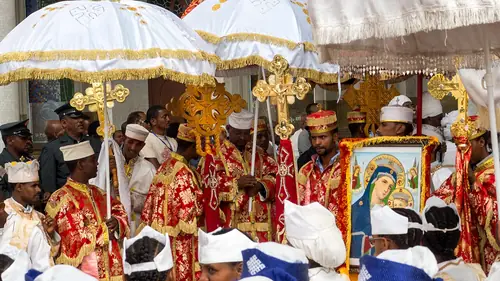
Photo : Jean Rebiffé · CC BY 4.007An Orthodox festivalExperience Timkat or Meskel amid crowds dressed in white, chanting, drums and processions.
The best time to travel in the highlands is from October to March, after the long rainy season: skies are clear, the landscapes still green at first, and the major religious festivals, Meskel at the end of September and Timkat in January, draw the crowds. The long rainy season, the kiremt, from June to September, makes some roads difficult and the mountains often shrouded in cloud, even if the scenery is superb. In the Danakil, temperatures are extreme: only November to February is bearable. The Omo Valley is best visited in the dry seasons, avoiding the April–May rains. In Addis Ababa, the altitude makes the nights cool all year round.
Getting around
Distances are vast and mountain roads slow: the national carrier, Ethiopian Airlines, with its extensive domestic network, is the best way to link Addis Ababa with Lalibela, Gondar, Bahir Dar, Aksum, Jinka or Semera. Passengers arriving on one of the airline's international flights have often been eligible for reduced domestic fares. For rural areas, you hire a vehicle with a driver. Long-distance buses exist, but journeys are long and sometimes risky. In Addis Ababa, a tram, minibuses and ride-hailing apps make getting around easier. Security conditions on some routes change quickly: find out before every journey.
Etiquette and customs
Ethiopians are proud of their culture and value politeness. Say hello with “Selam” and thank you with “Amesegënallehu”. In churches, take off your shoes and cover your shoulders and legs, and women cover their heads; some churches and monasteries are closed to women. On Wednesdays and Fridays, as well as during the fasting seasons, many Orthodox believers abstain from animal products: vegan dishes are then everywhere. Always ask before taking photographs, especially of priests and, in the Omo, of community members. Eat with your right hand. Avoid political and ethnic discussions, which are highly sensitive.
Food and drink in Ethiopia
Ethiopian cooking revolves around injera, a large, spongy and slightly sour pancake made from fermented teff, a tiny grain native to the highlands. You tear it with your fingers to scoop up wat, stews fragrant with berbere, a fiery spice blend, and niter kibbeh, spiced clarified butter. Doro wat, chicken simmered with a hard-boiled egg, is the dish for great feasts. Shiro, a chickpea purée, tibs, sautéed meat, and kitfo, minced beef served raw or barely seared, are classics. On fasting days, beyaynetu offers a colourful assortment of lentils, vegetables and peas. People drink tej, a honey wine, and coffee, served during a ceremony.
The best time to visit Ethiopia: October to March.
What should I see first in Ethiopia?
The must-sees: Rock-hewn Churches of Lalibela, Simien Mountains, Danakil Depression, Omo Valley.
Which cities should I visit in Ethiopia?
Addis Ababa, Lalibela, Gondar. The capital is Addis Ababa.
How much should I budget for a trip to Ethiopia?
Budget: around €30–60 per person per day, excluding flights. This is only a guide and depends above all on the accommodation and activities you choose.
The main international airport has the code ADD. Compare flights with the ‘Flights’ button on this page.
Do I need a visa to visit Ethiopia?
Entry requirements depend on your nationality and change regularly. Check them on the country's official website or with your foreign ministry before booking, and make sure your passport is valid.
What should I eat in Ethiopia?
Dishes to try while you're there: Injera, doro wat, coffee ceremony.
Map
Ethiopia on the map
Cities Places to see · Approximate positions
On the ground
Getting around and staying healthy
Getting around
Ethiopian Airlines runs an extensive domestic network from Addis Ababa (Lalibela, Gondar, Bahir Dar, Axum, Arba Minch and more), often the best way to cover long distances. The Addis Ababa–Djibouti railway carries passengers via Dire Dawa, and Addis has a light rail system. Bus companies such as Selam Bus and Sky Bus link the main cities, alongside minibuses. In Addis Ababa, the local apps Ride and Feres take the place of Uber. Traffic drives on the right; some regions (notably Amhara and Tigray) are affected by unrest, so check the situation before any road journey.
Health and safety
Yellow fever
Certificate required only if you arrive from, or transited through, a country with a risk of yellow fever (from 9 months, incl. airport transits over 12 h); vaccine: recommended, except travel limited to Afar or Somali regions (generally not recommended).
Malaria
Present in some areas (areas below 2,500 m): ask a doctor depending on your itinerary.
Water and food
Unless your accommodation says otherwise, drink sealed bottled or filtered water, and wash your hands often.
Sources: France Diplomatie, Viaggiare Sicuri, Belgian Foreign Affairs, GOV.UK, checked in November 2026. All 54 countries
Entry requirements (visas, vaccinations) and security conditions change regularly: check them with the official authorities before booking. Official tourism website: Visit Ethiopia (Ministry of Tourism).
Affiliate cookiesWe would like to load a script from our partner Travelpayouts. It may set cookies so that we receive a commission when you book through our links, at no extra cost to you. If you decline, the site works in exactly the same way. Find out more
 AfriqueUnie
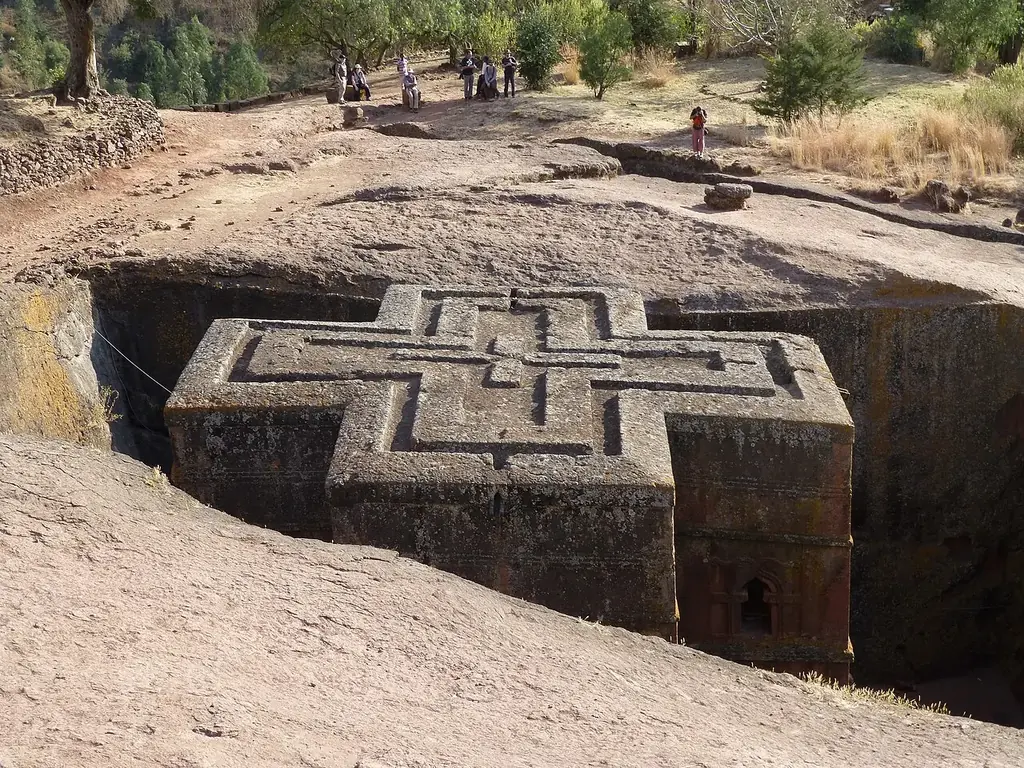 Photo: Ji-Elle · CC BY-SA 3.0
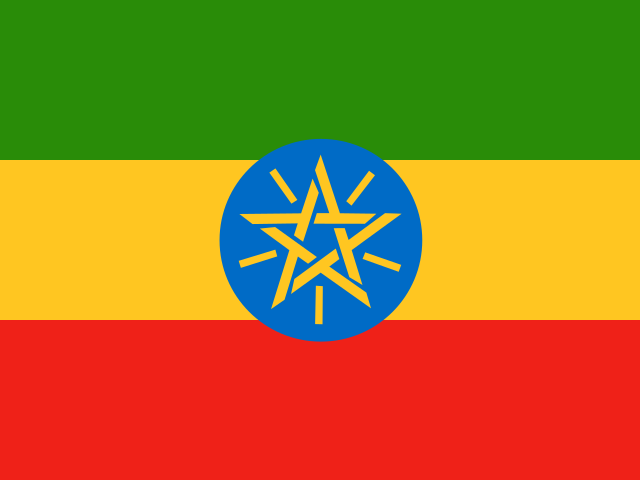 Ethiopia

 Ethiopia or Egypt
 Burundi
 Djibouti
 Eritrea
 Kenya
 Rwanda
 Somalia
 South Sudan
 Tanzania
 Uganda