 AfriqueUnie
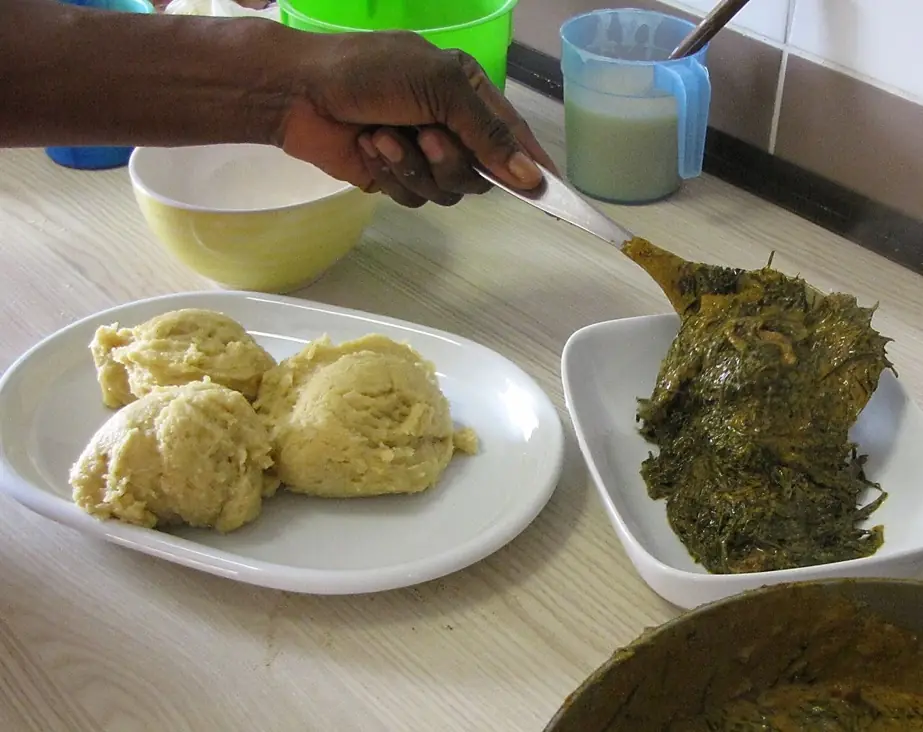 Photo: T.K. Naliaka · CC BY-SA 4.0
Published by Adama Doumbia, founder of Afrique Unie · updated 28 November 2026 · our method and sources
In the Central African Republic, cassava is the basis of almost every meal. It is most often eaten as gozo, a smooth, soft ball of cassava dough served with a sauce. One of the country's favourite sauces is koko, made with the leaves of a wild forest vine, Gnetum africanum.
Koko grows mainly in the Lobaye forest, in the south-west of the country, where the Aka people gather it all year round. Its tough leaves are cut into very thin strips before cooking. Cooked in a peanut sauce, it is called yabanda: a quick and much-loved dish, enriched with smoked fish, meat or, in season, caterpillars.
The same plant goes by other names in neighbouring countries: okok or eru in Cameroon, nkumu in Gabon, fumbua in the DRC. We present both parts together here, because koko is almost never eaten without its ball of gozo.
Ingredients
For the koko sauce
- 400 g (14 oz) frozen shredded koko leaves (or 150 g / 5 oz dried koko)
- 250 g (9 oz) smoked fish (mackerel or smoked catfish)
- 200 g (7 oz) plain unsweetened peanut paste
- 1 onion, sliced
- 2 tomatoes, diced
- 2 tablespoons red palm oil, optional
- 1 Scotch bonnet or habanero chilli
- 600 ml (1 pint) water
- 1 stock cube
- Salt
For the gozo
- 500 g (1 lb 2 oz) cassava flour
- 750 ml (1 1/4 pints) water
- A pinch of salt
Method
- If using dried koko, soak it in warm water for 30 minutes, then drain. Frozen koko can be used straight away, without fully thawing.
- Remove the skin and bones from the smoked fish, then break it into pieces.
- In a saucepan, whisk the peanut paste into the 600 ml of water. Add the onion, tomatoes, whole chilli and stock cube.
- Bring to a gentle simmer and cook for 20 minutes over a low heat, stirring often: the sauce thickens and a little peanut oil rises to the surface.
- Add the koko, smoked fish and palm oil. Simmer for 25 minutes (40 minutes for dried koko), until the leaves are tender. Add a little water if the sauce gets too thick, then taste and add salt.
- Meanwhile, make the gozo: bring the salted water to the boil in a heavy-based saucepan, then take it off the heat.
- Sprinkle in the cassava flour little by little, stirring hard with a wooden spatula to avoid lumps.
- Return to a low heat and keep working the dough for 5 to 8 minutes, pressing it against the sides of the pan, until it is smooth, stretchy and slightly translucent.
- Shape into balls using a wet bowl and serve at once with the hot koko sauce.
Tips and variations
- Koko is sold frozen or dried in African grocery shops, often labelled okok, eru or gnetum leaves. If you cannot find it, chopped spinach makes a milder but pleasant dish: add it only 10 minutes before the end.
- If you cannot find cassava flour, make the gozo with cassava fufu flour, following the proportions on the packet.
- The smoked fish can be replaced with diced beef: cook it for 40 minutes in the peanut sauce before adding the koko.
- Koko sauce keeps for 3 days in the fridge. Gozo, however, should be made just before serving, as it hardens as it cools.
To serve with it: Serve it with a chilled hibiscus drink or a ginger drink.
Have you tried this recipe?
Be the first to rate it.
Thank you for your rating!
Frequently asked questions
What is koko?
Koko is the Sango name for the leaves of Gnetum africanum, a wild vine from the forests of Central Africa. They are shredded very finely before being cooked in a sauce.
What is gozo?
Gozo is the Central African cassava ball, made by working cassava flour into boiling water. It goes with most sauces, much as fufu does in other countries.
What is the difference between koko and ngoundja?
Koko is made with gnetum leaves, while ngoundja is the cassava leaf sauce. Both are eaten with gozo and are among the country's favourite dishes.
What is yabanda?
It is the name given to koko cooked in a peanut sauce, as in this recipe. It is an everyday dish, simple and quick to make.
Visit the Central African Republic · All recipes · Flavours of Africa