 AfriqueUnie
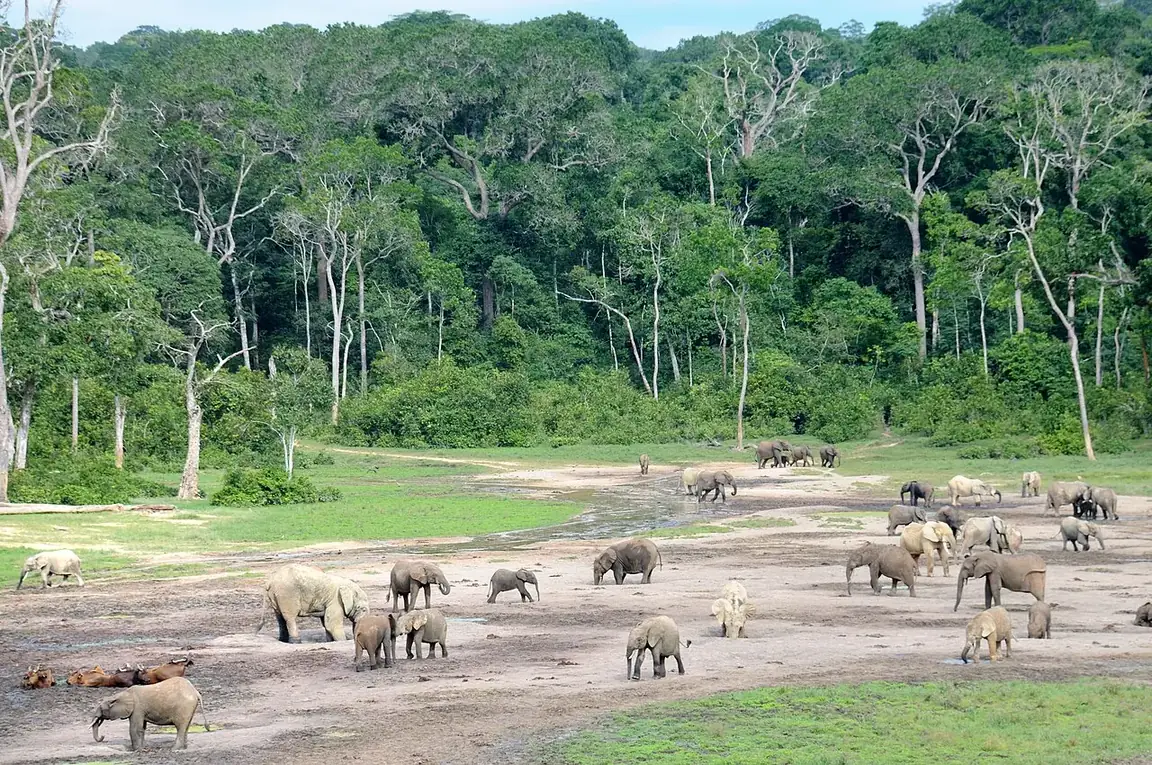 Photo: JosepMGracia · CC BY-SA 4.0
 Central African Republic
Published by Adama Doumbia, founder of Afrique Unie · updated 28 November 2026 · our method and sources
Why go to the Central African Republic
First, an essential word of warning: the Central African Republic has been going through a deep security crisis for more than a decade, and most foreign ministries strongly advise against all travel there. You must check your government's official travel advice before considering anything at all. This page exists to introduce a little-known country, not to encourage you to go there today.
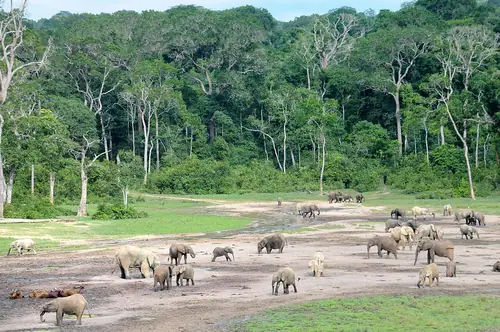
And yet what makes the Central African Republic so remarkable can be summed up in a handful of images. In the south-west, where the Sangha River flows between Cameroon and Congo, lies one of the most intact forests in the whole Congo Basin. Here you find the Dzanga clearing, where dozens of forest elephants come to dig into the ground in search of mineral salts, and families of lowland gorillas patiently habituated to human presence. Few places on the planet let you watch the great forest wildlife with such intimacy, and the site is part of the Sangha Trinational, a UNESCO World Heritage Site.
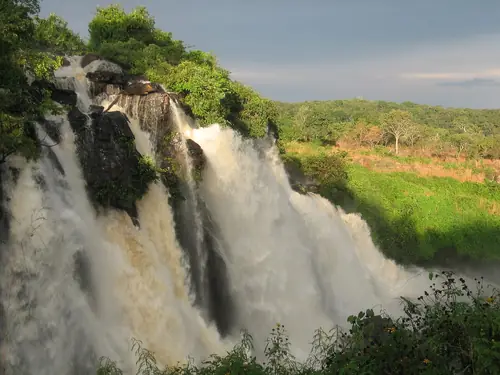
The Central African Republic is also a living, endearing culture: Sango, the national language spoken by almost everyone, which gives the country a rare sense of unity; the polyphonic songs of the Aka, hunter-gatherers of the forest, recognised by UNESCO; dugout canoes gliding across the Ubangi at dusk in Bangui; the Boali waterfalls thundering in the rainy season. When the situation allows, this is a country that would reward patient, curious and respectful travellers, far removed from any kind of mass tourism.
History and culture
Before colonisation, the territory was home to very diverse societies, from forest peoples to the savannah kingdoms of the north, and it was hit hard by slave raids from the north and east in the 19th century. As a French colony under the name of Ubangi-Shari, part of French Equatorial Africa, the region endured the rule of the great concession companies, whose brutality was denounced as early as the 1920s. Barthélemy Boganda, a priest turned politician, championed the dream of independence and a union of Central Africa, but died in a plane crash in 1959, shortly before independence was proclaimed in 1960.
The post-colonial era was marked by coups, including that of Jean-Bedel Bokassa, who had himself crowned emperor in 1977 before being overthrown in 1979. Since 2013, the seizure of Bangui by the Séléka coalition and the violence between armed groups that followed have plunged the country into a lasting humanitarian crisis, despite the presence of a United Nations peacekeeping mission. The vast majority of Central Africans long, above all, for peace and reconstruction.
8 experiences not to miss in the Central African Republic
- 01The Dzanga clearingWatch dozens of forest elephants gathered in a bai from a wooden platform, a spectacle unique in Central Africa.
- 02Tracking gorillasFollow Aka trackers through the Dzanga-Sangha forest to a family of lowland gorillas habituated to humans.
- 03The forest with the AkaJoin Aka hunter-gatherers to learn about foraging, net hunting and their encyclopaedic knowledge of plants.
- 04Polyphonic singingListen to Aka polyphonies, recognised by UNESCO, in which every voice weaves its own melodic line.
- 05The river at BanguiWatch the dugouts cross the Ubangi in the late afternoon, with the bank of the Democratic Republic of the Congo just opposite.
- 06The Boali FallsFeel the power of the Mbali River's cascades, spectacular in the rainy season.
- 07Learning SangoPick up a few words of the national language, such as “Bara ala” to say hello: a gesture that brings out plenty of smiles.
- 08By dugout on the SanghaDrift slowly down the Sangha in the early morning, between walls of forest and the calls of birds.
When to go to the Central African Republic
The climate is tropical, with a dry season running roughly from December to April and a long rainy season for the rest of the year, more pronounced in the south. The dry season has traditionally been the best time: tracks remain passable, getting around is less unpredictable and, in the Dzanga-Sangha forest, elephants flock to the clearings. It is hot all year round, with oppressive humidity in the forest. The Boali Falls, on the other hand, are far more impressive at the end of the rainy season, around September and October. Whatever the season, no plans should be made without first checking official travel advice, which takes precedence over any consideration of climate.
Getting around
Infrastructure is very limited, and insecurity on the roads is one of the main reasons travel is advised against. Bangui M'Poko Airport is the only real international gateway by air. Overland links between Bangui and the rest of the country are long, in poor condition and exposed to armed groups; the Dzanga-Sangha region has historically been reached by charter flights to the Bayanga airstrip, or from neighbouring countries via the Sangha River. When the situation allows, any travel should be done solely as part of a tour run by recognised organisations, with security monitoring, and never independently.
Etiquette and customs
Central Africans attach great importance to greetings: you take time to ask after people before getting down to business, and a handshake, often with the left hand resting on the forearm, is a mark of respect. Sango is understood everywhere, and a few words learnt always go down well. Always ask permission before photographing anyone, and absolutely refrain from photographing official or military buildings, bridges or checkpoints. With Aka communities, discretion is essential: they are your hosts, not a show. Dress modestly, avoid political discussions with strangers and bear in mind that many people have lived through terrible ordeals.
Food and drink in the Central African Republic
The foundation of any Central African meal is gozo, a dense white cassava dough that you roll between your fingers and dip into a sauce. Among the sauces, koko holds a special place: it is made from the leaves of gnetum, a forest vine, finely shredded and simmered with peanut paste, smoked fish or meat. Cassava leaves, known as ngoundja, are prepared in a similar way. On the banks of the Ubangi, Nile perch, grilled or in a sauce, is a great favourite. Palm wine, local beer and coffee, once grown in the country, keep the conviviality flowing. Caterpillars and forest mushrooms round out the table, depending on the season.
 Angola
 Cameroon
 Chad
 DR Congo
 Equatorial Guinea
 Gabon
 Republic of the Congo
 São Tomé and Príncipe