 AfriqueUnie
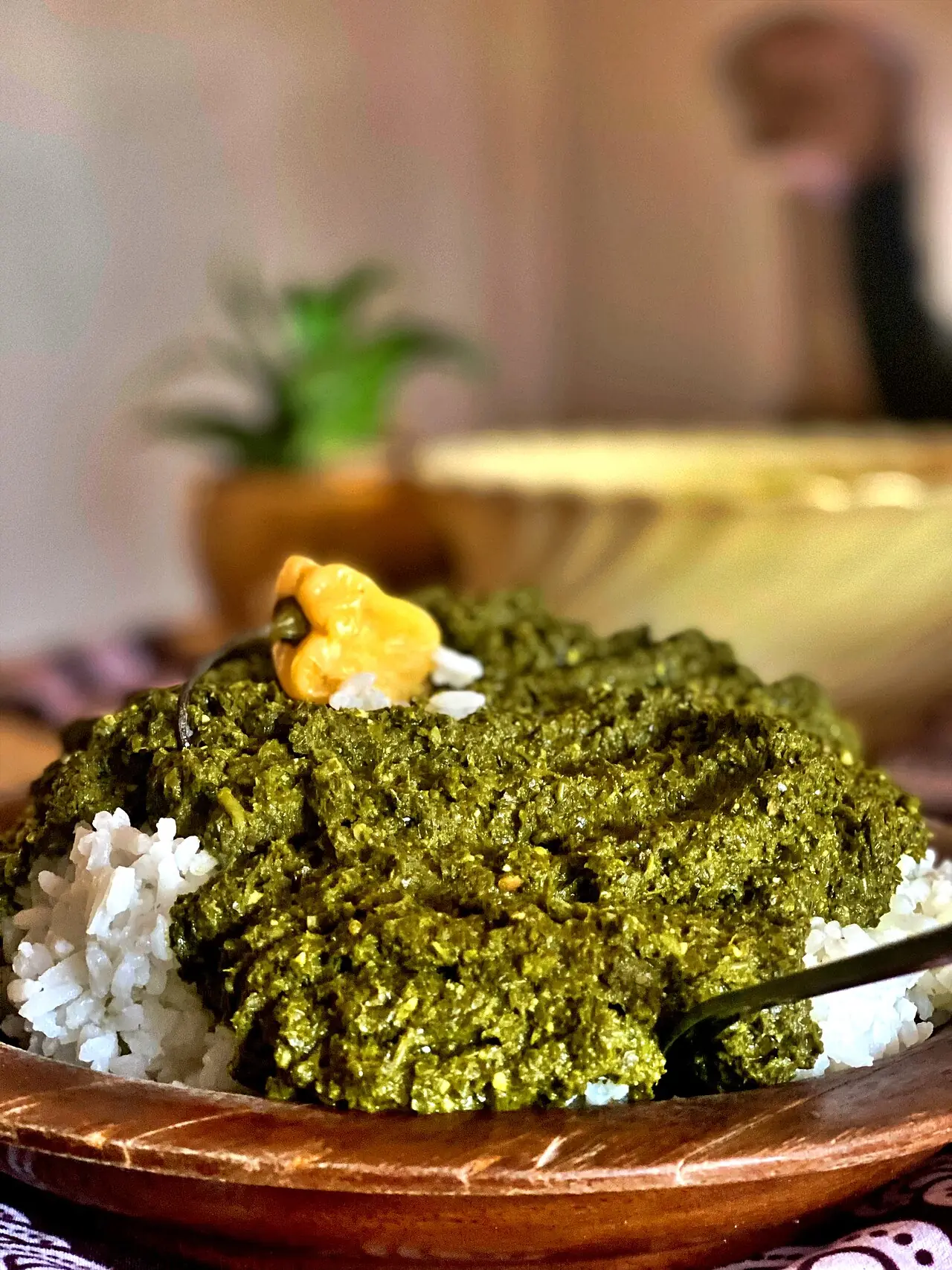 Photo: Mutiganda · CC BY-SA 4.0
Published by Adama Doumbia, founder of Afrique Unie · updated 28 November 2026 · our method and sources
Isombe is one of Rwanda's most typical dishes. It is made from pounded cassava leaves, simmered for a long time with vegetables, then enriched with peanut butter. The result is a thick, silky and fragrant green stew.
The dish is believed to have come from the neighbouring Democratic Republic of the Congo, where cassava leaves are also cooked under the names pondu or saka-saka. It is eaten in Burundi too. In Rwanda, it is part of the midday meal, the main meal of the day.
Isombe is served with rice, beans, plantains, sweet potatoes or ugali, a stiff dough made from maize or cassava flour. Some cooks add dried fish or a meat stock, but the vegetarian version is very common.
Ingredients
For the leaves
- 1 kg (2 lb 4 oz) frozen pounded cassava leaves (pondu or saka-saka), thawed
- 1.5 litres (2 1/2 pints) water
- 1 stock cube (optional)
For the sauce
- 100 ml (3 1/2 fl oz) red palm oil
- 2 onions, sliced
- 3 garlic cloves, chopped
- 1 aubergine, finely diced
- 1 green pepper, finely diced
- 2 tomatoes, diced
- 1 leek, sliced (optional)
- 150 g (5 1/2 oz) smooth unsweetened peanut butter
- 1 whole Scotch bonnet chilli (optional)
- Salt
Method
- Put the cassava leaves in a large pot with the water and stock cube. Bring to the boil.
- Simmer gently for 1 hour with the lid ajar, stirring from time to time. This long cooking is essential: cassava leaves must never be eaten raw or undercooked. Add a little hot water if the mixture starts to catch.
- Meanwhile, heat the palm oil in a large frying pan over a medium heat. Fry the onions and leek for 5 minutes, then add the garlic.
- Add the aubergine and green pepper and fry for 8 minutes, stirring. Stir in the tomatoes and cook for another 5 minutes.
- Tip the vegetables into the pot of cassava leaves. Add the whole chilli, stir and simmer for 20 minutes over a low heat.
- Loosen the peanut butter with a ladleful of the cooking liquid to make a smooth cream. Pour it into the pot and stir well.
- Simmer for another 15 minutes over a very low heat, stirring often, as peanut butter catches easily. The sauce should be thick and glossy. Taste and season with salt.
- Remove the chilli and serve the isombe piping hot, with rice, beans or plantains.
Tips and variations
- Frozen pounded cassava leaves are sold in African grocers, often labelled pondu or saka-saka. Even if they are pre-cooked, still cook them for at least 45 minutes.
- Can't find them? A mix of chopped spinach and kale gives a different but similar-textured sauce. In that case, 20 minutes' cooking for the greens is enough.
- No palm oil? Use groundnut or sunflower oil: the flavour will be less typical and the colour less orange.
- Isombe keeps for 3 days in the fridge and freezes very well. It is often even better the next day.
To serve with it: Serve it with white rice and beans, and a glass of chilled fermented milk (ikivuguto).
Have you tried this recipe?
Be the first to rate it.
Thank you for your rating!
Frequently asked questions
Can cassava leaves be eaten undercooked?
No. Raw, they contain toxic compounds that are destroyed by cooking. They must be boiled for a long time, at least an hour for raw leaves.
What is the difference between isombe and pondu?
They are close cousins, both made from cassava leaves. Rwandan isombe stands out mainly for its peanut butter and vegetables such as aubergine.
Is isombe vegetarian?
Yes, in its basic form. Some families add dried fish, meat or a beef bone stock for extra flavour.
Where can I find cassava leaves in Europe?
In African grocers, in the freezer section, already pounded. They are sometimes sold in tins too.