 AfriqueUnie
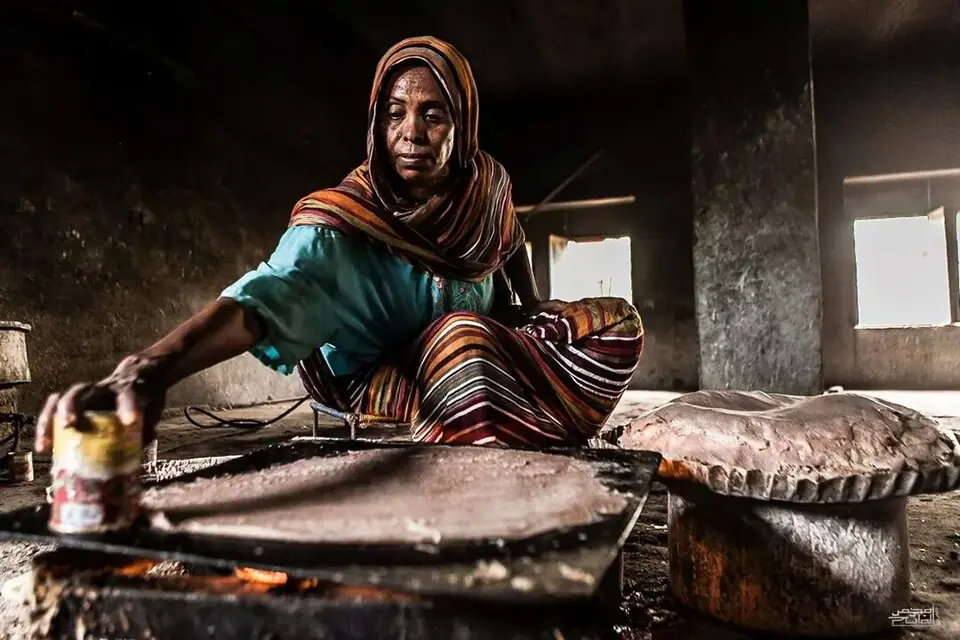 Photo: Mohamed Elfatih Hamadien · CC BY-SA 4.0
Published by Adama Doumbia, founder of Afrique Unie · updated 28 November 2026 · our method and sources
Kisra is often described as the national dish of South Sudan. This very thin flatbread, made from a fermented sorghum batter, is also eaten in Sudan and Chad. It looks like Ethiopian injera and serves as both bread and cutlery: you tear off a piece to scoop up the sauce.
The batter ferments overnight, and the flatbreads are cooked early in the morning on an oiled metal or clay griddle called a douka. It takes only about thirty seconds for a paper-thin sheet to be ready. There is also a thick porridge version, aseeda, served with stews.
South Sudanese cooking, based on sorghum and maize, has been influenced by Arab cuisine. Ful, fava beans simmered with garlic, cumin and lemon, which came from Egypt and is widely eaten in Sudan, is a good example. Together with kisra, it makes a simple, filling and vegetarian meal.
Ingredients
For the kisra (start the day before)
- 400 g (14 oz) sorghum flour
- 700 ml (1 1/4 pints) lukewarm water, plus 100 to 150 ml the next day
- 1 teaspoon salt
- 1/4 teaspoon fast-action dried yeast, optional
- A little oil for the pan
For the ful
- 2 x 400 g (14 oz) tins of cooked fava beans (ful medames beans), plus 150 ml (5 fl oz) water
- 3 garlic cloves
- 1 teaspoon ground cumin
- Juice of 1 lemon
- 4 tablespoons untoasted sesame oil or olive oil
- 1 tomato, finely diced
- 1 small red onion, finely chopped
- 1 green chilli, chopped, optional
- 100 g (3 1/2 oz) salty white cheese such as feta, optional
- Salt
Method
- The day before, mix the sorghum flour, salt and yeast in a large bowl. Gradually whisk in the lukewarm water until you have a smooth, lump-free batter.
- Cover with a tea towel and leave to ferment for 12 to 24 hours at room temperature. The batter is ready when it is covered in small bubbles and smells slightly sour.
- On the day, add 100 to 150 ml (3 1/2 to 5 fl oz) water to the batter to give it the consistency of a thin pancake batter.
- Heat a large non-stick frying pan or crêpe pan over a medium-high heat and grease it lightly with kitchen paper dipped in oil.
- Pour in a small ladle of batter and immediately spread it very thinly with the back of the ladle or a crêpe spreader. Cook for 40 seconds to 1 minute without turning, until the surface is dry and the edges lift.
- Lift the kisra off with a spatula and stack the flatbreads on a clean tea towel, covering them so they stay soft. Repeat until all the batter is used, greasing the pan from time to time.
- Make the ful: tip the beans and their liquid into a pan, add 150 ml (5 fl oz) water and warm through over a low heat for 10 minutes. Mash about half of them with a potato masher or fork.
- Pound the garlic with the cumin and a pinch of salt, add it to the beans with the lemon juice and half the oil. Simmer for 2 minutes, taste and adjust the salt.
- Spoon the ful into bowls, drizzle with the rest of the oil and top with the tomato, onion, chilli and crumbled cheese. Serve with the kisra folded into quarters or rolled up.
Tips and variations
- Sorghum flour is sold in health food shops, African grocers and Indian grocers, where it is labelled jowar. For a batter that is easier to spread, you can swap 100 g (3 1/2 oz) of the sorghum flour for wheat flour.
- Yeast is not traditional: a little batter from a previous batch is normally used as a starter. The yeast simply helps fermentation get going in a cool kitchen.
- If using dried fava beans, soak them for 12 hours, then simmer them for 2 to 3 hours until they mash easily.
- The flatbreads keep for 2 days in the fridge, wrapped in a tea towel and then a bag. Warm them for a few seconds in a hot pan.
To serve with it: Serve with a glass of karkade, the hibiscus infusion much loved in South Sudan, or a cup of coffee.
Have you tried this recipe?
Be the first to rate it.
Thank you for your rating!
Frequently asked questions
What is the difference between kisra and injera?
Both are thin flatbreads made from a fermented batter and cooked on one side only. Ethiopian injera is mostly made with teff, whereas kisra is made with sorghum. Kisra is usually thinner and smaller.
Is kisra gluten-free?
Yes, if you use only sorghum flour, which is naturally gluten-free. Check the packet if you have an intolerance, and do not add wheat flour.
What is kisra eaten with in South Sudan?
With ful, but also with meat and vegetable stews, okra sauces or combo, a dish of spinach, peanut butter and tomatoes.
Can I make the batter in the morning for the evening?
Yes, as long as it ferments for at least 8 to 10 hours in a warm room. The longer it ferments, the more flavour and gentle sourness the kisra will have.