 AfriqueUnie
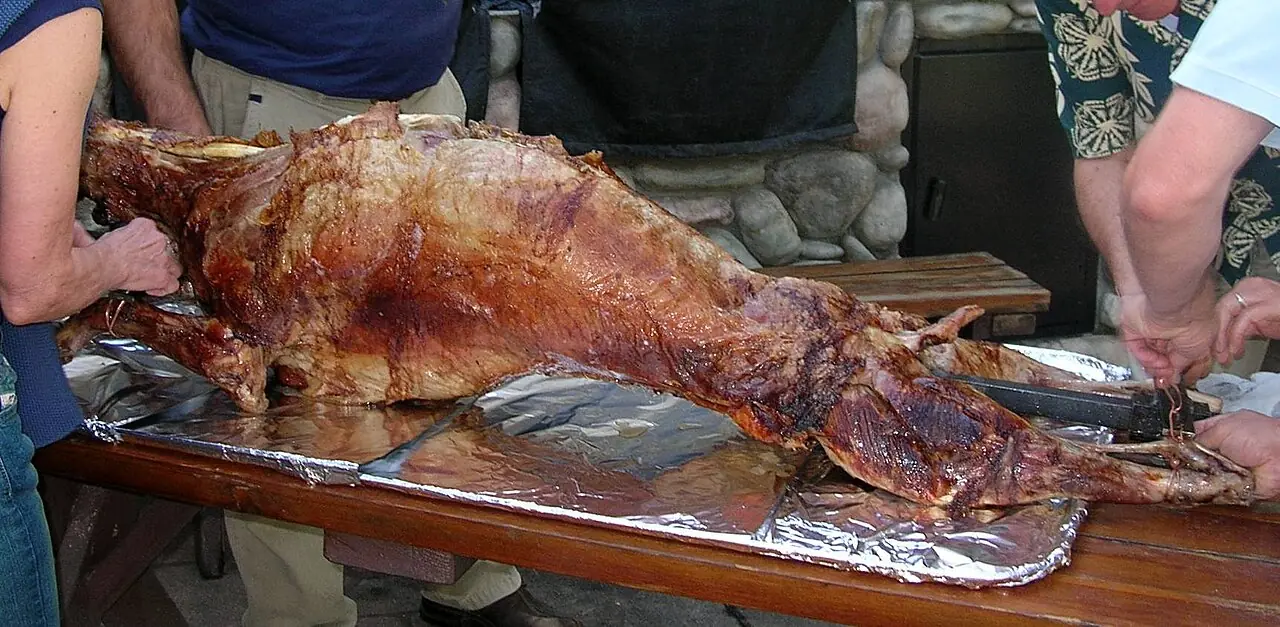 Photo: Andre Piquet · CC BY 3.0
Published by Adama Doumbia, founder of Afrique Unie · updated 28 November 2026 · our method and sources
In Mauritania, nomadic herding of camels, sheep and goats has long shaped the cuisine. In Moorish tradition, meat is served without much fuss, and mechoui, a whole sheep or lamb slowly spit-roasted beside the embers, is the dish for big occasions: religious festivals, weddings and welcoming guests of honour.
The word comes from Arabic and means "grilled" or "roasted". The meat is eaten with the fingers of the right hand, and the host often offers the best pieces to the guests himself. The meal then carries on over mint tea, served in three glasses.
Thieboudienne, the fish and rice dish from neighbouring Senegal, is often named as Mauritania's national dish, especially on the coast. As we already have a recipe for it on our Senegal page, we have chosen mechoui here, which is more representative of Moorish tradition. Without a spit and embers, this version is made in the oven with a shoulder of lamb.
Ingredients
For the lamb
- 1 bone-in shoulder of lamb, about 2 kg (4 lb 8 oz)
- 60 g (2 oz) softened butter (or ghee)
- 4 garlic cloves, crushed
- 1 tablespoon coarse salt
- 1 teaspoon ground black pepper
- 1 teaspoon ground cumin (optional)
- 200 ml (7 fl oz) water
To serve
- 1 teaspoon ground cumin mixed with 1 teaspoon fine salt
- Bread or plain couscous
- 1 onion and tomato salad
Method
- Take the shoulder out of the fridge 1 hour before cooking. Preheat the oven to 160°C (150°C fan).
- Mix the softened butter with the garlic, coarse salt, pepper and cumin. Using the tip of a knife, make about ten shallow cuts in the meat.
- Rub the seasoned butter all over the shoulder, pushing it into the cuts.
- Place the shoulder in a roasting tin, pour the water into the bottom and cover tightly with foil.
- Roast for 3 hours 30 minutes. Every hour, baste the meat with the juices in the tin and add a little water if the bottom becomes dry.
- Remove the foil, turn the oven up to 220°C (200°C fan) and roast for 20 to 30 minutes, basting once or twice, until the outside is golden and crisp.
- Check that it is done: the meat should come away from the bone with a fork, with no resistance at all.
- Leave to rest for 15 minutes under a sheet of foil. Serve whole in the middle of the table, with the cumin salt in a small bowl, the bread or couscous and the salad: everyone pulls the meat off with their fingers.
Tips and variations
- A shoulder of mutton also works very well: it has more flavour but needs an extra 30 to 45 minutes of cooking.
- A leg of lamb can replace the shoulder, but it is leaner: cover it well and baste it more often so that it stays tender.
- On a barbecue with a lid, place the meat beside the embers, never directly above them, and cook it slowly, turning it, as tradition demands.
- Leftovers keep for 3 days in the fridge. Shred the meat and reheat it in a frying pan with a little of the cooking juices.
To serve with it: Finish the meal with three glasses of green mint tea, poured from a height until frothy, the Mauritanian way.
Have you tried this recipe?
Be the first to rate it.
Thank you for your rating!
Frequently asked questions
What is the national dish of Mauritania?
Thieboudienne, the fish and rice dish shared with Senegal, is often named, especially on the coast. But in nomadic Moorish tradition, meat dishes such as mechoui, couscous and camel's milk are the most iconic.
What is the difference between Mauritanian and North African mechoui?
The principle is the same: a lamb slowly roasted. In Moorish tradition, meat is served without much fuss, whereas in North Africa the lamb is often seasoned with spices such as ras el hanout.
Can you make mechoui without a spit?
Yes: a shoulder slow-roasted in the oven at a low temperature and then browned at a high heat gives tender meat very close to traditional mechoui.
How long should a lamb shoulder cook to be tender?
Allow about 3 hours 30 minutes to 4 hours at 160°C (150°C fan), covered, for a 2 kg (4 lb 8 oz) shoulder, then 20 to 30 minutes uncovered to brown it.