The caravan towns of the Adrar, dunes as far as the eye can see, the desert iron-ore train and the Banc d'Arguin: Mauritania is a destination for lovers of the Sahara.
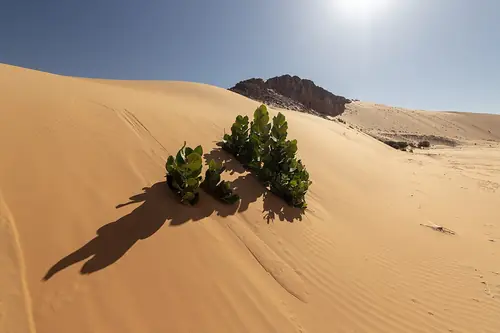
Mauritania speaks to those for whom the desert is not a backdrop but a destination in its own right. Here the Sahara is not a day trip from a beach resort: it covers most of the country, and you travel through it slowly, by 4x4 or on foot behind a camel caravan, sleeping in a tent or under the stars. The dunes of the Adrar change colour by the hour, from the off-white of morning to the coppery orange of evening, and the silence has a depth you will rarely forget.
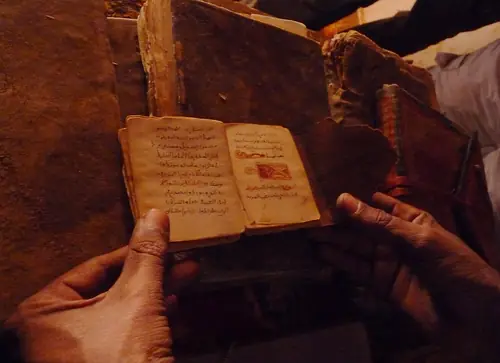
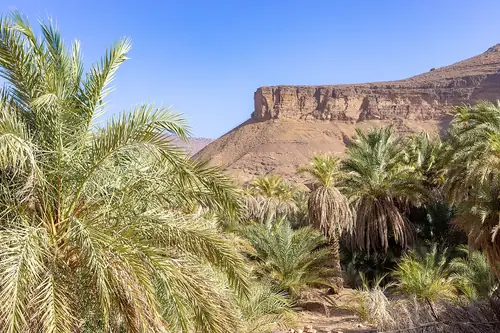
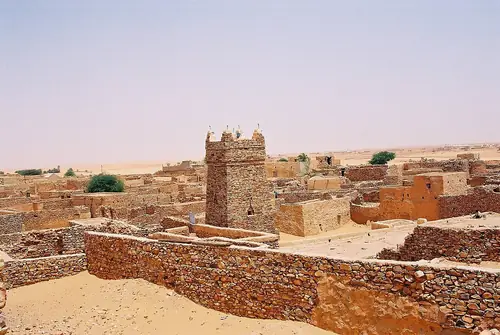
Out of this mineral landscape rise the caravan towns that made the fortune of trans-Saharan trade. Chinguetti, Ouadane, Tichitt and Oualata, inscribed together as a World Heritage Site, have kept their dry-stone houses, their mosques with square minarets and, above all, family libraries where ancient manuscripts on theology, law, astronomy and poetry lie sleeping. Between towns, you stop at oases such as Terjit, where a warm spring flows in the shade of palm trees at the bottom of a narrow canyon.
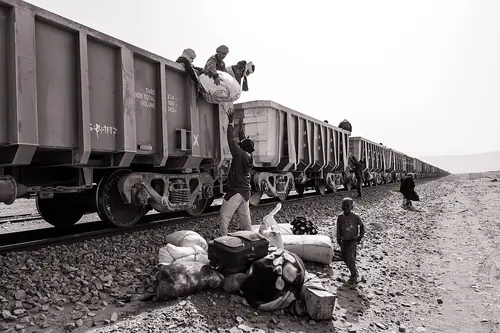
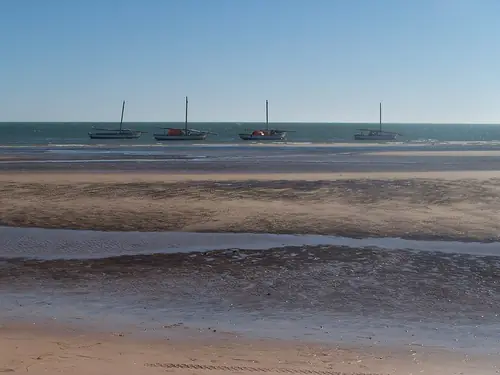
The country also offers experiences you won't find anywhere else. The iron ore train, one of the longest in the world, links the mines of Zouérat to the port of Nouadhibou across the desert, and some adventurous travellers climb aboard for an unforgettable night. On the coast, Banc d'Arguin National Park welcomes hundreds of thousands of migratory birds in a setting where the dunes plunge into the Atlantic. And everywhere, the Moorish culture of hospitality, tea served in three glasses, Hassaniya poetry and the great woollen tents welcome travellers with quiet generosity. A word of caution, though: some regions in the east and north-east, close to the borders, remain advised against. Check the risk maps in your government's official travel advice before planning your itinerary.
History and culture
Mauritania was inhabited long before it became desert, as rock engravings and Neolithic remains in the Adrar and Tagant show. From around the 8th century, caravan routes carried salt, gold and ideas across it. In the 11th century, the Almoravid movement, born among the Sanhaja Berber tribes of the western Sahara, set out from this region to conquer Morocco and part of Spain. Koumbi Saleh, in the south-east, is often identified as one of the capitals of the ancient Ghana Empire.
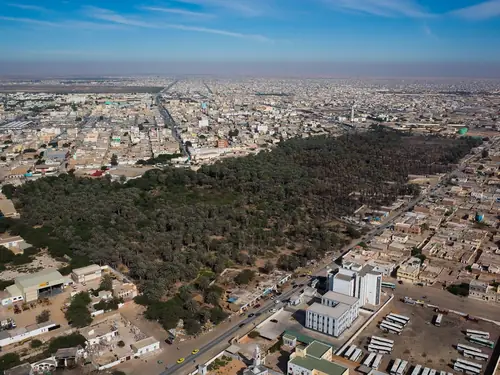
The following centuries saw the gradual Arabisation of the region, the formation of emirates such as those of Adrar and Trarza, and the rise of the scholarly towns. Colonised by France at the beginning of the 20th century, Mauritania became independent in 1960, with Nouakchott, then a mere village, as its capital. The country has since been through droughts, rapid urbanisation and several changes of regime, while developing iron mining, fishing and, more recently, offshore gas.
8 experiences not to miss in Mauritania
Photo : Valerian Guillot · CC BY 2.001Sleep in the dunes of the AdrarSpend a night in a tent or under the stars, after watching the sun set over the ridges of sand.
Photo : Ji-Elle · CC BY-SA 3.002Visit a library in ChinguettiListen to a manuscript keeper explain the history of works handed down in his family for generations.
Photo : Ben Kawam · CC BY-SA 4.004Ride the desert trainExperience the night crossing on the ore train, a tough adventure that needs careful preparation.
Photo : Kokopelado · CC BY-SA 3.005Birdwatch at Banc d'ArguinSail aboard a lanche, a traditional Imraguen sailing boat, among flamingos and pelicans.
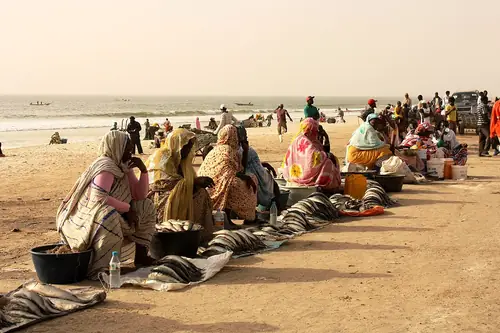
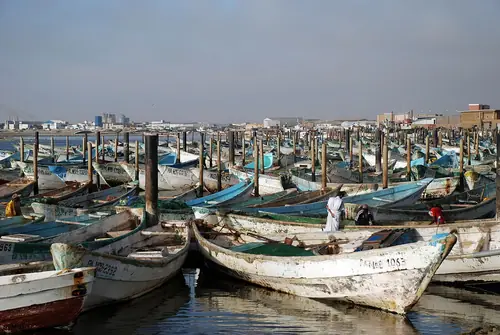
Photo : Uzabiaga · CC BY-SA 4.006Watch the fishermen come inIn Nouakchott, see the colourful pirogues hauled up the beach in the late afternoon amid spectacular commotion.
07Walk the lanes of OuadaneClimb through the old stone town tiered up its hillside, facing the palm groves.
08Share the three teasAccept the tea ritual, in which the first glass is said to be bitter like life, the second sweet like love and the third gentle like death.
When to go to Mauritania
The best time is November to March: days are hot and sunny but bearable in the desert, and the nights are cool, even downright cold in the Adrar in December and January, so you will need plenty of warm layers. This is also the season when you see the most migratory birds at Banc d'Arguin. From April to October the heat inland becomes extreme, often above 45 °C, and sandstorms are frequent. The coast, cooled by the trade winds and the ocean, stays more temperate all year round. During Ramadan, the pace of the country slows during the day.
Getting around
Distances are vast and public transport is limited to a few routes. A tarmac road links Nouakchott to Atar, your base for Chinguetti and Ouadane; another runs along the coast to Nouadhibou. Bush taxis and minibuses cover these routes. For the desert, the most common option is to hire a 4x4 with a driver-guide, or to join an organised camel trek. In some seasons, direct flights from Europe serve Atar. Police and gendarmerie checkpoints are frequent, so keep photocopies of your passport on you. Check the official risk maps, as some border areas are off limits or advised against.
Etiquette and customs
Mauritania is an Islamic republic where religion shapes daily life. Alcohol is forbidden, clothing should be modest, and women travellers would do well to wear a light headscarf in religious places and villages. People greet each other at length, often starting with “salam aleykoum”, and you should accept tea, as refusing is seen as an offence. It is customary to stay for all three glasses. In a tent, take off your shoes, sit on the rugs without showing the soles of your feet, and eat with your right hand. Always ask before taking photographs, especially of women.
Food and drink in Mauritania
Mauritanian cuisine blends Moorish and West African influences. Thiéboudienne, rice with fish and vegetables from neighbouring Senegal, is very popular along the river and on the coast. In the desert and at celebrations, méchoui, slow-roasted lamb, or grilled camel meat is served with rice or couscous. Camel's milk, fresh or curdled, is a precious drink that you will gladly be offered, as are the dates of the Adrar. But the true heart of the table remains green mint tea, prepared at length and poured from a height to form a thick froth.
The best time to visit Mauritania: November to March.
What should I see first in Mauritania?
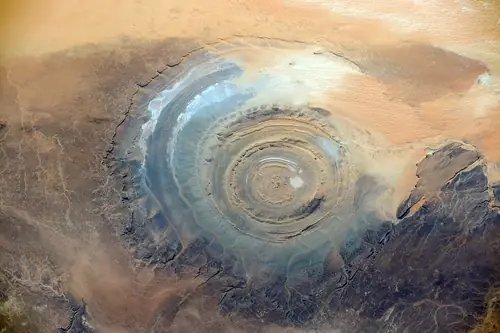
The must-sees: Chinguetti, Richat Structure, Banc d'Arguin National Park.
Which cities should I visit in Mauritania?
Nouakchott, Atar, Nouadhibou. The capital is Nouakchott.
How much should I budget for a trip to Mauritania?
Mid-range: around €60–120 per person per day, excluding flights. This is only a guide and depends above all on the accommodation and activities you choose.
What currency and languages are used in Mauritania?
The main international airport has the code NKC. Compare flights with the ‘Flights’ button on this page.
Do I need a visa to visit Mauritania?
Entry requirements depend on your nationality and change regularly. Check them on the country's official website or with your foreign ministry before booking, and make sure your passport is valid.
What should I eat in Mauritania?
Dishes to try while you're there: Thieboudienne, méchoui, mint tea.
Map
Mauritania on the map
Cities Places to see · Approximate positions
On the ground
Getting around and staying healthy
Getting around
Mauritania Airlines operates domestic flights from Nouakchott, notably to Nouadhibou and Zouérat. The paved Nouakchott–Nouadhibou road is served by minibuses and bush taxis, and there are many checkpoints along the way, so carry photocopies of your passport to hand over. SNIM's iron-ore train between Nouadhibou, Choum and Zouérat takes passengers, with no reservations or fixed timetable, an adventure best left to well-prepared travellers. For the Adrar (Atar, Chinguetti, Ouadane), a 4x4 with driver is essential; driving is on the right.
Health and safety
Yellow fever
Certificate required only if you arrive from, or transited through, a country with a risk of yellow fever (from 1 year, incl. airport transits over 12 h); vaccine: recommended south of the Sahara; not recommended for travel limited to the Sahara.
Malaria
Present in some areas (everywhere except Dakhlet Nouadhibou and Tiris Zemmour): ask a doctor depending on your itinerary.
Water and food
Unless your accommodation says otherwise, drink sealed bottled or filtered water, and wash your hands often.
Source: US CDC, November 2026. Rules change: see a travel health clinic before you leave, and the UK Foreign Office travel advice for safety.
Useful numbers
Local emergency numbers
Police: 117 or 17 Ambulance: 101 Fire: 118 or 18 Gendarmerie: 119. Police: 117 (FCDO, Viaggiare Sicuri) or 17 (France Diplomatie); fire brigade: 118 (FCDO) or 18 (France Diplomatie, Viaggiare Sicuri). The authorities may not respond.
Affiliate cookiesWe would like to load a script from our partner Travelpayouts. It may set cookies so that we receive a commission when you book through our links, at no extra cost to you. If you decline, the site works in exactly the same way. Find out more
 AfriqueUnie
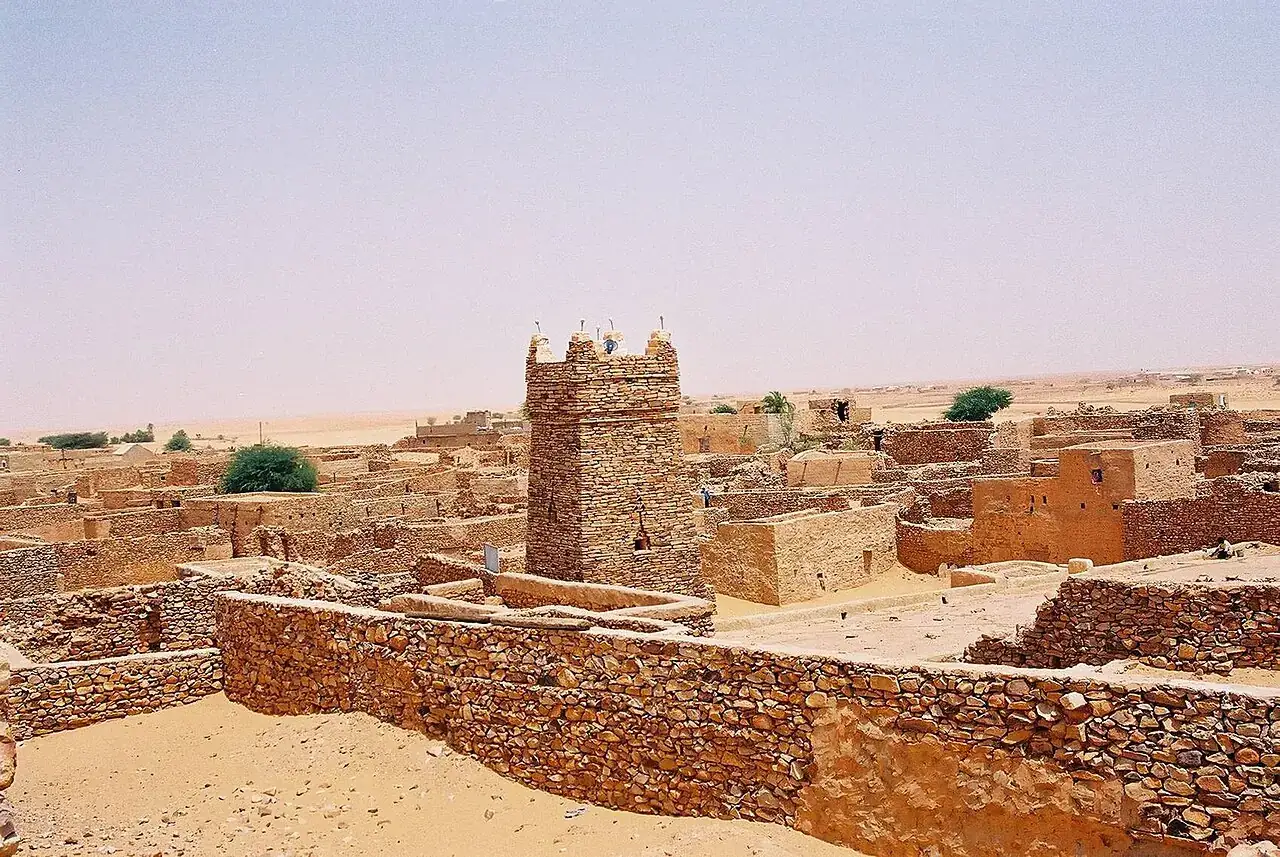 Photo: François COLIN · CC BY-SA 2.5
 Mauritania
 Benin
 Burkina Faso
 Cape Verde
 Côte d'Ivoire
 Ghana
 Guinea
 Guinea-Bissau
 Liberia
 Mali
 Niger
 Nigeria
 Senegal
 Sierra Leone
 The Gambia
 Togo