 AfriqueUnie
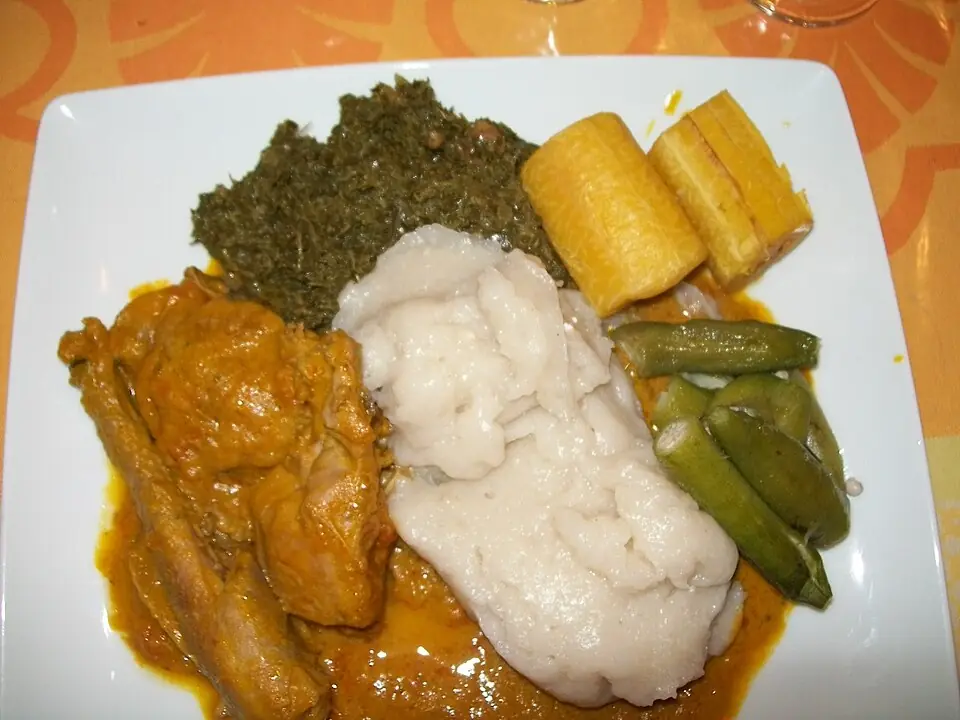 Photo: Rui Gabriel Correia · CC BY-SA 3.0
Published by Adama Doumbia, founder of Afrique Unie · updated 28 November 2026 · our method and sources
Muamba de galinha (also spelt moamba) is often described as Angola's national dish, along with funge, the cassava dough that almost always goes with it. In Portuguese, galinha means hen or chicken, and muamba is the name of the palm nut sauce.
The chicken simmers in red palm oil and palm nut paste, with plenty of garlic, onions, tomatoes, squash and okra, which thickens the sauce. Gindungo chilli, much loved in Angola, gives it a kick. A variant, moamba de ginguba, swaps the palm nut for a peanut sauce.
The dish belongs to a large Central African family that includes moambe from the two Congos and nyembwe chicken from Gabon. It is cooked for family meals and celebrations, and today it can also be found in Portugal, home to a large Angolan community.
Ingredients
For the chicken
- 1 chicken of about 1.6 kg (3 1/2 lb), cut into 10 pieces
- 2 lemons
- 5 garlic cloves, crushed
- 2 bay leaves
- Salt and black pepper
For the sauce
- 100 ml (3 1/2 fl oz) red palm oil
- 200 g (7 oz) tinned palm nut cream, optional
- 2 onions, sliced
- 3 ripe tomatoes, diced
- 400 g (14 oz) butternut squash or pumpkin, cubed
- 250 g (9 oz) okra, trimmed and halved
- 1 or 2 hot chillies (gindungo, piri-piri or bird's eye), chopped
- 500 ml (18 fl oz) water
For the funge
- 400 g (14 oz) cassava flour
- 1 litre (1 3/4 pints) water
Method
- Put the chicken pieces in a bowl with the lemon juice, garlic, bay leaves, salt and pepper. Mix well and leave to marinate in the fridge for at least 1 hour.
- Heat the palm oil in a large casserole over a medium heat. Drain the chicken, keeping the marinade, then brown it for 8 to 10 minutes, turning the pieces.
- Add the onions and soften them for 5 minutes. Then add the tomatoes, chilli and marinade and cook for 5 minutes.
- Pour in the water and, if using, the palm nut cream loosened with a little hot liquid. Bring to the boil, cover and simmer for 25 minutes over a low heat.
- Add the squash and cook for 15 minutes.
- Add the okra and cook for another 15 minutes, uncovered, stirring gently. The sauce should thicken and turn orange.
- Check the chicken is cooked: the meat should come away from the bone and the juices from the largest pieces should run clear. Taste and adjust the salt.
- During the last 15 minutes, make the funge: bring the water to the boil, take it off the heat and sprinkle in the cassava flour, stirring hard with a wooden spatula.
- Return to a low heat and work the dough for 5 minutes, until it is smooth, stretchy and translucent grey.
- Serve the muamba piping hot, with the funge shaped into balls using a wet ladle.
Tips and variations
- Unrefined red palm oil is sold in African and Brazilian grocery shops (as azeite de dendê). It gives the dish its colour and flavour, so do not replace it.
- If you do not like the texture of okra, cook the pods whole without cutting them: they thicken the sauce less but stay firm.
- Funge can be replaced with white rice, the other common side dish in Angola. In the south of the country, pirão, a cornmeal dough, is more usual.
- Muamba keeps for 3 days in the fridge and freezes well. If you plan to freeze some, set that portion aside before adding the okra, and add the okra when reheating. Funge is best made just before serving.
To serve with it: Serve it with funge or white rice, plus beans cooked in palm oil (feijão de óleo de palma) for a festive meal.
Have you tried this recipe?
Be the first to rate it.
Thank you for your rating!
Frequently asked questions
Is it muamba or moamba?
Both spellings exist and refer to the same dish. Moamba de galinha is also widely used in books and on menus in Angola.
What is funge?
Funge is a dough made from cassava flour, gelatinous and grey in colour, which goes with most Angolan dishes. It tastes neutral and is used to scoop up the sauce.
What is the difference between muamba de galinha and moambe chicken?
They belong to the same family. The Angolan version relies mainly on red palm oil, garlic and okra, while Congolese moambe is often richer in palm nut or peanut paste.
Is muamba de galinha very spicy?
It has some heat, but you can adjust the chilli to taste. In Angola, people like to add gindungo, a hot chilli sauce, at the table.