 AfriqueUnie
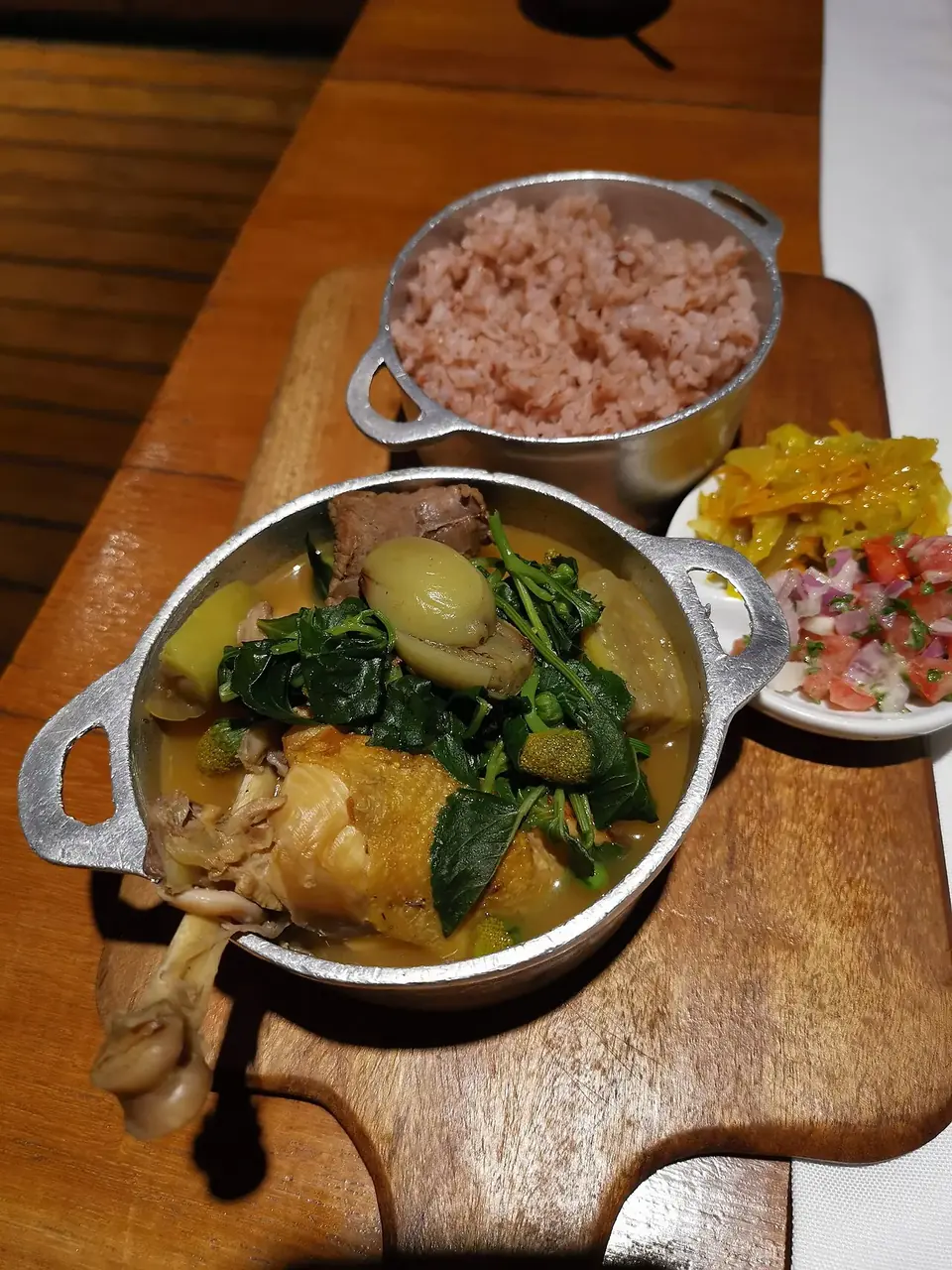 Photo: Z thomas · CC BY-SA 4.0
Published by Adama Doumbia, founder of Afrique Unie · updated 28 November 2026 · our method and sources
Romazava is regarded as the national dish of Madagascar. It is a meat broth, traditionally made with zebu, cooked with tomatoes, onion, ginger and above all several kinds of brèdes, the leafy greens cooked all over the Indian Ocean islands. It is also made in the Comoros.
Its star is brède mafane (paracress), whose leaves and little yellow flowers create a gentle tingling on the tongue and lips. That sensation, surprising the first time, is what defines romazava. Anamamy (black nightshade) and petsai (Chinese cabbage) are often added too. In Malagasy, ro means broth and mazava means clear: romazava is a light broth, not a thick sauce.
In Madagascar, rice, or vary, is eaten at almost every meal, and romazava is ladled over it in a deep plate. It is both an everyday dish and a family feast, and one of the first things the Malagasy diaspora asks for on returning home.
Ingredients
For the meat
- 1 kg (2 lb 4 oz) stewing beef (chuck, shin or short rib), in 3 cm (1 1/4 in) cubes
- 2 tablespoons vegetable oil
- 1 large onion, sliced
- 3 garlic cloves, crushed
- 4 cm (1 1/2 in) piece of fresh ginger, grated
- 4 ripe tomatoes, diced
- 1.5 litres (2 1/2 pints) water
- 1 teaspoon salt and black pepper
For the greens
- 1 bunch of brède mafane (paracress), fresh or frozen, from Indian Ocean or Asian grocers
- 1 bunch of watercress
- 200 g (7 oz) Chinese cabbage or pak choi, sliced
- 200 g (7 oz) spinach or mustard greens
To serve
- 500 g (1 lb 2 oz) white rice (short or long grain)
- Sakay (chilli paste) or tomato rougail, on the side
Method
- Heat the oil in a large casserole. Brown the beef in two batches, 5 minutes per batch, so it colours well on all sides.
- Add the onion and fry for 5 minutes. Add the garlic and ginger, then the tomatoes. Cook for 5 minutes, stirring, until soft.
- Pour in the water and add the salt and pepper. Bring to the boil, skim, then cover and simmer gently for 1 hour 15 minutes to 1 hour 30 minutes, until the meat is very tender.
- Meanwhile, wash all the greens thoroughly. Remove the tough stalks from the watercress and spinach. Roughly chop the leaves and slice the Chinese cabbage.
- Cook the rice: rinse it, then cook it in about 1.5 times its volume of water, covered, over a low heat for 15 to 18 minutes. Leave to stand, covered, for 5 minutes.
- When the meat is tender, check the broth: there should still be plenty. Add a little hot water if needed.
- Add the Chinese cabbage and mustard greens first, as they are firmer, and cook for 5 minutes. Then add the paracress, watercress and spinach and cook, covered, for another 5 to 8 minutes. The leaves should be tender but still green.
- Taste and adjust the seasoning. Serve the romazava piping hot in deep plates, over or beside the rice, with sakay on the side for those who like heat.
Tips and variations
- Paracress is sold fresh or frozen in Asian and Réunion Island grocers, sometimes as spilanthes or 'toothache plant'. Without it, a small pinch of ground Sichuan pepper added at the end recreates some of its tingling effect.
- Beef is a perfect stand-in for zebu. It is also made with chicken, fish or prawns.
- Go easy on the fat: romazava should stay a clear broth, true to its name.
- Romazava keeps for 2 days in the fridge. The greens lose some colour when reheated, so for a fresher result reheat the meat and broth, then add a handful of fresh leaves.
To serve with it: It is always served with white rice, often with ranovola, a lightly toasted rice water made in the rice pot.
Have you tried this recipe?
Be the first to rate it.
Thank you for your rating!
Frequently asked questions
Why does paracress make my tongue tingle?
Its leaves and flowers contain a natural compound called spilanthol, which causes a gentle tingling and makes you salivate. It is harmless and fades within a few minutes.
What can I use instead of Malagasy greens?
A mix of watercress, spinach, pak choi and mustard greens gets very close. Add a pinch of Sichuan pepper to mimic the tingle of paracress.
Is romazava spicy?
No, the broth is mild and flavoured with ginger. The heat comes from sakay, a chilli paste served on the side for everyone to add to taste.
What does romazava mean?
In Malagasy, ro is the broth served with rice and mazava means clear. The name describes a light, clear broth.