 AfriqueUnie
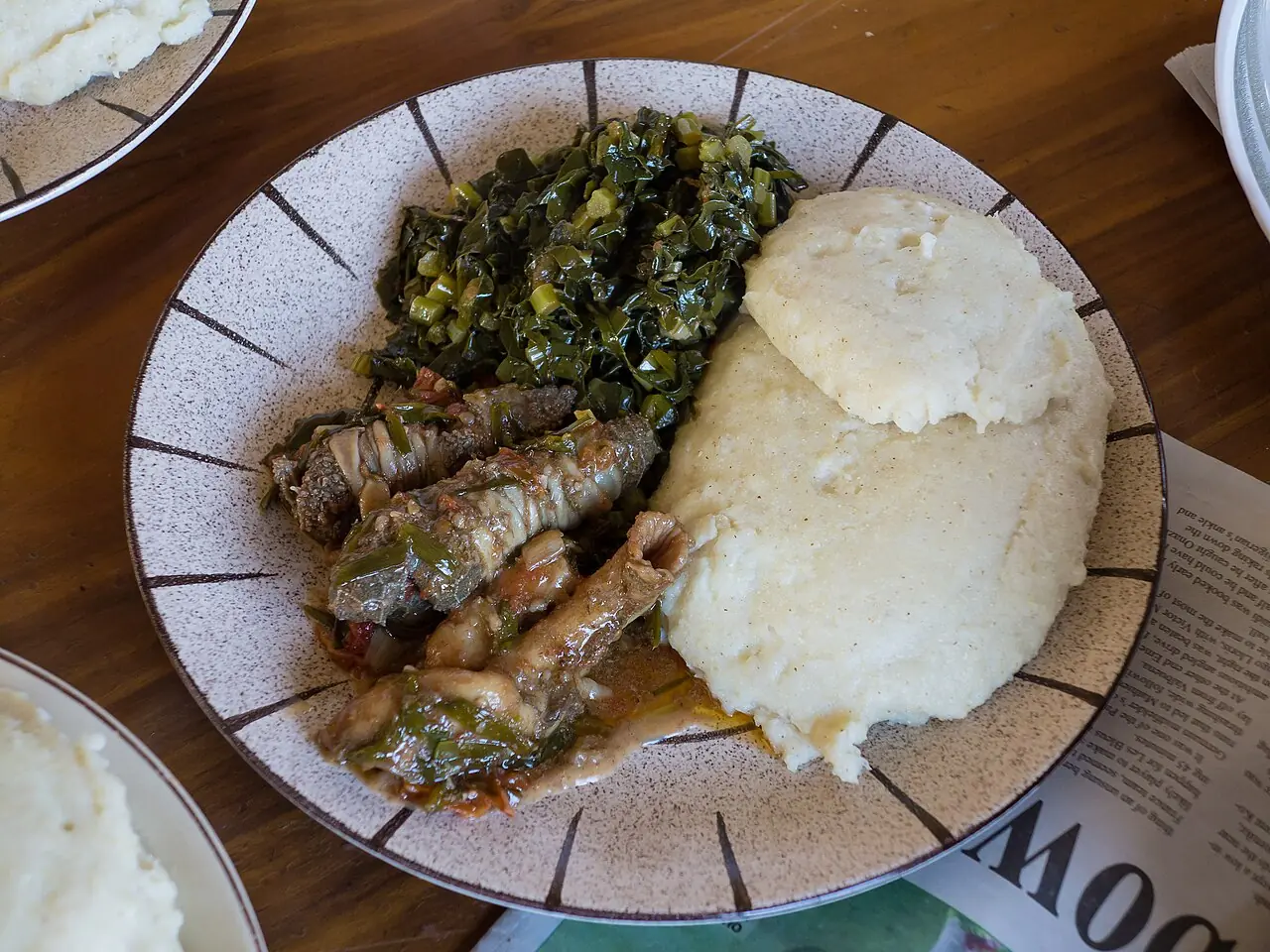 Photo: Tamuka Hwami · CC BY-SA 4.0
Published by Adama Doumbia, founder of Afrique Unie · updated 28 November 2026 · our method and sources
Sadza is Zimbabwe's staple food. This Shona word means a firm paste of white maize flour; in Ndebele it is called isitshwala. Most families eat it for both lunch and dinner. Before maize arrived, it was made with millet or sorghum.
Sadza comes with what is known as relish: leafy greens, beans, dried fish or meat. Nyama simply means meat in Shona, and beef stewed with tomato and onion is one of the most common ways to serve it. At weddings, graduations and big family gatherings, a goat or a cow is often slaughtered for the occasion.
In the past, the whole family ate sadza from one shared bowl, a custom that lives on in rural areas. You take it with your right hand, roll it into a small ball and dip it into the sauce.
Ingredients
For the nyama (beef stew)
- 800 g (1 lb 12 oz) braising beef (chuck, shin or short rib), cut into 3 cm (1 1/4 in) cubes
- 1 teaspoon salt
- 600 ml (1 pint) water
- 2 tablespoons vegetable oil
- 2 onions, sliced
- 2 garlic cloves, chopped
- 3 ripe tomatoes, diced
- 1 teaspoon curry powder, optional
- 1 beef stock cube, plus 200 ml (7 fl oz) hot water
- 1 green pepper, sliced, optional
For the greens (optional)
- 300 g (10 oz) kale or collard greens
- 1 small onion
- 1 tomato
- 1 tablespoon oil
- A pinch of salt
For the sadza
- 1 litre (1 3/4 pints) water
- 400 g (14 oz) fine white maize meal (mealie meal)
Method
- Put the beef in a casserole dish with the salt and 600 ml of water. Bring to the boil, skim, then cover and simmer gently for 1 hour 15 minutes, until the meat is tender.
- Take off the lid and let the remaining water evaporate almost completely. Add the oil and brown the pieces of meat for 5 minutes, turning them.
- Add the onions and green pepper and fry for 5 minutes, then the garlic and curry powder for 1 minute.
- Add the tomatoes and the stock cube dissolved in the 200 ml of hot water. Cover and simmer for 15 minutes, stirring now and then, until the sauce is thick. Taste and adjust the salt.
- Meanwhile, make the greens: roll up the leaves and cut them into thin strips. Fry the onion and tomato in the oil for 3 minutes, add the greens and salt, then cover and cook for 5 to 8 minutes.
- For the sadza, pour the water into a heavy-based pan. Take out a glass of the cold water, mix 100 g of the maize meal into it and pour it back into the pan. Bring to the boil, stirring, then cook for 5 minutes until you have a porridge.
- Add the rest of the maize meal little by little, stirring hard with a wooden spoon. Press the paste against the sides of the pan until it is firm and smooth.
- Cover and cook for another 4 to 5 minutes over a very low heat, then stir one last time.
- Shape portions of sadza with a wet spoon and serve with the hot nyama and the greens.
Tips and variations
- Choose a cut of beef meant for slow cooking, with a little fat and plenty of connective tissue: it will stay tender. In a pressure cooker, step 1 takes about 30 minutes.
- In Zimbabwe, greens are often made with chomolia, a local leafy green. Kale, collard greens or spinach are good substitutes.
- White maize meal is sold in African grocery shops. Yellow polenta will do at a push, but the sadza will be yellower and sweeter.
- Nyama keeps for 3 days in the fridge and freezes very well. It is often even better the next day.
To serve with it: Serve with a bowl of soured milk, mukaka wakakora, which Zimbabweans also love to eat with sadza.
Have you tried this recipe?
Be the first to rate it.
Thank you for your rating!
Frequently asked questions
What does nyama mean?
Nyama means meat in Shona. In Zimbabwe, the word can refer to a beef stew as well as grilled goat or chicken.
What is the difference between sadza and fufu?
Sadza is made from maize flour cooked in water. West African fufu is often made from pounded cassava, plantain or yam.
What else is sadza eaten with?
With beans, leafy greens, soured milk, kapenta (small dried fish also called matemba) or grilled boerewors sausages.
Can sadza be made ahead?
It is much better freshly cooked. Make the stew first, then cook the sadza last, just before eating.