 AfriqueUnie
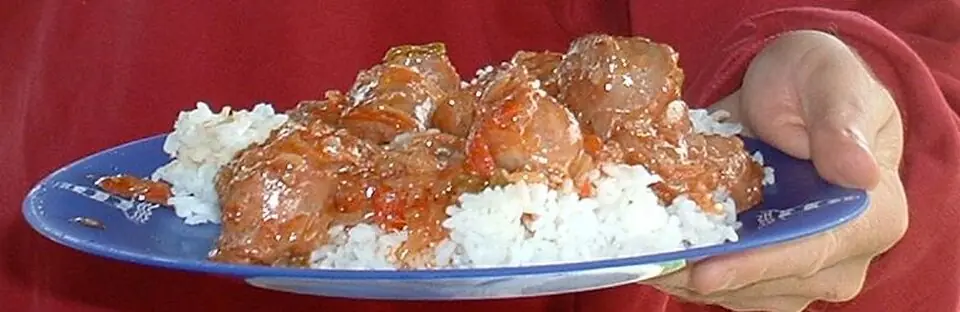 Photo: The original uploader was Kikitoul at French Wikipedia · CC BY-SA 3.0
Published by Adama Doumbia, founder of Afrique Unie · updated 28 November 2026 · our method and sources
Rougaille is one of the great classics of Mauritian Creole cooking. It is a tomato sauce simmered with onions, garlic, ginger, thyme and chilli, in which sausages, fish, meat, eggs or vegetables are cooked. In Mauritius, tomatoes are even known as pomme d'amour, or love apples.
The word is thought to come from Tamil, a language of southern India, and the dish sums up the island's influences: a French base scented with thyme, spices from India and the Creole love of chilli. It is cooked for a quick weekday lunch as well as for a Sunday family meal.
On neighbouring Réunion it is usually spelt rougail, and sausage rougail is a real institution there. The two islands enjoy teasing each other over who makes the best one: we will not take sides, but here is the Mauritian version, generous with tomatoes and fresh herbs.
Ingredients
For the rougaille
- 1 kg (2 lb 4 oz) chicken or pork sausages, fresh or smoked
- 3 tablespoons oil
- 2 onions, sliced
- 4 garlic cloves
- 3 cm (1 1/4 in) piece of fresh ginger
- 1 kg (2 lb 4 oz) very ripe tomatoes, chopped
- 1 tablespoon tomato purée
- 4 sprigs of thyme
- 1 or 2 green chillies, slit
- 100 ml (3 1/2 fl oz) water
- 1 small bunch of flat-leaf parsley or coriander, chopped
- 2 spring onions, sliced
- Salt and black pepper
To serve
- 450 g (1 lb) white rice
Method
- Prick the sausages with a fork. Drop them into a pan of simmering water for 5 minutes to remove excess fat and salt, then drain and cut into 3 cm (1 1/4 in) pieces.
- Pound or blend the garlic and ginger with a pinch of salt to make a paste.
- Heat the oil in a deep frying pan or casserole and brown the sausages for 8 to 10 minutes, stirring. Lift them out with a slotted spoon.
- In the same oil, fry the onions for 6 to 8 minutes until golden. Add the garlic and ginger paste, the thyme and the chillies and stir for 1 minute without letting it burn.
- Add the tomatoes and tomato purée, season lightly with salt and pepper. Cook for 10 minutes over a medium heat, stirring, until the tomatoes break down into a thick sauce.
- Return the sausages, pour in the water, cover and simmer gently for 15 minutes. Remove the lid and let it reduce for 5 minutes. The sausages must be cooked right through, with no pink left inside.
- Meanwhile, rinse the rice and cook it the way you usually do.
- Off the heat, remove the thyme sprigs and scatter over the parsley or coriander and spring onions. Taste, adjust the salt and serve piping hot with the rice.
Tips and variations
- Out of season, use two 400 g (14 oz) tins of chopped peeled tomatoes instead of fresh ones and reduce the sauce a little longer.
- For fish rougaille, fry 800 g (1 lb 12 oz) of firm fish steaks (tuna, swordfish), set them aside and add them to the sauce 5 minutes before the end. With salt cod, soak it the day before and change the water several times.
- For more heat, serve mazavarou, the Mauritian chilli paste, at the table, or a crushed chilli in a little oil.
- Rougaille keeps for 3 days in the fridge and is even better reheated.
To serve with it: Serve it with white rice, slow-cooked lentils and a pomme d'amour chatini (tomato chutney), just as in Mauritius.
Have you tried this recipe?
Be the first to rate it.
Thank you for your rating!
Frequently asked questions
Is it rougaille or rougail?
Both spellings exist. In Mauritius it is often spelt rougaille; on Réunion, rougail is more common. Either way, it is a Creole dish based on spicy tomato sauce.
Which sausages should I use for rougaille?
Chicken or pork sausages, fresh or smoked. Smoked ones give more flavour. Always blanch them for a few minutes before browning.
Is rougaille very spicy?
It has a kick but is not fiery: the chillies are slit, not chopped. Everyone then adds as much chilli as they like at the table.
What do Mauritians eat rougaille with?
Most often with white rice, lentils and a chatini. It is also tucked into bread or a faratha, a flatbread cooked on a griddle.