 AfriqueUnie
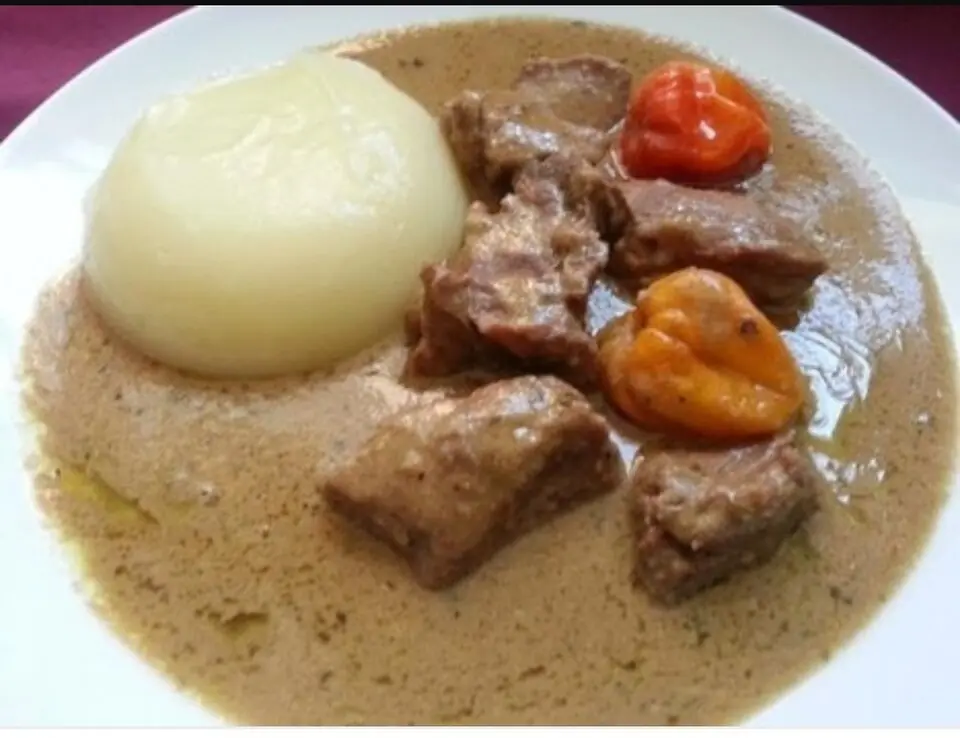 Photo: Marshiayers · CC0
Published by Adama Doumbia, founder of Afrique Unie · updated 28 November 2026 · our method and sources
In Mali it is called tiguadege na, which means peanut paste sauce in Bambara (tiga: peanut, dege: paste, na: sauce). Elsewhere in West Africa and in Europe it is better known as maafe or mafé, a word generally traced back to Wolof.
The stew is generally linked to the Mandinka and Bambara peoples, and it has spread across the whole region, from Senegal to Guinea and as far as Cameroon. Peanuts, grown widely in the Sahel, are at its heart: they make a thick, creamy and slightly sweet sauce.
It is usually made with beef or lamb, sometimes with chicken, and served with white rice. It is an everyday dish as well as a celebration one, warming and filling enough for the whole family.
Ingredients
For the meat
- 1 kg (2 lb 4 oz) stewing beef (chuck or shin), in 4 cm (1 1/2 in) cubes
- 3 tablespoons groundnut oil
- 2 onions, chopped
- 4 garlic cloves, crushed
- Salt and pepper
For the sauce
- 250 g (9 oz) pure peanut paste or unsweetened smooth peanut butter
- 3 ripe tomatoes, blended
- 2 tablespoons tomato purée
- 1 whole Scotch bonnet chilli
- 1 bay leaf
- 1 stock cube, crumbled
- 1.5 litres (2 1/2 pints) hot water
For the vegetables
- 3 carrots, cut into chunks
- 1 sweet potato, in large cubes
- 1/4 white cabbage, in wedges
- 1 piece of cassava or yam (optional)
To serve
- 500 g (1 lb 2 oz) white rice
Method
- Season the beef with salt and pepper. Heat the oil in a large casserole and brown the cubes on all sides, in batches, for about 8 minutes.
- Add the onions and garlic and fry for 5 minutes, stirring. Stir in the tomato purée and the blended tomatoes and cook for 10 minutes.
- Pour in 1 litre (1 3/4 pints) of hot water and add the bay leaf and stock cube. Cover and simmer gently for 45 minutes.
- Meanwhile, loosen the peanut paste with the remaining 500 ml of hot water, a little at a time, until you have a smooth cream with no lumps.
- Pour this cream into the casserole and stir well. Add the whole chilli, taking care not to burst it.
- Add the carrots, cassava or yam and sweet potato. Simmer, covered, for 30 minutes, stirring from time to time, as peanut sauce catches easily.
- Add the cabbage and cook uncovered for another 20 minutes. The sauce is ready when it has thickened and a thin layer of oil rises to the surface.
- Meanwhile, cook the rice. Taste the sauce, adjust the salt, remove the chilli and serve the tiguadege na piping hot over the rice.
Tips and variations
- Choose pure peanut paste with no added sugar or oil, sold in African grocers and health food shops. Sweetened peanut butter changes the taste.
- The beef can be swapped for lamb (same cooking time) or chicken (allow 45 minutes cooking in total).
- For a meat-free version, simmer just the vegetables with a few okra pods and some chickpeas.
- It keeps for 3 days in the fridge and freezes well. Add a little water when reheating, as the sauce thickens as it cools.
To serve with it: Serve it with white rice and a glass of ginger juice or bissap (hibiscus drink).
Have you tried this recipe?
Be the first to rate it.
Thank you for your rating!
Frequently asked questions
What is the difference between tiguadege na and maafe?
They are two very similar dishes that are often confused. Tiguadege na is the Bambara name of the Malian peanut sauce, while maafe, a word traced back to Wolof, became the usual name in Senegal and then in Europe; the traditional Malian version is often more liquid. Recipes mostly vary from one family to the next.
Can I use peanut butter?
Yes, as long as it is plain, with no added sugar or salt. Otherwise the sauce will be too sweet.
Why does the sauce stick to the bottom?
Peanut paste is rich and thick. Cook it over a low heat and stir regularly, scraping the bottom of the pot.
Is this dish safe for people with allergies?
No, it contains a lot of peanut. Always tell your guests, as peanut allergy can be serious.