 AfriqueUnie
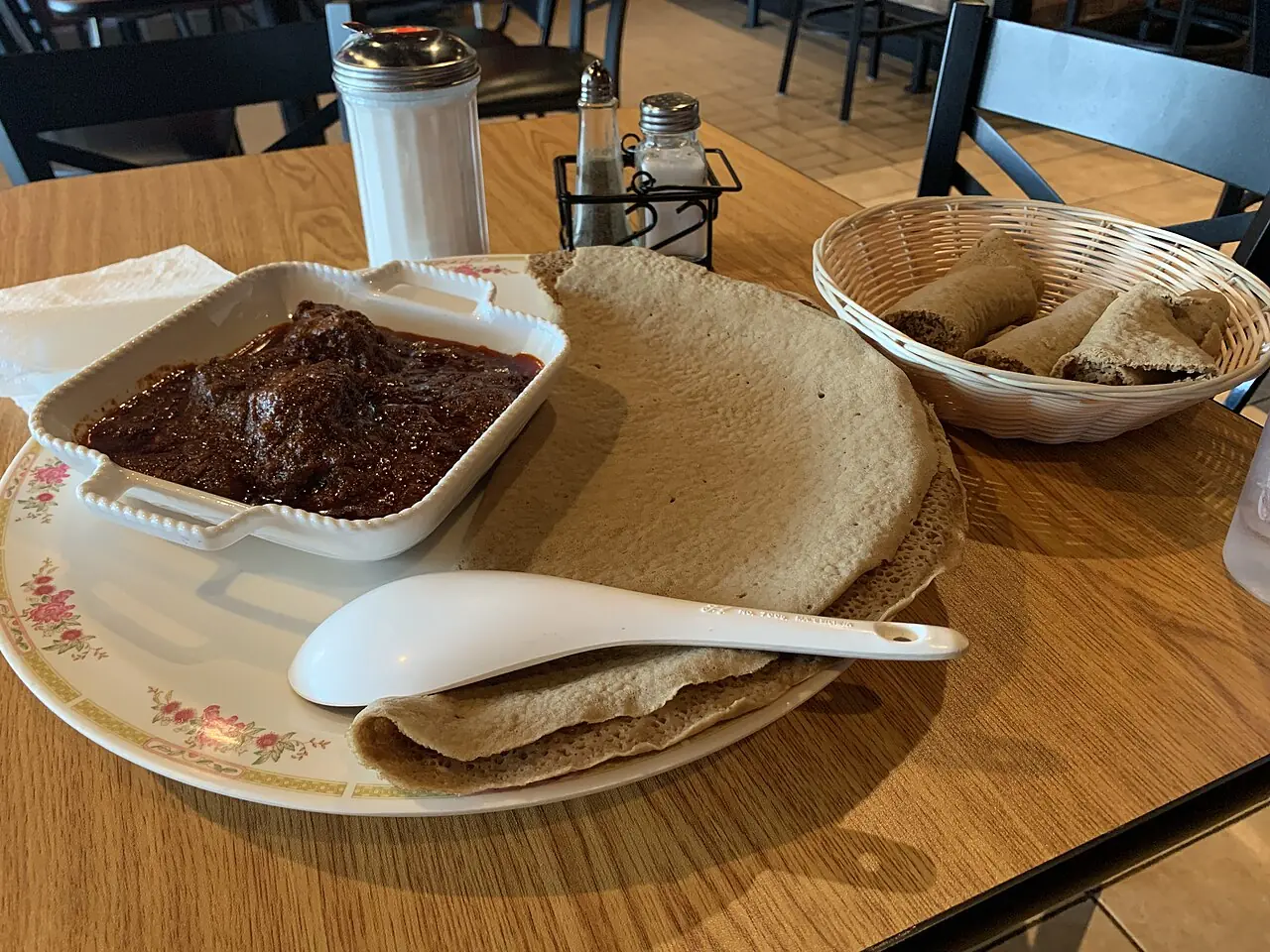 Photo: LittleT889 · CC BY-SA 4.0
Published by Adama Doumbia, founder of Afrique Unie · updated 28 November 2026 · our method and sources
Zigni is regarded as the national dish of Eritrea. It is a tsebhi, or stew, made with meat (most often beef), red onions, tomatoes and berbere, the chilli spice blend that gives it its red colour. In neighbouring Ethiopia, a very similar dish goes by the Amharic name key wat (red stew): the two countries share a long culinary history.
It is never eaten on its own: it is served on injera, a large, thin, spongy flatbread made from teff flour, with a slightly sour taste from one to three days of fermentation. Diners share a large tray and tear off pieces of injera to scoop up the meat and sauce, traditionally with the right hand.
Tomato, used more than in Ethiopia, reflects the Italian influence in Eritrea. Because it takes a long time to cook, zigni is sometimes kept for special occasions, celebrations and family meals.
Ingredients
For the stew
- 1 kg (2 lb 4 oz) braising beef (chuck), cut into 2 to 3 cm (1 in) cubes
- 800 g (1 lb 12 oz) red onions, very finely chopped
- 6 tablespoons tesmi (spiced clarified butter), ghee or oil
- 3 to 4 tablespoons berbere
- 4 garlic cloves, chopped
- A 3 cm (1 1/4 in) piece of fresh ginger, grated
- 2 tablespoons tomato purée
- 3 ripe tomatoes, blended
- 500 ml (18 fl oz) hot water
- Salt
To serve
- 6 to 8 injera
- Plain yoghurt, to cool things down (optional)
Method
- Put the chopped onions in a large casserole with no fat. Cook over a medium heat for 15 minutes, stirring often, until soft and their liquid has evaporated. Add a spoonful of water if they start to catch.
- Add the tesmi and cook for 5 minutes. Stir in the berbere and fry for 3 to 4 minutes over a low heat, stirring constantly, so that it releases its aroma without burning.
- Add the garlic and ginger, then the tomato purée. Stir for 2 minutes.
- Pour in the blended tomatoes and cook for 10 minutes, until the sauce thickens and the fat starts to rise to the surface.
- Add the meat, stir to coat it well in the sauce and cook for 5 minutes.
- Pour in the hot water, season with salt, cover and simmer over a low heat for 1 hour 30 minutes to 1 hour 45 minutes, stirring from time to time. Add a little water if the sauce becomes too thick.
- The zigni is ready when the meat is very tender and the thick, glossy sauce coats the pieces well. Taste and adjust the salt.
- Lay an injera on a large tray, spoon the zigni into the centre and serve with the remaining injera rolled up on the side, plus a bowl of yoghurt for anyone wary of the heat.
Tips and variations
- Berbere and injera are sold in Ethiopian and Eritrean grocers, which are increasingly common in large European cities.
- To make injera yourself, mix 250 g (9 oz) teff flour with 500 ml (18 fl oz) water, cover and leave to ferment for 2 to 3 days at room temperature. Cook the batter in a thin layer in a large non-stick pan, on one side only, covered, for 2 to 3 minutes, until the top is covered in tiny holes.
- No tesmi? Melt unsalted butter with a little garlic, ginger, fenugreek and cardamom, then strain it. Plain ghee or oil also work.
- Zigni keeps for 3 days in the fridge and for 1 month in the freezer in an airtight container. It is even better reheated.
To serve with it: Serve it on injera and finish the meal with Eritrean coffee, traditionally brewed in a clay coffee pot (jebena).
Have you tried this recipe?
Be the first to rate it.
Thank you for your rating!
Frequently asked questions
What is the difference between zigni and Ethiopian key wat?
They are two very close versions of the same red berbere stew. Eritrean zigni often uses more tomato and a little less spiced butter, which makes it slightly lighter.
What is injera?
It is a large, thin flatbread made from teff, a tiny grain from East Africa. The batter ferments for several days, giving it a slightly sour taste and a surface full of holes that soaks up the sauce.
Is zigni very hot?
It is spicy, but you can adjust the berbere: start with 2 tablespoons and add more to taste.
Can I serve it with something other than injera?
Yes. Rice, bread or a wheat flatbread work very well, but injera remains the traditional accompaniment.