 AfriqueUnie
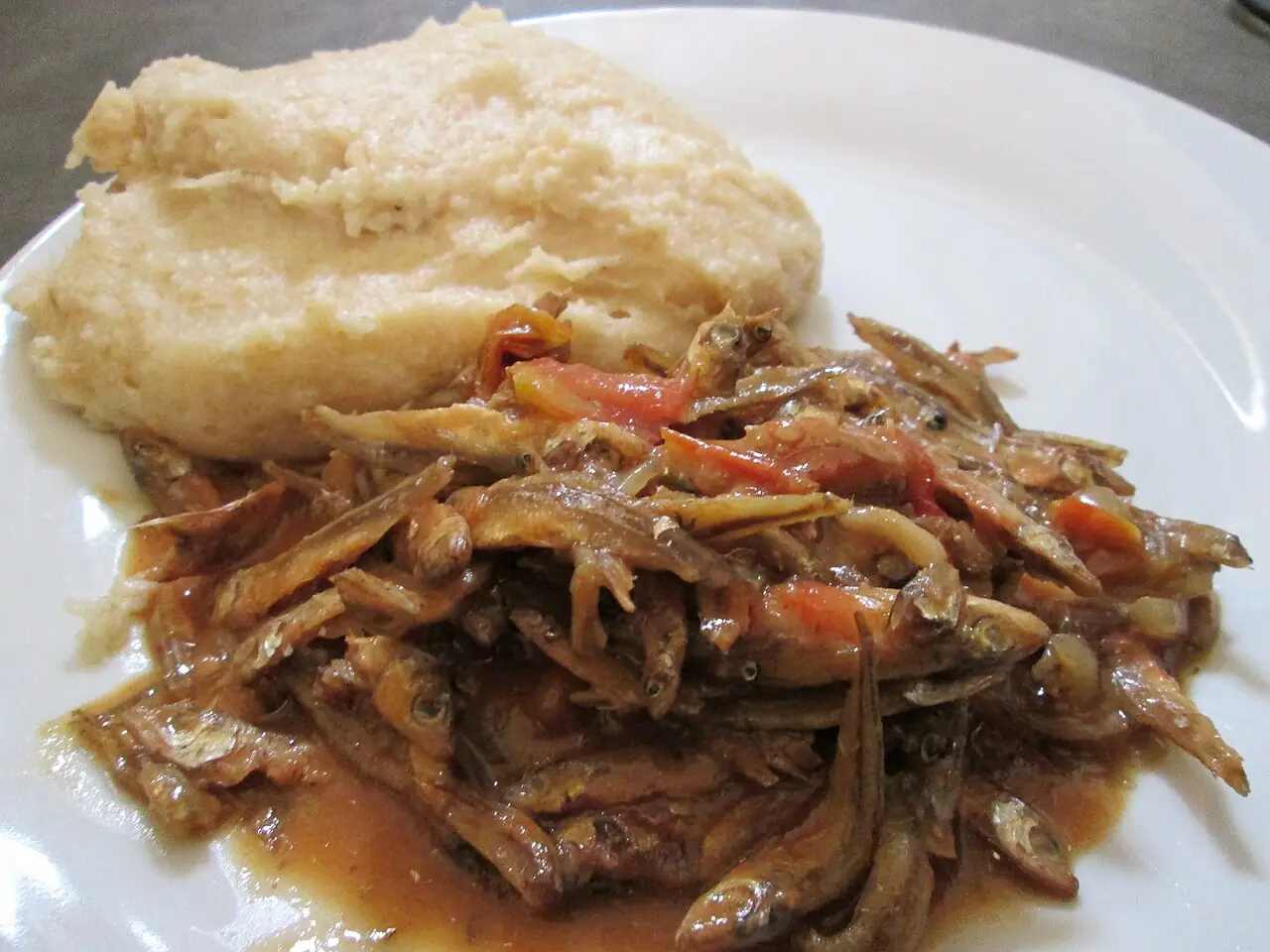 Photo: Simz711 · CC BY-SA 4.0
Published by Adama Doumbia, founder of Afrique Unie · updated 28 November 2026 · our method and sources
In Zambia, a proper meal means nshima, the stiff porridge made from white maize flour, served with a dish known as relish. One of the most popular relishes is kapenta: tiny freshwater fish, dried in the sun, then fried and simmered with tomatoes and onions. Cheap, high in protein and easy to store, it is found on tables and in markets all over the country.
Kapenta are small freshwater sardines that originate in Lake Tanganyika; one species, Limnothrissa miodon, was successfully introduced into Lake Kariba, on the border between Zambia and Zimbabwe. They are fished at night by attracting them with lights, then dried in the sun. The same fish is popular in Malawi, where it is eaten with nsima, and in Zimbabwe, where it is served with sadza.
Ingredients
For the kapenta
- 250 g (9 oz) dried kapenta (or small dried anchovies)
- 4 tablespoons vegetable oil
- 2 onions, thinly sliced
- 4 ripe tomatoes, grated or chopped (or a 400 g tin of chopped tomatoes)
- 1 green pepper, in strips (optional)
- 1 small fresh chilli, chopped, or 1/2 teaspoon chilli flakes (optional)
- 1 teaspoon curry powder (optional)
- Salt
For the nshima
- 400 g (14 oz) fine white maize meal (mealie meal)
- 1.2 litres (2 pints) water
Method
- Put the dried kapenta in a bowl and cover with warm water. Leave to soak for 10 minutes, then rinse under running water, stirring, to remove any sand and excess salt. Drain thoroughly.
- Heat the oil in a deep frying pan over a medium heat. Add the drained kapenta and fry for 6 to 8 minutes, stirring often, until golden and slightly crisp.
- Add the onions and green pepper and fry for 5 minutes until the onions are soft.
- Add the tomatoes, and the chilli and curry powder if using. Stir well.
- Cover and simmer over a low heat for 10 minutes, stirring now and then, until the tomatoes have broken down into a thick sauce. Add 2 or 3 tablespoons of water if it starts to catch.
- Taste before adding salt: dried kapenta is often already salty. Adjust the seasoning.
- Meanwhile, make the nshima: mix a third of the maize meal into the cold water, bring to the boil while stirring and let it thicken for 5 minutes. Gradually add the rest of the meal, working it hard with a wooden spoon, until you have a firm, smooth paste, then cook for 3 to 4 minutes, covered, over a low heat.
- Shape the nshima into portions with a wet spoon and serve it alongside the kapenta. It is eaten with the right hand: roll a small ball of nshima, press a dip into it with your thumb and use it to scoop up the kapenta and sauce.
Tips and variations
- Dried kapenta is sold in African grocers, sometimes under the name matemba. Otherwise, use small dried anchovies from Asian shops, or fresh whitebait, simply dusted in flour and fried before adding to the sauce.
- For crispier kapenta, fry it on its own and set it aside, make the tomato and onion sauce separately and mix them at the last minute.
- Fine white maize meal (mealie meal or ugali flour) is sold in African grocers. You will find all the details on nshima in our nshima and ifisashi recipe.
- Kapenta in tomato keeps for 2 days in the fridge. Reheat it in a frying pan with a splash of water.
To serve with it: Serve with nshima and a dish of greens, such as cabbage or pumpkin leaves, or ifisashi.
Have you tried this recipe?
Be the first to rate it.
Thank you for your rating!
Frequently asked questions
What is kapenta?
Kapenta are small freshwater sardines that originate in Lake Tanganyika and are now also fished in Lake Kariba. They are mostly sold whole and sun-dried.
Does kapenta need to be gutted?
No. The fish are so small that they are eaten whole, heads included. A short soak followed by a good rinse is all they need.
Does kapenta taste strong?
It has a fairly pronounced dried-fish flavour, which frying and the tomato sauce soften a lot. A slightly longer soak reduces the saltiness and intensity further.
What can I serve instead of nshima?
Kenyan ugali, Zimbabwean sadza or white polenta are very similar. Kapenta is also eaten with rice.
Another recipe from Zambia: Nshima and ifisashi