 AfriqueUnie
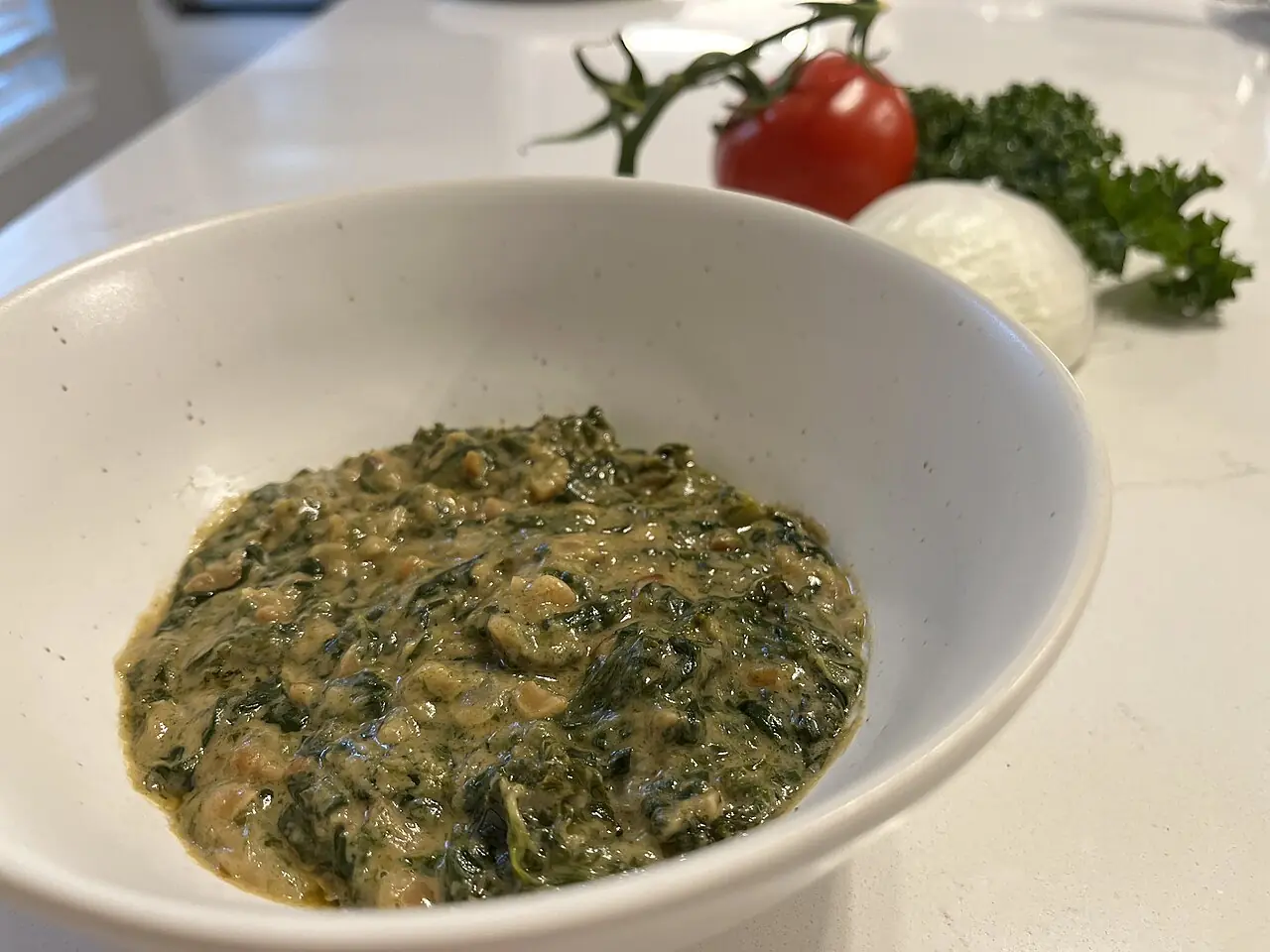 Photo: LittleT889 · CC BY 4.0
Published by Adama Doumbia, founder of Afrique Unie · updated 28 November 2026 · our method and sources
Nshima is Zambia's staple food: a thick, smooth paste of white maize flour, also called ubwali. It is eaten at lunch and dinner, almost every day. Maize reached Africa from the Americas in the 16th and 17th centuries and only gradually replaced sorghum and millet, which had long been used for this kind of porridge.
Nshima is never eaten on its own. It always comes with one or more side dishes known as relish: meat, fish, beans or vegetables. One of the best loved is ifisashi, leafy greens simmered with ground peanuts, tomatoes and onion. It is a vegetarian dish, although meat can be added.
To eat it, you take a small piece of nshima in your right hand, roll it into a ball, press a little hollow into it with your thumb, then use it like a spoon to scoop up the sauce.
Ingredients
For the ifisashi
- 150 g (5 oz) unsalted roasted peanuts
- 500 g (1 lb 2 oz) leafy greens: spinach, kale, pumpkin leaves or sweet potato leaves
- 1 onion, chopped
- 2 ripe tomatoes, finely diced
- 400 ml (14 fl oz) water
- 1 tablespoon groundnut oil, optional
- 1 fresh chilli, optional
- 1 teaspoon salt
For the nshima
- 1 litre (1 3/4 pints) water
- 400 g (14 oz) fine white maize meal (mealie meal)
Method
- Pulse the peanuts in a blender until you have a fine powder. Stop before it turns into a paste.
- Wash the greens, remove any tough stalks and shred them finely. If using pumpkin leaves, also peel off the fibres on the back of the leaves.
- Bring the 400 ml of water to the boil in a saucepan with the oil. Add the onion, tomatoes and chilli, then cook for 5 minutes.
- Sprinkle in the ground peanuts, stirring all the time. Cook for 5 minutes over a low heat until the sauce turns creamy.
- Add the greens and salt, cover and simmer for 15 to 20 minutes, stirring often as peanuts catch easily. The ifisashi is ready when the greens are soft and the sauce is nice and thick. Keep it warm.
- For the nshima, pour the litre of water into a heavy-based pan. Take out a glass of this cold water, mix 100 g of the maize meal into it, then pour the mixture back into the pan.
- Bring to the boil, stirring, then cook for 5 to 8 minutes over a medium heat until you have a smooth, thin porridge.
- Add the rest of the maize meal a handful at a time, working it hard with a flat wooden spoon. Press the paste against the sides of the pan to break up any lumps. Stop when it is firm, smooth and comes away from the sides (you may not need all the meal).
- Cover and cook for another 3 to 5 minutes over a very low heat, then give it one last stir.
- Dip a large spoon in cold water and shape the nshima into oval portions. Serve straight away with the hot ifisashi.
Tips and variations
- Fine white maize meal is sold in African grocery shops as white maize meal or mealie meal. Yellow polenta will do at a push, but the taste and colour will be different.
- No roasted peanuts? Use 120 g (4 oz) plain peanut butter with no added sugar or salt, loosened with a little hot water.
- Spinach and kale are good stand-ins for pumpkin and sweet potato leaves, which are easier to find in Africa.
- Ifisashi keeps for 2 days in the fridge and reheats well with a splash of water. Nshima is much better freshly made.
To serve with it: In Zambia, the meal often also includes kapenta, small dried fish fried with tomato and onion.
Have you tried this recipe?
Be the first to rate it.
Thank you for your rating!
Frequently asked questions
What is the difference between nshima, ugali and sadza?
They are essentially the same dish: a firm paste of white maize flour. It is called nshima in Zambia, nsima in Malawi, sadza in Zimbabwe and ugali in Kenya and Tanzania.
Is ifisashi vegetarian?
Yes, the basic recipe contains only vegetables and peanuts. You can, however, stir in some cooked chicken or beef.
How do I stop nshima from going lumpy?
Mix part of the maize meal with cold water first, then add the rest gradually, pressing the paste against the sides of the pan with a flat spoon.
Can nshima be eaten with cutlery?
Of course, but traditionally it is eaten with the right hand, rolled into small balls and dipped into the sauce.
Another recipe from Zambia: Kapenta with nshima