 AfriqueUnie
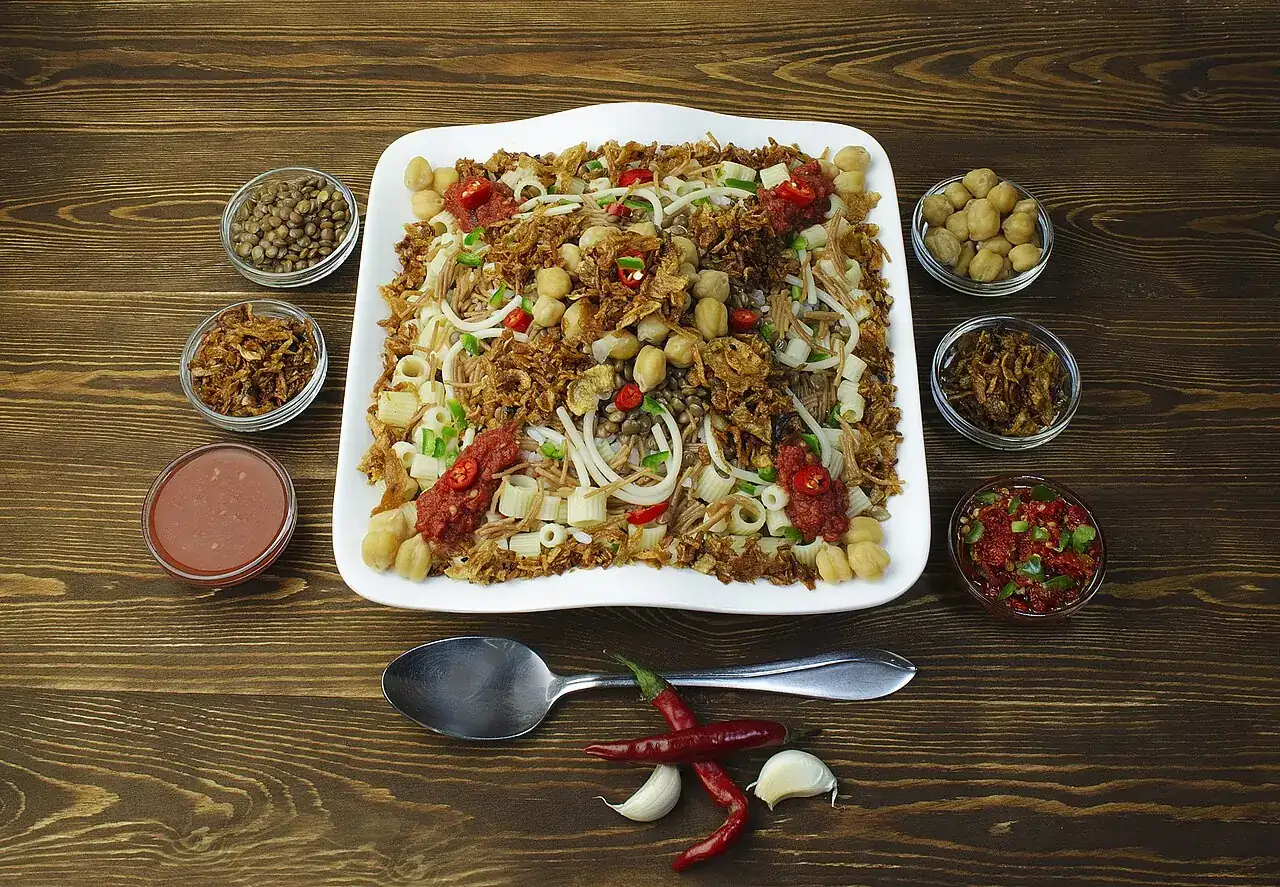 Photo: Dina Said · CC BY-SA 4.0
Published by Adama Doumbia, founder of Afrique Unie · updated 28 November 2026 · our method and sources
Koshari, also spelt kushari or koshary, is regarded as Egypt's national dish. It is a generous mix of rice, brown lentils, macaroni and vermicelli, topped with chickpeas, a tomato sauce sharpened with garlic and vinegar, and a mountain of crispy fried onions.
Its origins are debated. Its name is thought to come from the Hindi khichri (khichdi), an Indian rice and lentil dish, and the explorer Richard Burton already described it in 1853 as the breakfast of the people of Suez. The pasta and tomato sauce, meanwhile, hint at Italian influence. Egyptians have settled one point, though: it is theirs.
Cheap, filling and entirely plant-based, koshari is the king of Cairo street food, served in specialist shops from morning till night. Free of animal products, it also suits Coptic Christian fasting periods.
Ingredients
For the base
- 200 g (7 oz) brown (or green) lentils
- 200 g (7 oz) short-grain or Egyptian rice, rinsed
- 50 g (2 oz) fine vermicelli, broken into small pieces
- 200 g (7 oz) small pasta (elbow or short macaroni)
- 1 x 400 g (14 oz) tin of chickpeas, rinsed
- 4 tablespoons oil (taken from the onion frying oil)
- 1 teaspoon ground cumin
- Salt
For the fried onions
- 4 medium onions, very thinly sliced
- 1 tablespoon plain flour
- Oil for frying (about 300 ml / 10 fl oz)
For the tomato sauce
- 5 garlic cloves, chopped
- 800 g (1 lb 12 oz) tinned chopped tomatoes (or passata)
- 1 tablespoon tomato purée
- 1 teaspoon ground cumin
- 1/2 teaspoon ground coriander
- 1 pinch of chilli powder
- 3 tablespoons white vinegar
- 1 teaspoon sugar
For the garlic vinegar (daqqa)
- 3 garlic cloves, crushed
- 4 tablespoons white vinegar
- 4 tablespoons water
- 1/2 teaspoon ground cumin and a pinch of salt
Method
- Start with the onions: toss them with the flour and a pinch of salt. Heat the frying oil in a deep frying pan and fry them in two batches over a medium heat for 10 to 15 minutes, until deep brown and crisp. Drain on kitchen paper and keep the flavoured oil.
- Rinse the lentils and boil them in plenty of unsalted water for 20 minutes, until tender but still whole. Drain.
- In a saucepan, heat 2 tablespoons of the onion oil and toast the vermicelli for 2 to 3 minutes, stirring, until golden. Add the rice and stir to coat it in oil, then add the lentils, cumin, 1 teaspoon of salt and 500 ml (18 fl oz) of hot water.
- Bring to the boil, cover and cook over a very low heat for 18 to 20 minutes, until all the water has been absorbed. Leave to rest, covered and off the heat, for 10 minutes.
- Meanwhile, cook the pasta in boiling salted water according to the packet instructions. Drain and toss with a little of the onion oil.
- Make the sauce: in a saucepan, fry the garlic in 2 tablespoons of the onion oil for 1 minute without letting it burn. Add the tomatoes, tomato purée, cumin, coriander, chilli, sugar and a pinch of salt. Simmer for 20 minutes, then add the vinegar and cook for 5 minutes more.
- Make the daqqa by mixing the crushed garlic, vinegar, water, cumin and salt in a small bowl.
- Warm the chickpeas in a little salted water for 5 minutes, then drain.
- To serve, spoon a layer of rice and lentils into each shallow bowl, then the pasta. Pour over the tomato sauce, add the chickpeas and crown with fried onions. Everyone adds daqqa and chilli to taste.
Tips and variations
- The onions are the key to koshari: slice them very thinly and only lift them out of the oil once they are deep brown, as they crisp up as they cool. They can be made the day before and kept in an airtight container.
- Egyptian rice is a medium short-grain rice; risotto rice or any medium-grain rice works perfectly.
- The components keep separately for 3 days in the fridge. Reheat the rice with a spoonful of water and add the onions at the last minute so they stay crisp.
- In Cairo, a separate hot sauce (shatta) is often served alongside. Some cooks use red lentils, or broken spaghetti instead of elbow macaroni.
To serve with it: Serve with the daqqa and hot sauce on the side, then finish with rice pudding or a glass of black tea with mint.
Have you tried this recipe?
Be the first to rate it.
Thank you for your rating!
Frequently asked questions
Is koshari vegan?
Yes, the traditional recipe contains no animal products at all, so it also suits Coptic fasts, as long as everything is fried in vegetable oil.
Can I cook everything together?
It is best to cook the components separately so each keeps its texture. Only the rice, vermicelli and lentils are cooked together.
Where does the name koshari come from?
It is thought to come from the Hindi khichri (khichdi), an Indian rice and lentil dish. The dish has been recorded in Egypt since at least 1853, when the explorer Richard Burton described it in Suez.
How do I get really crispy onions?
Slice them very thinly, dust them lightly with flour, fry them in small batches and drain them straight away on kitchen paper.