AfriqueUnie
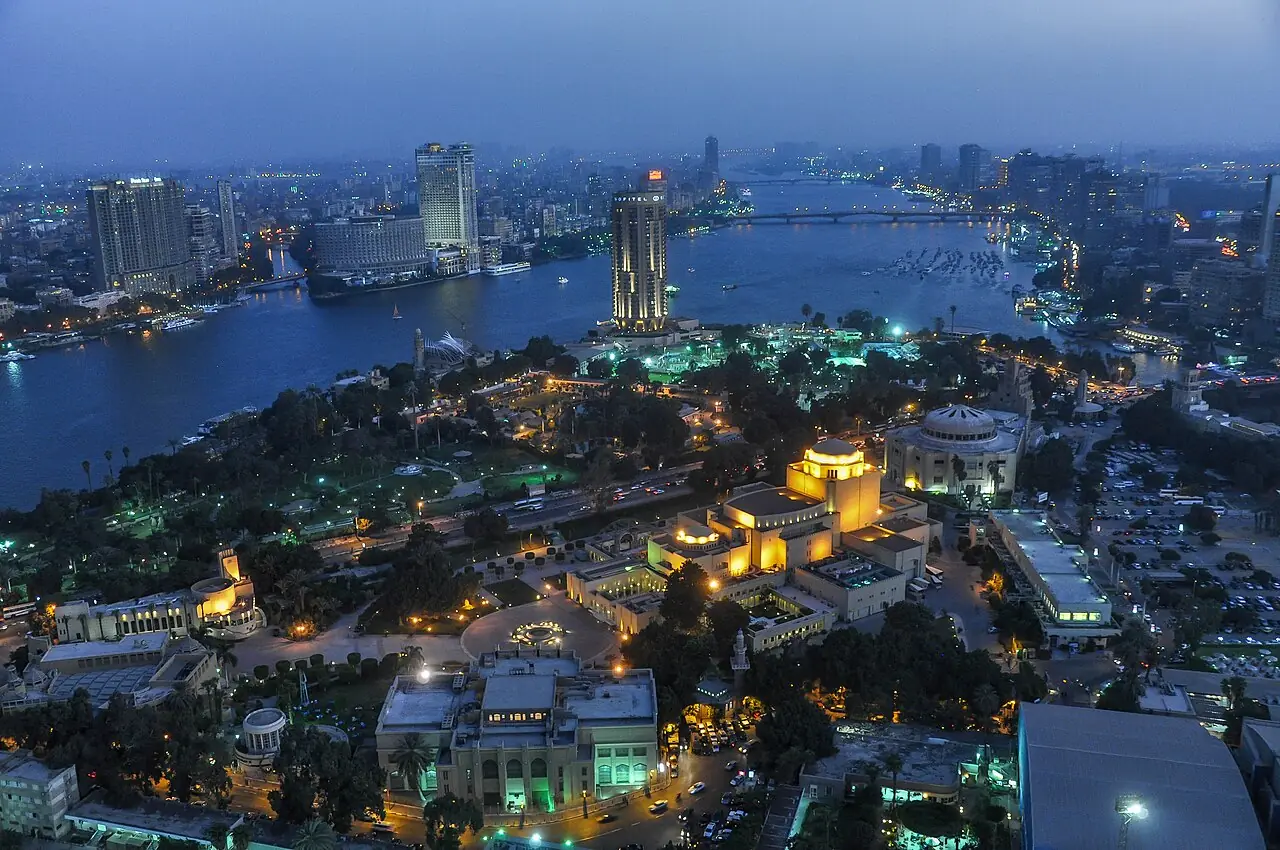 Photo: Jorge Láscar from Melbourne, Australia · CC BY 2.0
Published by Adama Doumbia, founder of Afrique Unie · updated 28 November 2026 · our method and sources
Why visit Cairo?
Cairo is a city that never really sleeps. With a metropolitan area of more than twenty million people, the largest in Africa and the Arab world, it overwhelms visitors with noise, movement and life: car horns, calls to prayer from hundreds of minarets, bread sellers cycling with trays balanced on their heads, cafés where people smoke shisha until dawn. You have to let yourself go with the flow to grasp its charm.
The city is layered with eras. Coptic Cairo, around the Hanging Church and the Ben Ezra Synagogue, preserves the memory of the Roman fortress of Babylon. Historic Cairo, listed by UNESCO, unfolds in mosques, madrasas, mausoleums and monumental gates, from the Mosque of Ibn Tulun, one of the oldest in the city, to the Mamluk complexes of al-Muizz Street, all the way to the Citadel of Saladin and the Mosque of Muhammad Ali. Downtown, built in the 19th century on European lines, offers Belle Époque façades and old cinemas.
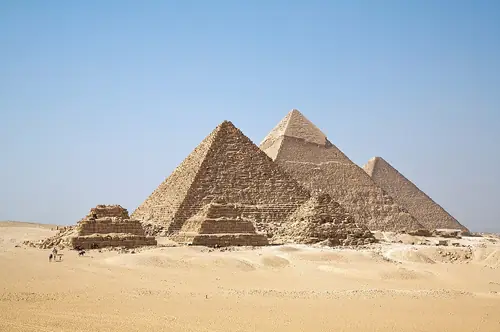
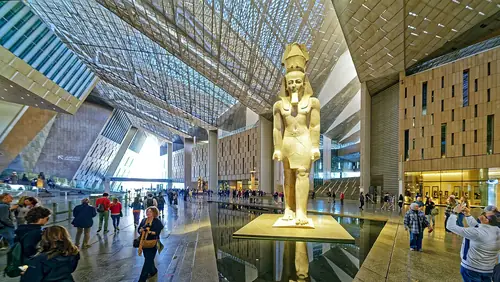
And of course there are the pyramids of Giza, on the city's doorstep, and the Grand Egyptian Museum facing them, which brings together the treasures of Tutankhamun among much else. The older Egyptian Museum on Tahrir Square also holds important collections. In the evening, a stroll across the Nile bridges or a night in the Khan el-Khalili bazaar rounds off the Cairo experience.
Things to do in Cairo: 6 ideas
- 01The Grand Egyptian MuseumSet aside a whole day for this colossal museum and its galleries devoted to Tutankhamun, then carry on to the Giza plateau.
- 02Al-Muizz Street and Khan el-KhaliliA late-afternoon walk past illuminated Mamluk mosques, followed by tea in the bazaar.
- 03The Citadel of SaladinThe medieval fortress and Muhammad Ali's Alabaster Mosque offer a view over the whole city.
- 04The Mosque of Ibn TulunA vast 9th-century courtyard of utter serenity, with a minaret climbed by an external staircase.
- 05Coptic CairoAncient churches, the Coptic Museum and cemeteries, in a quiet district steeped in history.
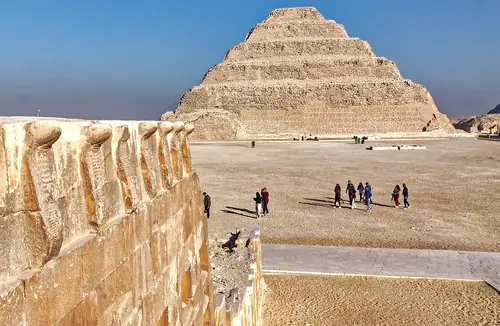
- 06Saqqara and DahshurAn hour to the south, the Step Pyramid of Djoser and the Bent Pyramid, far less crowded than Giza.
Cairo in 3 days: the perfect itinerary
A little history
People lived here long before Cairo existed: Memphis, capital of pharaonic Egypt, stood some twenty kilometres to the south, and the Giza pyramids have dominated the Nile's west bank for more than four thousand years. After the Arab conquest in 641, Amr ibn al-As founded Fustat next to the Roman fortress of Babylon. In 969 the Fatimids built a royal city alongside it, al-Qahira, "the Victorious", and soon founded al-Azhar Mosque, which became one of the great centres of learning in the Muslim world.
Saladin began the Citadel in 1176, then the Mamluk sultans filled the city with mosques, madrasas and mausoleums, many of which still line al-Muizz Street. Taken by the Ottomans in 1517, the city modernised in the 19th century under Muhammad Ali and then Khedive Ismail, who laid out a European-style downtown. Historic Cairo was added to the UNESCO World Heritage List in 1979. The metropolis has kept spreading ever since, out to new desert cities, and the Grand Egyptian Museum fully opened in November 2025.
What to eat in Cairo
The national dish, koshari, combines rice, lentils, pasta and chickpeas, topped with a vinegary tomato sauce and crispy onions; you eat it at dedicated counters where it is served in seconds. In the morning, street carts sell ful, fava beans stewed with oil and cumin, and ta'ameya, the Egyptian falafel made from fava beans, tucked into baladi bread. Also try molokhia, a leafy soup served with rice or rabbit, feteer, a flaky pastry with sweet or savoury fillings, and hawawshi, bread stuffed with spiced meat.
For dessert, om ali, a bread pudding with milk and dried fruit, and rice pudding are everywhere. To drink, tea and Turkish coffee are served in the ahwa, neighbourhood cafés where people play backgammon, and juice stalls press sugar cane, mango or guava. Karkadé, a hibiscus infusion, comes hot or iced. During Ramadan, the streets come alive after sunset around tables laid out for breaking the fast.
Where to stay in Cairo
Zamalek, on an island in the Nile, is a leafy, cosmopolitan district with galleries, cafés and hotels, ideal for a first visit. Garden City and Downtown are convenient for reaching the museums and Islamic Cairo. The Giza area, near the pyramids, has hotels and guesthouses with views of the plateau, perfect for visiting the sites early in the morning. Heliopolis, further out, is close to the airport.
Getting there and getting around
Cairo International Airport (code CAI) is north-east of the city, around twenty kilometres from the centre; depending on traffic, a taxi or ride-hailing car takes from thirty minutes to over an hour. Sphinx Airport (code SPX), to the west, is served mainly by low-cost airlines from Europe and the Gulf, and is closer to the pyramids than to the centre. Most travellers get their visa on arrival or online before they leave.
The metro, with three lines, is the fastest way to cross the city and has carriages reserved for women; ride-hailing apps are handy for everything else, especially to Giza. The currency is the Egyptian pound: cards are accepted in hotels, museums and shopping centres, but keep cash and small notes for taxis, markets and tips, which are expected almost everywhere.
France Diplomatie places Cairo in a heightened-vigilance zone and advises caution in crowded places and keeping away from gatherings; some parts of the country, such as North Sinai and the desert areas bordering Libya and Sudan, are advised against entirely. The best time to visit is October to April; from June to August the heat is overwhelming and sightseeing is best done early in the morning.
Frequently asked questions
How many days do you need in Cairo?
Allow at least three days: one for the Giza pyramids and the Grand Egyptian Museum, one for Islamic Cairo and Khan el-Khalili, and one for Coptic Cairo and the Citadel. Add a day for Saqqara, Dahshur and Memphis, south of the city.
Is Cairo safe for tourists?
France Diplomatie places Cairo under heightened vigilance: petty crime is relatively limited, but avoid gatherings and stay alert in crowds. The main nuisance is persistent touting around the tourist sites. Read your government's travel advice before you go, as the regional situation can change.
When is the best time to visit Cairo?
From October to April, temperatures let you sightsee at any time of day, with cool evenings in December and January. In spring, the khamsin, a sand-laden wind, can blow for a few days. Summer is very hot, so start your visits as soon as sites open.
How do you get to the pyramids from central Cairo?
The easiest way is a ride-hailing car or taxi, which takes from forty minutes to over an hour depending on traffic. The Grand Egyptian Museum is on the same road, at the edge of the Giza plateau, so you can combine both visits in one day.
 Egypt