 AfriqueUnie
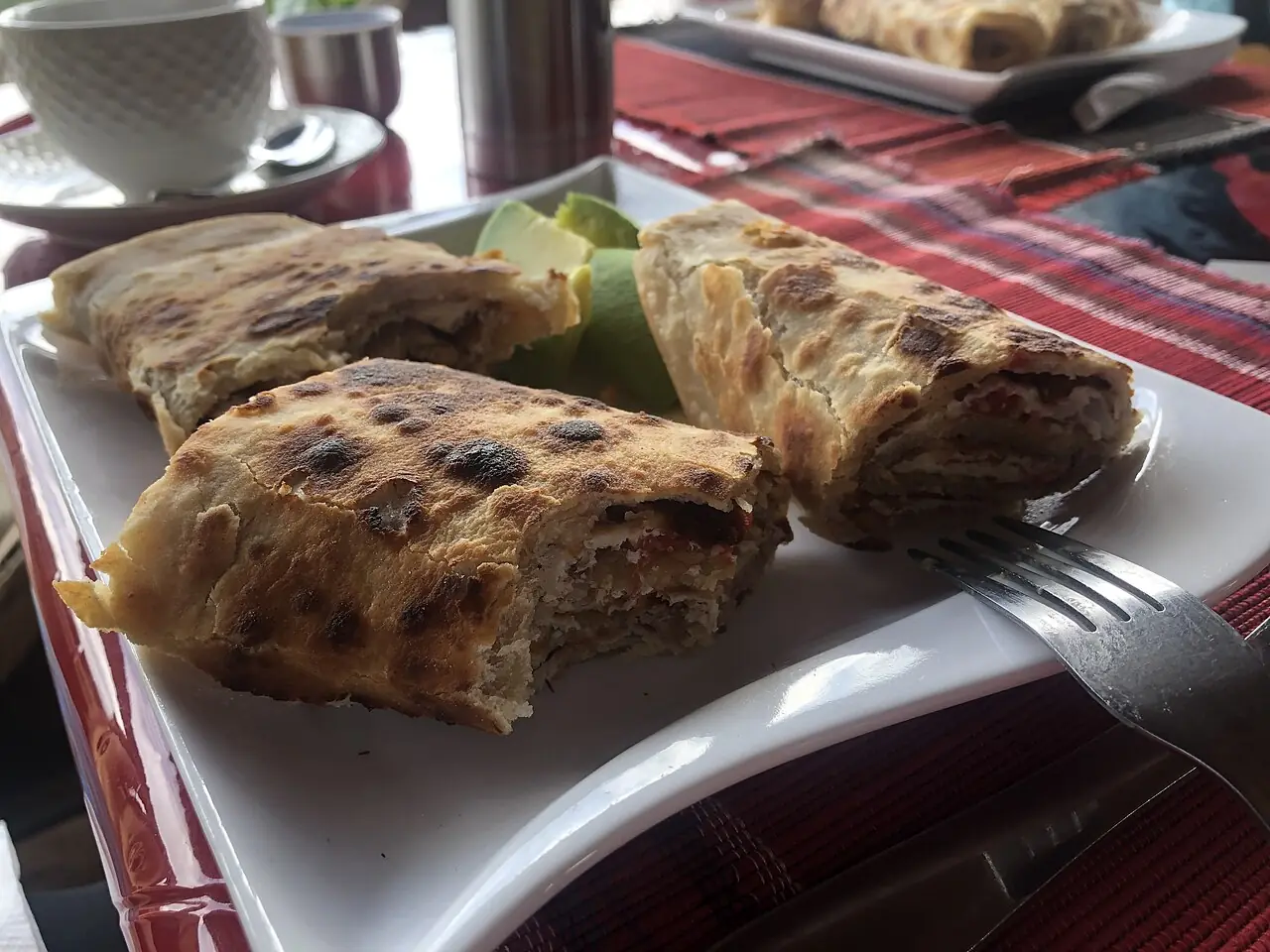 Photo: Roxanne.heston · CC0
Published by Adama Doumbia, founder of Afrique Unie · updated 28 November 2026 · our method and sources
The rolex is Uganda's best-loved snack: an omelette packed with vegetables, laid on a chapati and rolled up. The name is a play on the English words 'rolled eggs', said very quickly.
The story goes that the idea came from a chapati seller in the Busoga region, in the east of the country. It then caught on in Wandegeya, the neighbourhood next to Makerere University in Kampala, where students needed a quick, filling and affordable meal. From there, the rolex spread across the whole country.
It is eaten at any time of day, from breakfast to supper, cooked to order on a hotplate by the roadside. It has even inspired variations with fun names: the 'Titanic', rolled in two chapatis, and the kikomando, a chapati cut into pieces and mixed with beans.
Ingredients
For the chapatis (makes 4)
- 300 g (10 1/2 oz) plain flour
- 1 teaspoon salt
- 1 teaspoon sugar (optional)
- 3 tablespoons vegetable oil, plus a little for cooking
- About 170 ml (6 fl oz) warm water
For the omelettes
- 8 eggs
- 150 g (5 oz) white cabbage, finely shredded
- 1 red onion, finely sliced
- 2 tomatoes, deseeded and finely diced
- 1/2 green pepper, finely diced
- 1 small green chilli, finely chopped (optional)
- 2 tablespoons vegetable oil
- Salt and pepper
Method
- In a mixing bowl, combine the flour, salt and sugar. Add 3 tablespoons of oil, then pour in the warm water a little at a time, mixing until you have a soft dough that does not stick.
- Knead the dough for 5 minutes on a floured work surface. Cover it with a tea towel and leave it to rest for 20 minutes.
- Meanwhile, mix the cabbage, onion, tomatoes, green pepper and chilli in a bowl. Season lightly with salt.
- Divide the dough into 4 balls. Roll each one out into a thin round about 22 cm (8 1/2 in) across, the size of your frying pan.
- Heat a dry frying pan over a medium heat. Cook each chapati for 1 minute on each side, then brush it with a little oil and turn it once more on each side until golden in patches. Keep the chapatis warm under a tea towel.
- For each rolex, beat 2 eggs in a bowl with a quarter of the vegetables, salt and pepper.
- Heat 1/2 tablespoon of oil in the frying pan over a medium heat. Pour in the mixture and spread it out to make an omelette the size of the chapati.
- While the top is still slightly runny, lay a chapati on the omelette and press down gently so it sticks. After 1 minute, flip everything over and cook for another 1 to 2 minutes: the egg should be fully set.
- Slide it onto a board, omelette side up, and roll it up tightly. Cut it in half on the diagonal and serve straight away. Repeat with the remaining rolexes.
Tips and variations
- Short of time? Shop-bought chapatis or parathas from an Indian grocer work very well. A large wheat tortilla will also do.
- For a more filling rolex, add grated carrot, leftover shredded chicken or beef, or grated cheese to the omelette, as some street vendors do.
- Chapatis keep for 2 days in a sealed bag and freeze very well. The rolex itself is best eaten straight away, while it is still hot.
- For a 'Titanic', stack two chapatis and double the amount of omelette.
To serve with it: Serve it with a cup of spiced ginger milk tea or a glass of chilled passion fruit juice.
Have you tried this recipe?
Be the first to rate it.
Thank you for your rating!
Frequently asked questions
Why is it called a rolex?
It is a play on words: 'rolled eggs', said very quickly, sounds like 'rolex'. The dish has nothing to do with watches.
What is the difference between a rolex and a kikomando?
A rolex is a chapati rolled around an omelette. A kikomando is a chapati cut into pieces and mixed with beans in sauce.
Can I make the chapatis in advance?
Yes. Cook them the day before, wrap them in a tea towel and then in a sealed bag, and reheat them for 30 seconds on each side in a hot pan.
Is a rolex vegetarian?
Yes, the classic version contains only eggs, vegetables and the chapati. Some vendors add meat, but it is not essential.