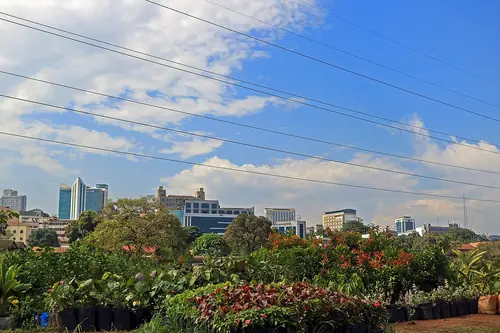
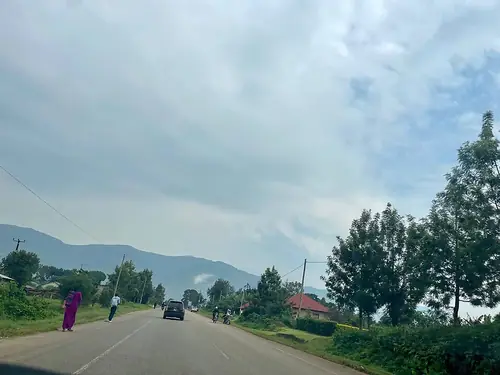
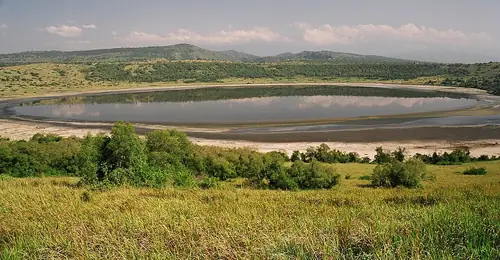
In 1908 Winston Churchill called Uganda “the pearl of Africa”, and the phrase has stuck. You understand why as you travel its roads: everywhere, green dominates. Banana groves on the hills, tropical rainforests, crater lakes, papyrus swamps, savannahs dotted with euphorbias and, in the west, the sometimes snow-capped peaks of the Rwenzori, the legendary “Mountains of the Moon”. Uganda sits at the crossroads of the eastern savannahs and the forests of Central Africa, and that position gives it astonishing biodiversity for a country of modest size.
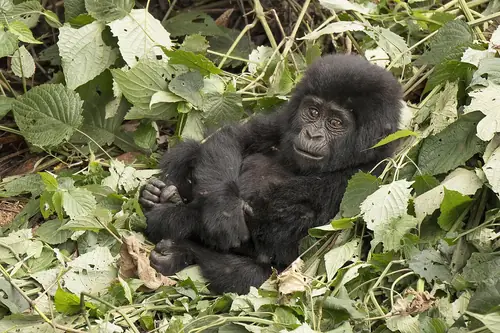
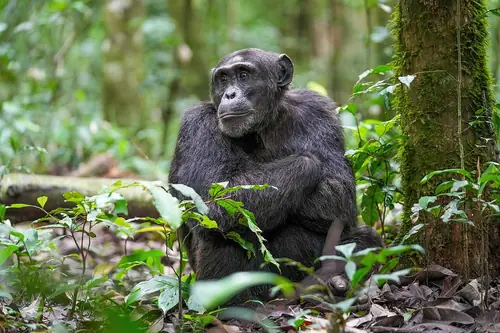
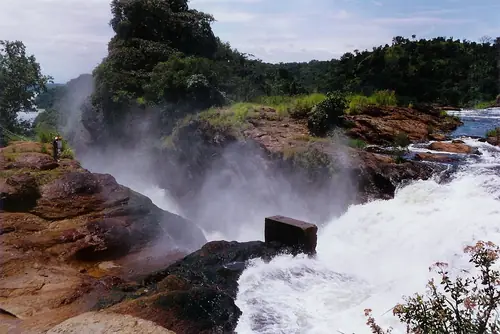
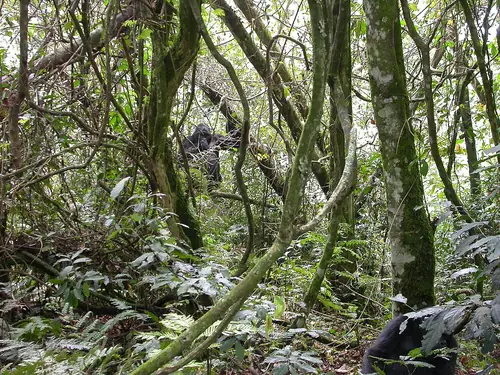
Above all, it is the destination for primates. Bwindi Impenetrable Forest and Mgahinga park are home to nearly half the world's mountain gorillas, and Kibale Forest is famous for its chimpanzees, which you follow on foot among giant fig trees. Add to that savannahs rich in lions, elephants, buffalo and antelope in Queen Elizabeth and Murchison Falls, more than a thousand bird species, including the much sought-after shoebill, and the Nile, which is born here from Lake Victoria before roaring through the gorge at Murchison.
Finally, there are the Ugandans, renowned for their hospitality, their humour and their love of a party. The country receives far fewer visitors than its neighbours, which makes encounters more spontaneous and the parks less crowded. Travel here calls for a little more patience, with some long roads, but it rewards you with a rare feeling of discovery.
History and culture
Before colonisation, the region was organised into powerful and sophisticated kingdoms, including Buganda, around Lake Victoria, Bunyoro, Toro, Ankole and Busoga. Buganda, with its king, the kabaka, its parliament and its elaborate administration, impressed the first European explorers. The Tombs of the Buganda Kings at Kasubi, in Kampala, are a UNESCO World Heritage Site. At the end of the 19th century, the arrival of missionaries and then the British led to the Uganda Protectorate.
Independence came in 1962. The decades that followed were tragic: the regime of Idi Amin in the 1970s, marked by terror and the expulsion of the Asian community, then civil war. Yoweri Museveni took power in 1986 and still holds it. The country has known a long period of relative stability and growth, although the north was hit hard until the mid-2000s by the Lord's Resistance Army rebellion. The traditional kingdoms were restored in 1993 in a cultural role.
8 experiences not to miss in Uganda
Photo : Charles J. Sharp · CC BY-SA 4.001An hour with the gorillasHike through Bwindi Forest to a family of mountain gorillas and share an unforgettable hour just a few metres from them.
Photo : Giles Laurent · CC BY-SA 4.002The chimpanzees of KibaleFollow a noisy, fast-moving community of chimpanzees on foot through this rainforest in the early morning.
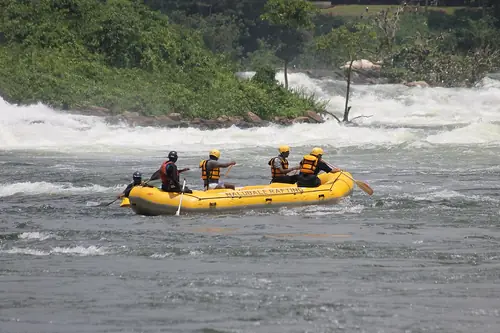
Photo : Owobusingye · CC BY 4.004Rafting the NileTackle powerful rapids downstream from Jinja, one of Africa's great rafting destinations.
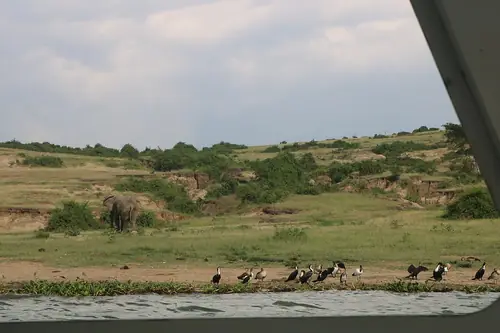
Photo : Alvinategyeka · CC005The Kazinga ChannelGlide past countless hippos, buffalo and birds by boat on this stretch of water in Queen Elizabeth park.
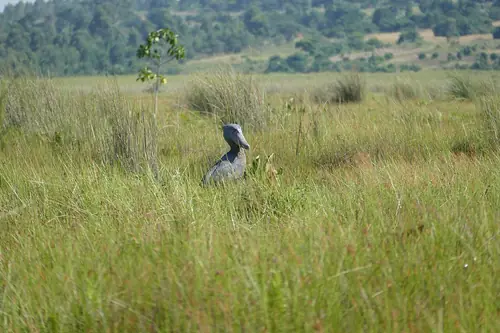
Photo : Sjoerdug · CC BY-SA 4.006The shoebillSearch by canoe in the Mabamba swamps near Entebbe for this prehistoric-looking, stern-faced bird.
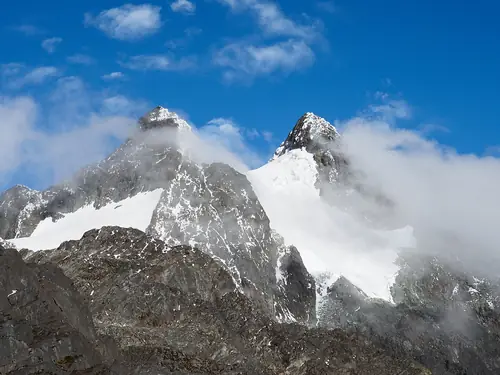
Photo : Rafał Kozubek · CC BY-SA 4.007The RwenzoriSet off on a trek of several days in the “Mountains of the Moon”, among giant lobelias and glaciers.
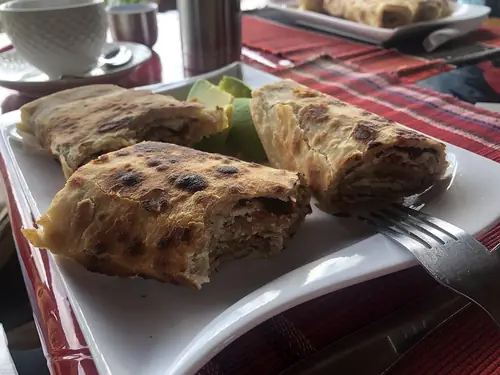
Photo : Roxanne.heston · CC008A roadside rolexOrder the national snack, an omelette rolled in a chapati, made before your eyes in two minutes.
When to go to Uganda
Lying on the equator, Uganda has a mild climate all year round, tempered by altitude. Two dry seasons are best for travelling: June to August, or even September, and December to February. Forest trails, notably at Bwindi, are less muddy then, tracks more passable and animals easier to spot on the savannahs. The rainy seasons, from March to May and October to November, don't rule out a trip: the downpours are often intense but short, the landscapes a dazzling green and gorilla permits easier to get. In the mountainous south-west, nights are cool all year: bring a fleece.
Getting around
Most travellers get around the country in a 4x4 with a driver-guide, booked through a local agency, as distances are long and some tracks difficult. Allow eight to ten hours on the road between Kampala and Bwindi. Domestic flights from Entebbe or Kajjansi airfield serve several parks, including Kihihi and Kisoro near Bwindi, Murchison and Queen Elizabeth. Public buses link the towns, but the driving is often dangerous. In town, boda-bodas, motorbike taxis, are everywhere; insist on a helmet and prefer the apps that provide one. Traffic drives on the left. The international airport is at Entebbe, about an hour from Kampala.
Etiquette and customs
Ugandans give great importance to greetings, which you take time to exchange before asking for anything. In Luganda, “Oli otya?” means “How are you?”, and “Webale” means thank you. Respect for elders is important, and in some traditional Baganda families women still kneel to greet. Dress fairly conservatively away from tourist spots. Ask before taking photographs, especially in villages. Be aware that Ugandan law is very repressive towards same-sex relationships: find out before you go and be discreet. Finally, check the official advice concerning certain border areas.
Food and drink in Uganda
Ugandan cooking is generous and built on starches. Matoke, green plantain steamed and then mashed, is the national dish, served with a groundnut, bean or meat sauce. Luwombo, Buganda's festive dish, is a stew of chicken, beef or mushrooms slow-cooked in banana leaves tied into a parcel. Posho, a maize porridge, is the everyday staple. But the star is the rolex, a contraction of “rolled eggs”: a vegetable omelette rolled up in a chapati, sold everywhere by the roadside. Tilapia and Nile perch from Lake Victoria are enjoyed grilled. People drink fresh fruit juice, local beer and waragi, a banana gin.
The best time to visit Uganda: June to August, December to February.
What should I see first in Uganda?
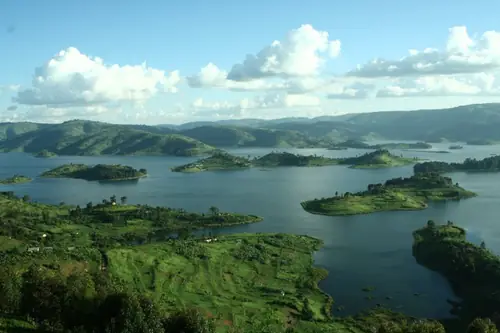
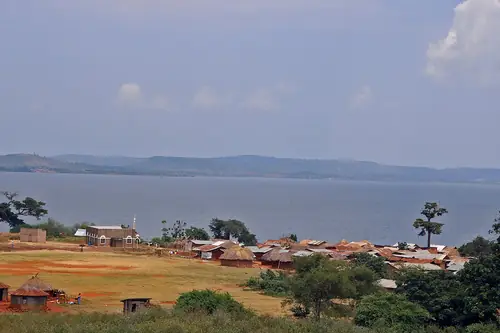
The must-sees: Bwindi Impenetrable Forest, Murchison Falls, Queen Elizabeth National Park, Lake Bunyonyi, Lake Victoria (Entebbe and the Ssese Islands), Kibale Forest National Park.
Which cities should I visit in Uganda?
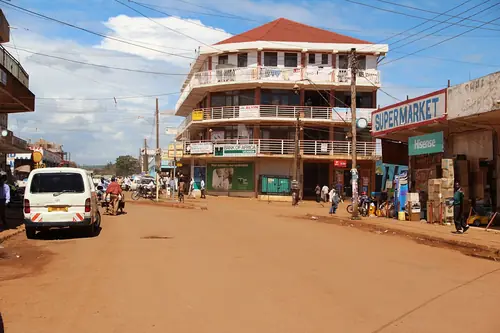
Kampala, Jinja, Fort Portal. The capital is Kampala.
How much should I budget for a trip to Uganda?
Mid-range: around €60–120 per person per day, excluding flights. This is only a guide and depends above all on the accommodation and activities you choose.
The main international airport has the code EBB. Compare flights with the ‘Flights’ button on this page.
Do I need a visa to visit Uganda?
Entry requirements depend on your nationality and change regularly. Check them on the country's official website or with your foreign ministry before booking, and make sure your passport is valid.
What should I eat in Uganda?
Dishes to try while you're there: Rolex (chapati omelette roll), matoke, luwombo.
Small planes link Entebbe and Kajjansi airfield with national park airstrips (Murchison Falls, Queen Elizabeth, Bwindi, Kidepo), saving many hours on the road. Minibuses, known as "taxis", and buses link Kampala with towns across the country, while boda-bodas (motorbike taxis) are everywhere: insist on a helmet. A ferry links Entebbe with the Ssese Islands (Kalangala) on Lake Victoria. In Kampala, apps such as Bolt and Uber work; for the parks, a 4x4 with driver is the most common choice. Traffic drives on the left.
Health and safety
Yellow fever
Vaccination certificate required on entry for all travellers (from 1 year); vaccine recommended for the whole country (from 9 months).
Malaria
Present throughout the country: ask a doctor about preventive medication and protect yourself from mosquitoes.
Water and food
Unless your accommodation says otherwise, drink sealed bottled or filtered water, and wash your hands often.
Sources: France Diplomatie, Viaggiare Sicuri, Belgian Foreign Affairs, GOV.UK, checked in November 2026. All 54 countries
Entry requirements (visas, vaccinations) and security conditions change regularly: check them with the official authorities before booking. Official tourism website: Uganda Tourism Board.
Affiliate cookiesWe would like to load a script from our partner Travelpayouts. It may set cookies so that we receive a commission when you book through our links, at no extra cost to you. If you decline, the site works in exactly the same way. Find out more
 AfriqueUnie
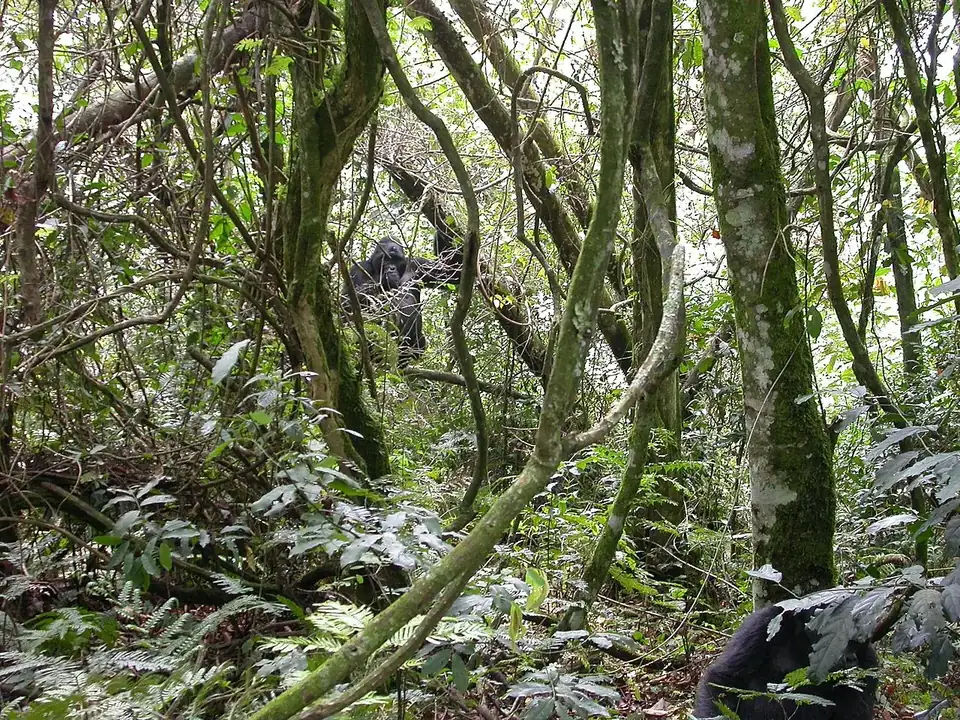 Photo: Auteur inconnu · CC BY-SA 3.0
 Uganda


 Uganda or Tanzania
 Burundi
 Djibouti
 Eritrea
 Ethiopia
 Somalia
 South Sudan