 AfriqueUnie
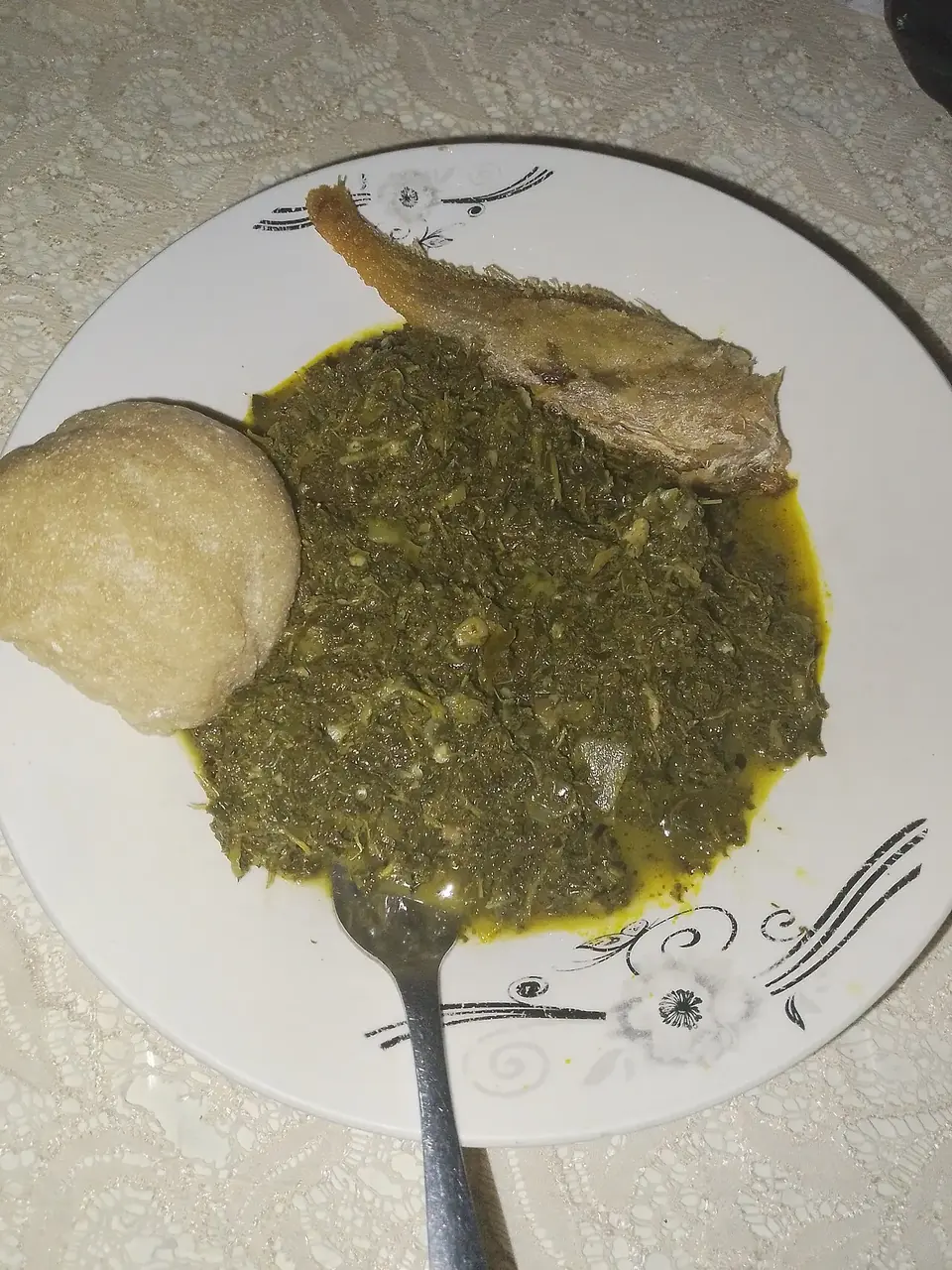 Photo: Pangou Stephane · CC0
Published by Adama Doumbia, founder of Afrique Unie · updated 28 November 2026 · our method and sources
Saka-saka is one of the best-loved dishes of the Republic of the Congo. It is made with pounded cassava leaves, boiled for a long time and then simmered with palm oil and smoked fish. In Brazzaville, as in Kinshasa, it is also called pondu, a Lingala word.
The dish is known throughout Central Africa, and every family has its own way of making it: some add peanut paste, others salted fish, aubergine or beans. In the Comoros it is called mataba, and in Madagascar ravitoto.
It is an everyday dish, cheap and filling, but it also has its place on festive tables. It is eaten with chikwangue (cassava bread), fufu, rice or plantain.
Ingredients
For the leaves
- 1 kg (2 lb 4 oz) frozen pounded cassava leaves (or fresh leaves pounded in a mortar)
- 2 litres (3 1/2 pints) water
- 1 teaspoon bicarbonate of soda, optional
For the flavouring
- 300 g (10 1/2 oz) smoked fish (mackerel, horse mackerel or smoked catfish)
- 150 ml (5 fl oz) red palm oil
- 2 onions, sliced
- 4 garlic cloves, chopped
- 1 leek or 4 spring onions, sliced
- 1 aubergine, diced
- 1 green pepper, diced
- 1 whole Scotch bonnet or habanero chilli
- 2 tablespoons plain peanut paste, optional
- 1 stock cube
- Salt
To serve
- 2 chikwangues (cassava bread sticks) or 400 g (14 oz) rice
Method
- Thaw the cassava leaves, then put them in a large pot with the 2 litres of water and the bicarbonate of soda. Bring to the boil.
- Boil for 1 hour over a medium heat, uncovered, stirring from time to time. Add hot water if the leaves start to dry out: they should always be covered.
- Meanwhile, remove the skin and bones from the smoked fish and break it into large flakes.
- After an hour, add the onions, garlic, leek, aubergine, green pepper and the whole chilli. Cook for 30 minutes.
- Pour in the palm oil and add the smoked fish and the crumbled stock cube. If using peanut paste, loosen it in a ladle of hot cooking liquid before stirring it in.
- Lower the heat and simmer for another 45 minutes to 1 hour, stirring often so nothing catches. The saka-saka is ready when the leaves are very tender, the water has almost completely evaporated and the oil rises to the surface.
- Taste and add salt with care, as the smoked fish is already salty. Remove the whole chilli.
- Cut the chikwangues into thick slices or cook the rice, then serve the saka-saka piping hot.
Tips and variations
- Do not cut the cooking time short: raw cassava leaves contain toxic compounds that only long boiling removes. Allow at least 2 hours in total.
- Frozen pounded cassava leaves, smoked fish and chikwangue are sold in African grocery shops. If you cannot find chikwangue, serve the saka-saka with fufu, rice or boiled plantain.
- For a milder version, replace the smoked fish with salted fish soaked overnight in cold water, or add dried prawns.
- Saka-saka keeps for 3 days in the fridge and freezes very well in portions. Reheat it gently with a splash of water.
To serve with it: Serve it with homemade ginger juice or a chilled glass of hibiscus juice.
Have you tried this recipe?
Be the first to rate it.
Thank you for your rating!
Frequently asked questions
What is the difference between saka-saka and pondu?
They are the same dish. Saka-saka and pondu are two common names for cooked pounded cassava leaves, both used in Congo-Brazzaville and the DRC.
Why does saka-saka need to cook for so long?
Cassava leaves naturally contain compounds that release cyanide. Long boiling removes them and makes the leaves tender and safe to eat.
Can I use spinach instead of cassava leaves?
Spinach makes a good but different dish, milder and less fibrous. If you use it, cut the cooking time to 30 minutes.
Can saka-saka be vegetarian?
Yes. Leave out the smoked fish and add more peanut paste and aubergine. The dish stays tasty and very filling.
Visit the Republic of the Congo · All recipes · Flavours of Africa