AfriqueUnie
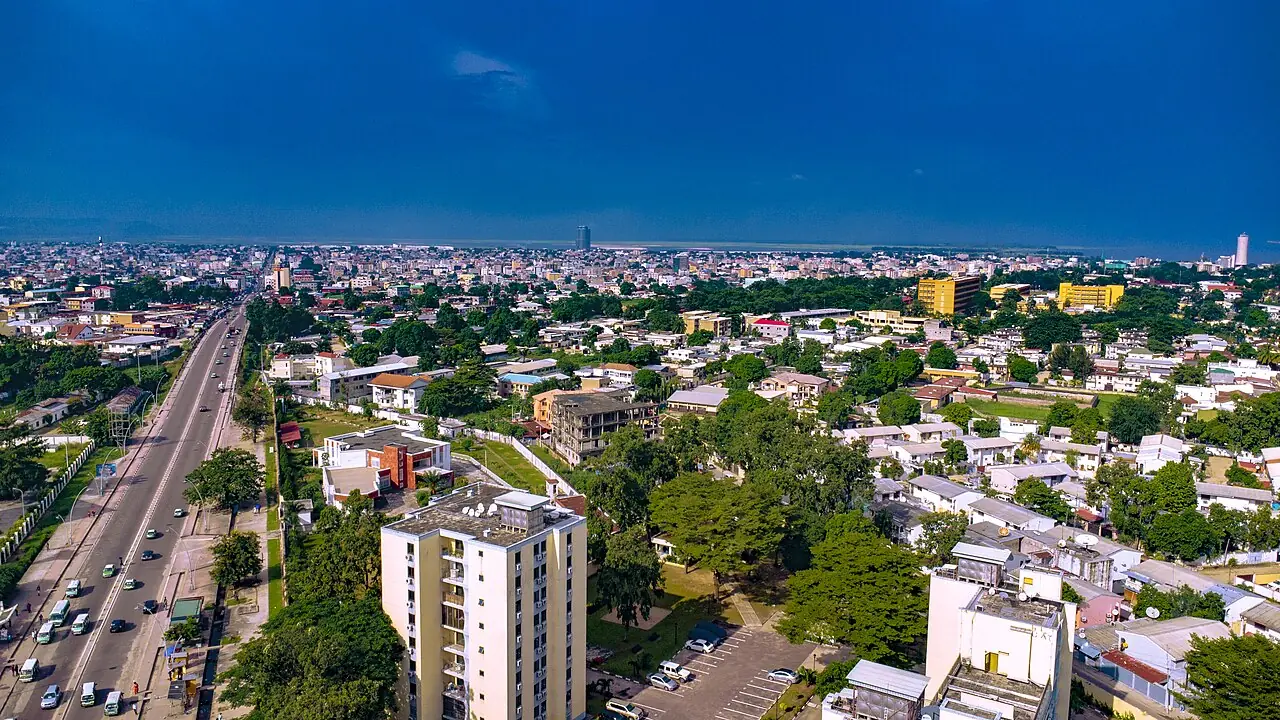 Photo: Prével EPOTA · CC BY-SA 4.0
Published by Adama Doumbia, founder of Afrique Unie · updated 28 November 2026 · our method and sources
Why visit Brazzaville?
Brazzaville has the gentleness of a city that has decided not to rush. Its avenues are lined with mango and flame trees, its neighbourhoods keep the feel of a big village, and the Congo River, vast and brown, sets the pace for everything else. From the corniche you can see Kinshasa on the opposite bank, just a few kilometres away: few capitals face each other at such close quarters.
The city reads in layers. The administrative centre, around the Plaine and the Poste district, retains colonial buildings and modern ministries. The Basilica of Sainte-Anne, with its green-tiled roof and pointed-arch nave, remains its most distinctive building, built from the 1940s onwards. Nearby, the Pierre Savorgnan de Brazza Memorial, a white marble building opened in 2006, tells the official version of the city's founding and still stirs debate.
But Brazzaville is above all experienced in its working-class districts. In Poto-Poto, to the north, painters' studios sit alongside markets and the mosques of West African communities. In Bacongo, to the south, la sape is practised like a religion, and Avenue Matsoua comes alive at weekends. On Sundays, families picnic at the Djoué rapids, where the river breaks over the rocks in a never-ending roar.
Things to do in Brazzaville: 6 ideas
- 01Basilica of Sainte-AnneStep beneath its soaring timber frame and admire the green-tiled roof, one of the city's architectural symbols.
- 02Djoué rapidsGo and watch the river boil over the rocks in the late afternoon, and tuck into grilled fish at a nearby eatery.
- 03Poto-Poto School of PaintingVisit this studio founded in the 1950s and buy a canvas directly from the artists.
- 04Sapeurs of BacongoStroll the streets of Bacongo on a Sunday, where the dandies happily parade for anyone who compliments them sincerely.
- 05Marché TotalDive into this big Bacongo market for its pagnes (printed cloths), spices, leafy greens and tailors.
- 06The corniche at sunsetWalk along the river as the lights of Kinshasa come on across the water.
Brazzaville in one day
- 01MorningStart at the Basilica of Sainte-Anne, on the edge of Poto-Poto: step under its pointed-arch nave and admire its green-tiled roof. Then head a few minutes away to the Poto-Poto School of Painting, founded in the 1950s, where you can watch artists at work and buy a canvas.
- 02LunchHave lunch at a nganda, a simple local eatery in Poto-Poto, choosing chicken moambé or saka-saka with chikwangue. This lively district mixes markets and the mosques of West African communities. Keep a copy of your passport on you, as police checks are frequent.
- 03AfternoonHead to the centre for the Pierre Savorgnan de Brazza Memorial, a white marble building opened in 2006, then the Sacred Heart Cathedral, described as the oldest surviving cathedral in Central Africa. Do not photograph ministries or nearby military buildings, not even from a taxi window.
- 04EveningWalk along the corniche in late afternoon as the lights of Kinshasa come on across the river, then have braised fish near the water. Return by taxi afterwards, as the French authorities advise vigilance when moving around at night, especially in outlying districts.
A second day in Brazzaville
- 01MorningGo to Bacongo and the Marché Total, one of the city's largest markets, for its printed cloth, spices, leafy greens and tailors. Come in the morning, when produce is freshest, and keep your money in a closed pocket. Ask before photographing the traders.
- 02LunchStay in Bacongo for lunch at a nganda, where maboké, fish steamed in leaves, and ngaï-ngaï, a tangy sorrel sauce, are often on the menu. At weekends the sapeurs parade through the streets: compliment them sincerely before taking their picture.
- 03AfternoonTake a taxi to the Djoué rapids, south-west of the city, where the Congo River churns over the rocks with a constant roar. It is the favourite outing for local families on Sundays. Stay on the landscaped banks and never swim, as the currents are extremely violent.
- 04EveningWatch the sunset over the rapids with braised fish from a nearby shack, then return by taxi before it gets fully dark. If you want to stay out longer, pick a lively maquis in Bacongo and go there and back by taxi rather than on foot.
A little history
On the right bank of the Congo River, facing Pool Malebo, the Teke villages of Mfoa and Nkuna lived off river trade when the explorer Pierre Savorgnan de Brazza arrived. In 1880 he signed a treaty with the Makoko, king of the Teke, placing the region under French protection, and a post was founded that was soon called Brazzaville. In 1910 the town became the capital of French Equatorial Africa. In 1940 it rallied to Free France, becoming its capital, and in 1944 hosted the Brazzaville Conference.
Congo gained independence on 15 August 1960, with Brazzaville as its capital. The city then went through a long period of Marxist-Leninist rule, followed by the civil wars of the 1990s, which devastated the southern districts of Bacongo and Makélékélé in particular. Since the 2000s the capital has rebuilt itself: a landscaped corniche, new bridges and office towers stand alongside colonial buildings, Sainte-Anne Basilica and working-class neighbourhoods that have kept all their energy.
What to eat in Brazzaville
Congolese food is built on cassava, served as foufou or chikwangue (fermented cassava dough cooked in leaves), and on river fish. Maboké, fish steamed in leaves with chilli and onion, salt fish, saka-saka (pounded cassava leaves), chicken moambé, cooked in palm-nut sauce, and ngaï-ngaï, a tangy sorrel sauce, are the classics. The adventurous can try caterpillars, popular in season.
Grilled fish at the Djoué rapids or along the corniche, the ngandas (small local eateries) of Bacongo and Poto-Poto and markets such as Marché Total are the best places to eat. To drink, local beer flows freely, palm wine is drunk fresh and fiery ginger juice goes with meals. Stick to well-cooked dishes and bottled water.
Where to stay in Brazzaville
The city centre, around Boulevard Denis Sassou Nguesso and the Plaine, has most of the business hotels and serviced residences close to the river: practical for a first night. The Poste district and the area around the corniche are quieter and pleasant on foot by day. Bacongo and Makélékélé, to the south, have the liveliest atmosphere, with bars and maquis, but little accommodation suited to visitors. Poto-Poto and Moungali, to the north, are perfect for markets and street life, better for visiting than staying. Guesthouses and small residences with gardens are often the best compromise.
Getting there and getting around
Maya-Maya International Airport (code BZV) is about 4 km north-west of the centre, a quarter of an hour by taxi. Crossing to Kinshasa is by boat from the river port known as the Beach, with formalities that can be slow; you need a visa for the Democratic Republic of the Congo.
In town, the green-and-white taxis are plentiful and convenient: agree the fare before getting in. Minibuses are cheap but crowded. The currency is the Central African CFA franc, pegged to the euro; cards are only accepted in a few large hotels and supermarkets, and ATMs are scarce outside the centre, so bring cash.
The French authorities place Brazzaville, like most of Congo, under heightened vigilance, with particular care in the Pool department next to the capital, and advise against all but essential travel to a 30 km strip along the border with the Central African Republic and to the southern border areas with Cabinda and the DRC; the UK Foreign Office advises against all travel within 50 km of the border with the Central African Republic. In Brazzaville, avoid walking at night and keep away from gatherings. The dry season, from June to September, is the most pleasant; most rain falls from October to May.
See places to stay in Brazzaville
Frequently asked questions
How many days do you need in Brazzaville?
Two days are enough for Sainte-Anne Basilica, the Poto-Poto painting school, Marché Total and the Djoué rapids. Stay for a weekend if you can: on Sunday, the atmosphere in Bacongo and family outings by the river show the city at its best.
Is Brazzaville safe?
The city is relatively calm, but the French authorities call for heightened vigilance across most of the country. Carry your passport or a copy because police checks are frequent, don't photograph official buildings and take a taxi in the evening.
How do you cross from Brazzaville to Kinshasa?
Boats cross the river from the Beach port to Kinshasa in a few minutes, but formalities at both ends can take time, and the crossing can close without warning; boats do not run on Sundays or in the late afternoon. You need a visa for the Democratic Republic of the Congo, obtained before you travel, and a valid passport.
When is the best time to visit Brazzaville?
The dry season, from June to September, brings milder temperatures and skies that are often grey but rain-free. From October to May the heat is humid and storms are frequent, with a relative lull around January and February.
What is there to do in Brazzaville on a Sunday?
Sunday is the best day to feel the city's spirit: sung Masses at the Basilica of Sainte-Anne or the Sacred Heart Cathedral in the morning, sapeurs on the streets of Bacongo, then a family picnic at the Djoué rapids. Plan to cross to Kinshasa on another day, as the boats do not run on Sundays.
What is there to do in Brazzaville in the evening?
In the evening, people stroll along the corniche facing Kinshasa, then eat braised fish and listen to Congolese rumba in the maquis of Bacongo or Poto-Poto. Get around by taxi rather than on foot, keep a copy of your passport on you and avoid outlying districts.
 Republic of the Congo