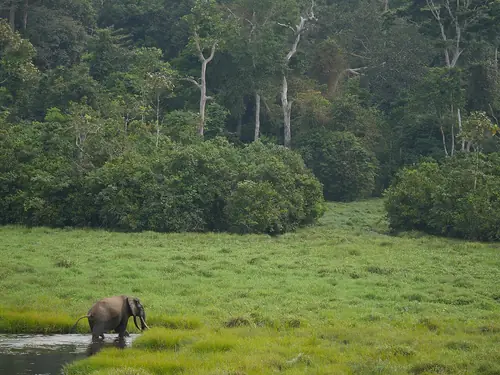
People come to Congo-Brazzaville for a forest that sees almost no tourists. In the north of the country, whole tracts of equatorial forest remain more or less untouched, threaded with tea-coloured rivers and dotted with bais, the swampy clearings where forest elephants, buffalo and sitatungas come to lick mineral salts. Here you track western lowland gorillas on foot, in a small group, behind trackers who read the forest like a newspaper. Few countries offer this experience with so few other people around you.
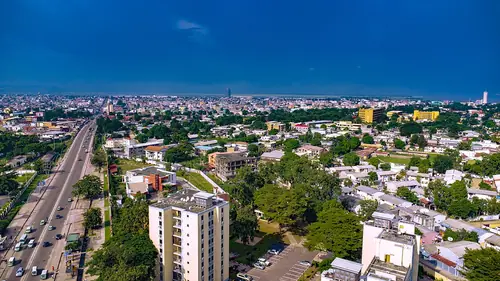
The second draw is the river. At Brazzaville, the Congo spreads out like an arm of the sea, so wide that you can make out the towers of Kinshasa on the far bank: two capitals eyeing each other, each with its own character. Brazzaville is calmer, greener and more provincial in the best sense of the word. You stroll beneath mango trees, stop by the Djoué rapids and eat grilled fish to the sound of rumba drifting out of a maquis. In the evening, in the southern districts, the sapeurs of Bacongo turn a simple stroll into a catwalk, with boldly coloured suits and shoes polished to a mirror shine.
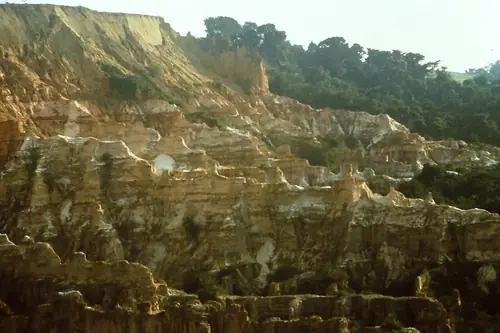
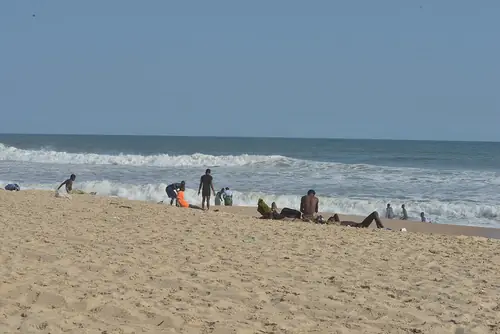
Finally, Congo has a little-known Atlantic coastline. Pointe-Noire, a laid-back oil town, opens onto swell-swept beaches, the red cliffs of Diosso and the history of the old Kingdom of Loango, whose coast was a slave-trading port. Travelling here takes planning: tourist infrastructure is scarce outside the two big cities and the parks run by specialist operators, and getting around the interior often means flying. But those who make the effort leave feeling they have seen Central Africa in the raw, a place whose story is still rarely told.
History and culture
Before colonisation, the territory was divided between several polities: the Kingdom of Loango on the coast, very active in Atlantic trade, chiefdoms linked to the old Kingdom of Kongo in the south, and the Teke kingdom on the plateaux. In 1880, the explorer Pierre Savorgnan de Brazza signed a treaty with the Makoko, ruler of the Teke, that paved the way for the French presence. Brazzaville went on to become the capital of French Equatorial Africa and then, during the Second World War, a symbol: the city rallied to Free France and in 1944 hosted the Brazzaville Conference.
Independent in 1960, the country went through a long period of Marxist-Leninist-inspired rule as the People's Republic of the Congo, before multi-party politics returned in the early 1990s. The civil wars at the end of that decade left deep scars on Brazzaville, especially its southern districts. Today the economy rests largely on oil pumped offshore from Pointe-Noire, while the conservation of the northern forests draws international attention.
8 experiences not to miss in the Republic of the Congo
Photo : Matt Muir · CC BY 4.002Watch for elephants at a baiSettle in silence on a viewing platform in Nouabalé-Ndoki and watch forest elephants step out of the undergrowth to root in the mud.
03Meet the sapeurs of BacongoOn a Sunday afternoon, watch la sape, the art of sartorial elegance in which every detail, from pocket square to socks, is carefully considered.
04Listen to the Djoué rapidsAt the end of the day, sit beside the rapids of the Congo River on the edge of Brazzaville, as the light turns the churning water gold.
05Visit the Poto-Poto studiosMeet the painters of the Poto-Poto school, known for its stylised figures and bright colours, and see canvases drying in the courtyard.
Photo : Oceanflynn · CC BY-SA 3.006Walk the Diosso GorgesFollow the trails down to the foot of the red cliffs near Pointe-Noire, then visit the museum devoted to the Kingdom of Loango.
Photo : Africany · CC BY 4.007Head for the Côte SauvageIn Pointe-Noire, wander along the beaches where fishermen haul their pirogues up onto the sand, and end the day on a terrace facing the ocean.
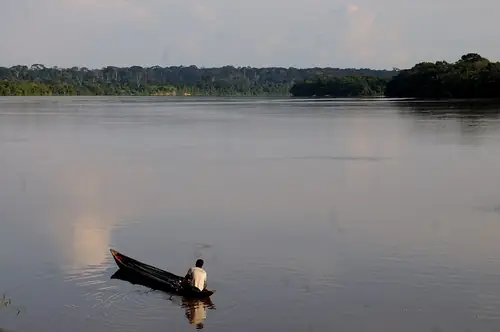
Photo : JosepMGracia · CC BY-SA 4.008Travel upriver by pirogueWhen logistics allow, glide along the northern rivers, the Sangha or the Lékoli, through a forest that never seems to end.
When to go to the Republic of the Congo
The most comfortable time is from June to September, during the long dry season: skies are often overcast, temperatures milder, dirt roads passable and rain rare in the south. A shorter, less pronounced dry season also appears around January and February. The rest of the year, tropical downpours are frequent and violent, especially between October and May, which makes overland travel harder. In the northern parks, which straddle the equator, the rainfall pattern is more irregular: wildlife viewing is possible almost all year round, but operators adjust their opening seasons. Check with them before fixing your dates.
Getting around
Brazzaville and Pointe-Noire are linked by air, the simplest option, as well as by the RN1 highway, now fully tarmacked, and by the Congo-Ocean Railway, a historic line whose service is irregular. For the north, the Odzala and Nouabalé-Ndoki parks are usually reached by charter flights arranged by the operators, or by long road journeys to Ouesso followed by river travel. In town, Brazzaville's green taxis and Pointe-Noire's blue ones, often shared, are handy: agree the fare before you get in. The river crossing to Kinshasa leaves from the Beach, and formalities can be lengthy. Avoid driving at night outside the cities.
Etiquette and customs
Congo is a country where people take care over their appearance: clean, pressed clothes are a mark of respect, even for a simple visit. Always greet people before asking for anything, taking time to exchange a little news. French is understood everywhere in towns, Lingala dominates in Brazzaville and Kituba in Pointe-Noire; a few words such as “mbote” (hello) will raise a smile. Be discreet with your camera: photographing official buildings, military sites, bridges and airports is frowned upon or even forbidden, and you should always ask people's permission. Carry a copy of your passport, as checks are frequent. Lastly, punctuality is flexible, but the respect owed to elders is not.
Food and drink in the Republic of the Congo
Congolese cooking is built on cassava, served as chikwangue, a loaf of fermented dough wrapped in leaves, or as foufou. Saka-saka, pounded cassava leaves slowly simmered with palm oil, smoked fish or groundnuts, accompanies almost every meal. Chicken moambe, coated in a palm-nut sauce, is the dish for special occasions. By the river, order grilled capitaine (Nile perch) or tilapia, served with fried plantains and crushed chilli that you should taste with caution. Maquis also serve skewers and salted fish. To drink, local beer, ginger juice or palm wine, depending on the hour and your mood.
When is the best time to visit the Republic of the Congo?
The best time to visit the Republic of the Congo: June to September.
What should I see first in the Republic of the Congo?
The must-sees: Odzala-Kokoua National Park, Nouabalé-Ndoki National Park, Diosso Gorge.
Which cities should I visit in the Republic of the Congo?
Brazzaville, Pointe-Noire, Ouesso. The capital is Brazzaville.
How much should I budget for a trip to the Republic of the Congo?
Mid-range: around €60–120 per person per day, excluding flights. This is only a guide and depends above all on the accommodation and activities you choose.
What currency and languages are used in the Republic of the Congo?
Currency: Central African CFA franc (XAF). Languages: French, Lingala, Kituba.
How do I get to the Republic of the Congo?
The main international airport has the code BZV. Compare flights with the ‘Flights’ button on this page.
Do I need a visa to visit the Republic of the Congo?
Entry requirements depend on your nationality and change regularly. Check them on the country's official website or with your foreign ministry before booking, and make sure your passport is valid.
What should I eat in the Republic of the Congo?
Dishes to try while you're there: Saka-saka, chicken moambe.
Map
Republic of the Congo on the map
Cities Places to see · Approximate positions
On the ground
Getting around and staying healthy
Getting around
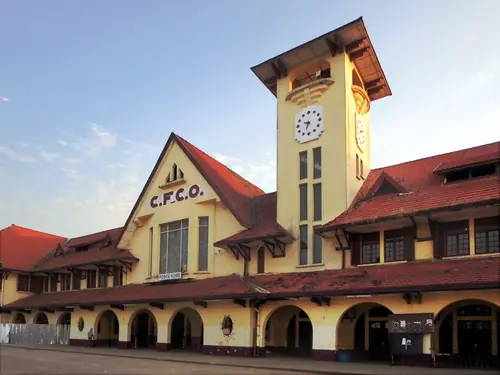
Between Brazzaville and Pointe-Noire, flying is fastest, with several flights a day; National Road 1, now paved, is also served by coach companies. The CFCO train between the two cities now carries very few passengers, as the line is being renovated. From Brazzaville, speedboats and a ferry cross the Congo River to Kinshasa. In town, green taxis (Brazzaville) and blue taxis (Pointe-Noire) are convenient; for the north and the national parks, a car with driver is essential. Driving is on the right.
Health and safety
Yellow fever
Vaccination certificate required on entry for all travellers (from 9 months); vaccine recommended for the whole country (from 9 months).
Malaria
Present throughout the country: ask a doctor about preventive medication and protect yourself from mosquitoes.
Water and food
Unless your accommodation says otherwise, drink sealed bottled or filtered water, and wash your hands often.
Source: US CDC, November 2026. Rules change: see a travel health clinic before you leave, and the UK Foreign Office travel advice for safety.
Useful numbers
Local emergency numbers
Police: 117 or 06 665 4804 Fire: 118 The FCDO states that there is no central emergency number and gives 06 665 4804 for reporting a crime to the police
Affiliate cookiesWe would like to load a script from our partner Travelpayouts. It may set cookies so that we receive a commission when you book through our links, at no extra cost to you. If you decline, the site works in exactly the same way. Find out more
 AfriqueUnie
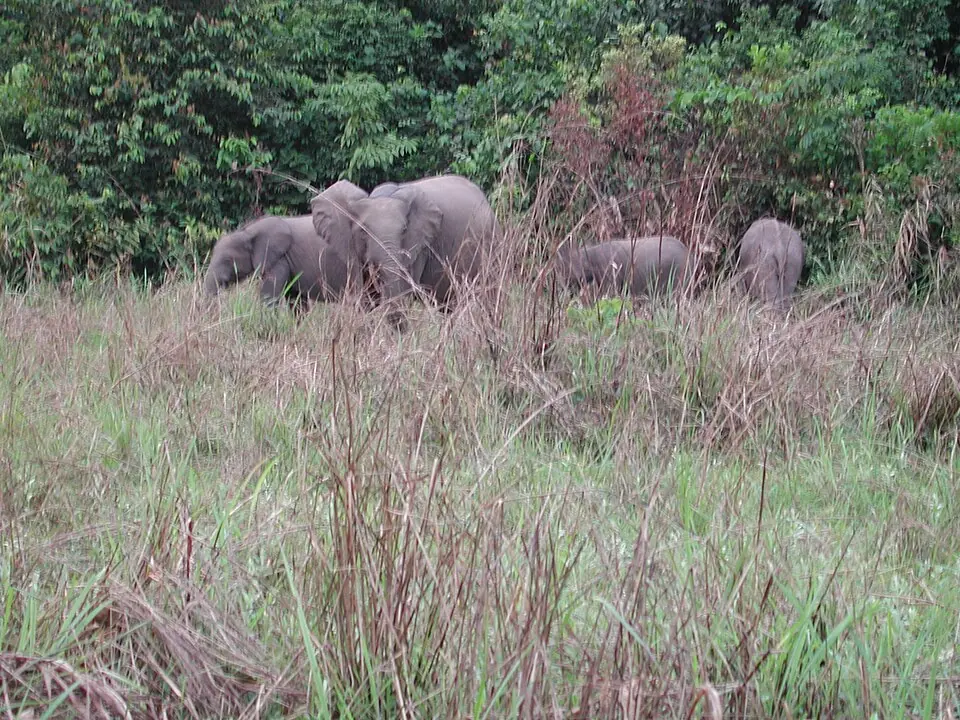 Photo: (c) John P Friel, some rights reserved (CC BY) · CC BY 4.0
 Republic of the Congo
 Angola
 Cameroon
 Central African Republic
 Chad
 DR Congo
 Equatorial Guinea
 Gabon
 São Tomé and Príncipe