 AfriqueUnie
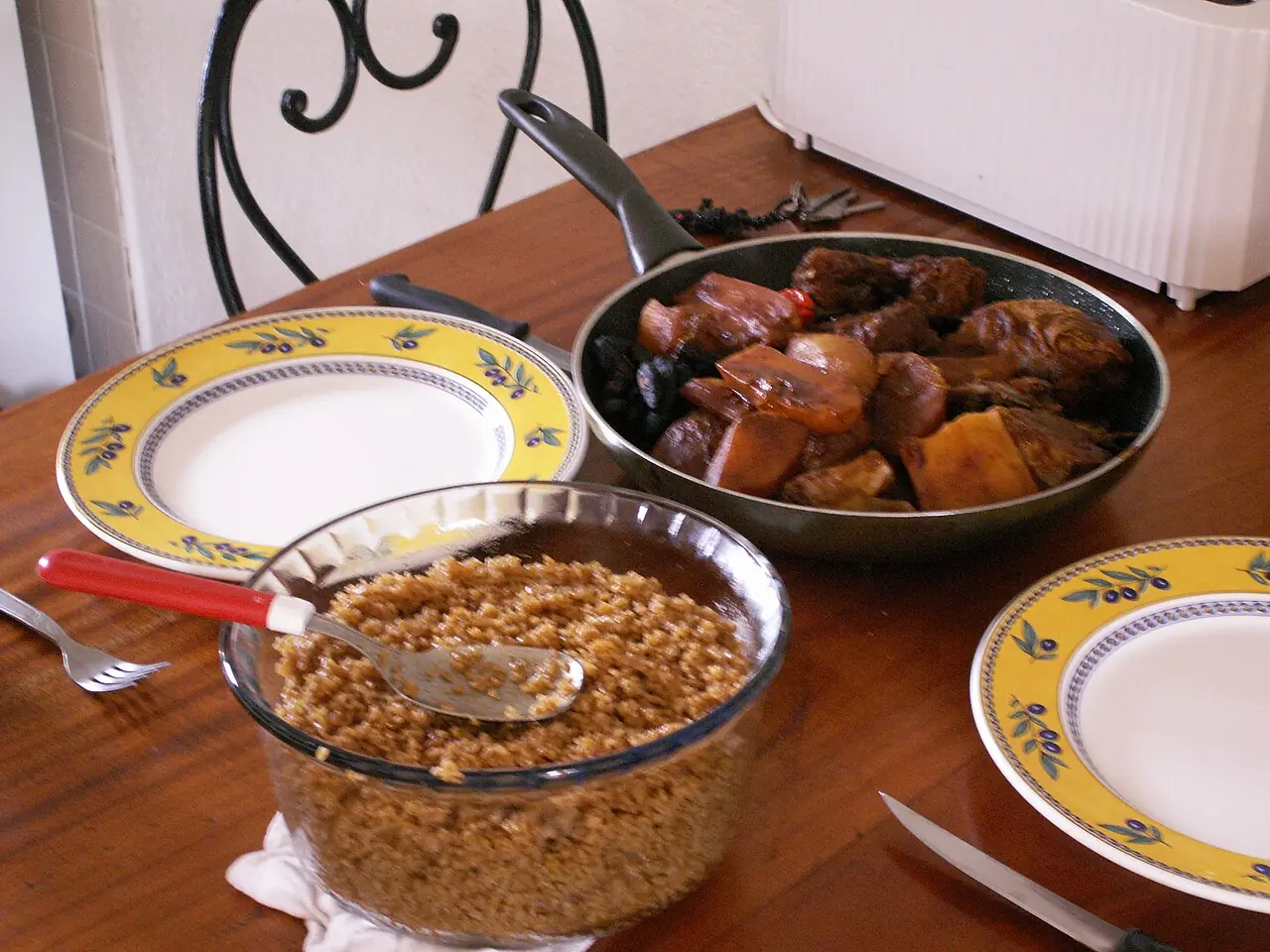 Photo: KVDP · Public domain
Published by Adama Doumbia, founder of Afrique Unie · updated 28 November 2026 · our method and sources
Thieboudienne, or ceebu jen in Wolof (meaning rice and fish), is the national dish of Senegal. Tradition credits its invention to Penda Mbaye, a cook from Saint-Louis, in the 19th century. In 2021, UNESCO added ceebu jen to its list of the Intangible Cultural Heritage of Humanity.
It is mostly cooked for the midday meal in a large pot, then served on one big shared platter that the whole family gathers around. The fish is stuffed with a paste of parsley, garlic and chilli called rof, and the vegetables simmer in a tomato sauce flavoured with dried fish.
The broken rice then cooks in that broth and catches slightly on the bottom of the pot. This crispy layer, the xoon, is the part everyone fights over. There are also versions made with meat (ceebu yapp) or chicken.
Ingredients
For the rof (stuffing)
- 1 bunch of flat-leaf parsley
- 4 garlic cloves
- 1 spring onion
- 1/2 Scotch bonnet or habanero chilli
- 1 stock cube, crumbled
- A pinch of salt and black pepper
For the fish and sauce
- 1.5 kg (3 lb 5 oz) white grouper or similar firm fish, cut into 6 thick steaks
- 150 ml (5 fl oz) groundnut oil
- 2 onions, sliced
- 140 g (5 oz) tomato purée
- 1 piece of dried fish (guedj), rinsed
- 1 yet (fermented sea snail), optional
- 2.5 litres (4 1/2 pints) water
- 1 whole chilli
- Salt
For the vegetables
- 1/4 white cabbage
- 2 carrots
- 1 small cassava, peeled and cut into chunks
- 1 aubergine
- 1 turnip
- 1 sweet potato
- 1 piece of pumpkin or squash (about 300 g / 10 oz)
- 6 okra pods
- 1 jaxatu (bitter garden egg), optional
For the rice
- 750 g (1 lb 10 oz) broken rice
- 1 tablespoon tamarind pulp, optional
- 2 limes, to serve
Method
- Make the rof: blend or pound the parsley, garlic, spring onion, chilli, stock cube, salt and pepper into a thick paste.
- Cut two or three deep slits into each fish steak and fill them with rof. Keep one spoonful of rof for the sauce.
- Heat the oil in a large pot and brown the fish steaks for 3 minutes on each side. Lift them out and set aside.
- In the same oil, fry the onions for 5 minutes. Add the tomato purée loosened with a glass of water and the remaining rof, then cook for 10 minutes over a medium heat, stirring, until the tomato loses its sharpness.
- Pour in the water and add the guedj, the yet and the whole chilli. Bring to the boil, then add the firmest vegetables: cassava, carrots, cabbage and turnip. Cook for 20 minutes.
- Add the fish, aubergine, sweet potato, pumpkin, okra and jaxatu. Simmer for 25 minutes, until the fish flakes easily with a fork and the vegetables are tender.
- Carefully lift out the fish and vegetables with a slotted spoon. Keep them warm in a covered dish with two ladles of sauce. If using tamarind, mix it into a small ladle of sauce and serve it on the side.
- Rinse the broken rice several times in cold water. Leave about 1.2 litres (2 pints) of broth in the pot (remove some or top up with water if needed), check the seasoning, then add the rice.
- Cover, turn the heat down to the lowest setting and cook for 30 to 35 minutes. Stir once or twice at the start, then let the bottom catch slightly to form the xoon.
- Spread the rice on a large platter, arrange the fish and vegetables on top and serve with lime wedges. Scrape out the xoon and serve it on the side.
Tips and variations
- No thiof (white grouper)? Grouper, sea bass, cod or pollack steaks all work well.
- Broken rice is sold in African and Asian grocers. Otherwise, roughly crush long-grain rice in a mortar or food processor.
- Guedj and yet give the sauce its deep flavour. If you cannot find them, add a little smoked fish or a spoonful of fish sauce.
- Thieboudienne keeps for 2 days in the fridge in a sealed container. Reheat the rice covered, with a splash of water.
To serve with it: Serve it with a glass of chilled bissap (hibiscus drink) or bouye (baobab fruit) juice.
Have you tried this recipe?
Be the first to rate it.
Thank you for your rating!
Frequently asked questions
What is the difference between thieboudienne and jollof rice?
Both are rice dishes cooked in a tomato sauce, and ceebu jen is often seen as the ancestor of jollof. Thieboudienne, however, uses broken rice, stuffed fish and large vegetables served on top.
Which rice should I use for thieboudienne?
Broken rice is the most authentic choice: it soaks up the sauce and has a soft texture. Crushed long-grain rice is a good substitute.
What is xoon?
It is the lightly toasted layer of rice that forms on the bottom of the pot. Crispy and full of flavour, it is a favourite and often served separately.
Can I make thieboudienne with meat?
Yes, the meat version is called ceebu yapp. Beef or lamb is used and simmered for longer before the vegetables go in.