Creative Dakar, the island of Gorée and its poignant memories, the beaches of the Petite Côte, the mangrove creeks of the Sine-Saloum and lush Casamance: Senegal is the ideal gateway to West Africa.
In Senegal, the first word you learn is often teranga. “Hospitality” is a poor translation: it is more a way of being, the reason a stranger is invited to share the family bowl of rice, why you are offered tea in the shade of a mango tree, and why someone will walk you to the right bus stop rather than wave vaguely in its direction. The country is experienced first and foremost through these encounters, and that is what brings so many travellers back.
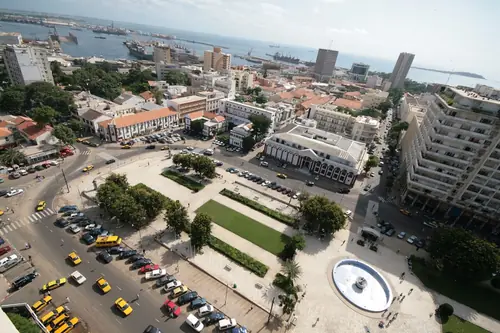
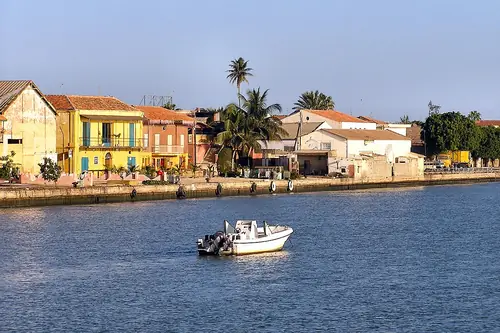
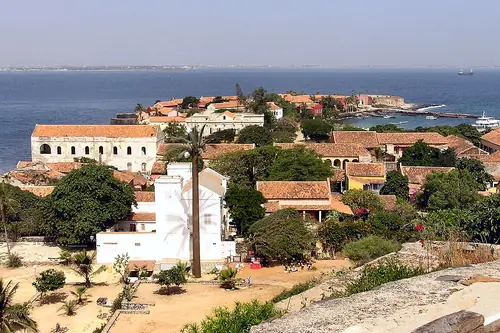
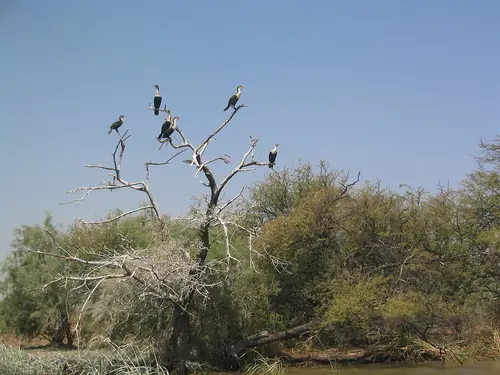
The land itself offers astonishing variety for its size. Dakar, perched at the tip of the Cap-Vert peninsula, is the westernmost city on the continent: you can surf at Les Almadies in the morning, listen to mbalax at night and drift through galleries between two markets. Twenty minutes away by ferry, Gorée Island calls for quiet reflection. Further south, the Petite Côte strings together fishing villages and beaches, then the Sine-Saloum Delta unfurls its bolongs, the mangrove channels you explore by pirogue among the egrets. In the north, Saint-Louis stretches its colonial façades along the river, a stone's throw from Djoudj National Park, where thousands of birds from Europe spend the winter. And in the far south, cut off from the rest of the country by the Gambia, Casamance surprises with its greenery, its rice paddies and its Jola culture.
Senegal is also a practical choice for a first taste of West Africa: long-standing political stability, a road network that has improved markedly, accommodation ranging from village campements to eco-lodges, and a long, pleasant dry season. In two weeks you can combine city life, history, nature and lazy beach days without rushing. Finally, it is a major cultural scene: Youssou N'Dour and mbalax, Dak'Art, the Biennale of Contemporary African Art, the writing of Senghor, Mariama Bâ and Cheikh Hamidou Kane, the films of Sembène. Travelling to Senegal means joining a conversation that has been going on for centuries between Africa, Sufi Islam, the Atlantic and Europe.
History and culture
Before the Europeans arrived, the lands of Senegal saw a succession of powers: Takrur in the river valley, then the Jolof Empire and the Wolof and Serer kingdoms of Cayor, Baol, Sine and Saloum. The Portuguese sailed along the coast from the 15th century; the Dutch, English and French then fought over the trading posts, among them Gorée and Saint-Louis, cogs in the Atlantic slave trade. In the 19th century France conquered the interior, meeting resistance notably from Lat Dior, and made first Saint-Louis and then Dakar the capitals of French West Africa.
The Sufi brotherhoods, above all the Mourides around Cheikh Ahmadou Bamba and the Tijaniyya, shaped society profoundly at the time, and still do. Independent in 1960 under the presidency of the poet Léopold Sédar Senghor, the country has seen several democratic transfers of power through the ballot box, a regional rarity of which Senegalese are proud. The tirailleurs sénégalais, the colonial infantrymen enlisted in both world wars, and the Thiaroye massacre of 1944 remain living memories. Today the great Magal pilgrimage to Touba, Dakar's rise as a cultural capital and the discovery of offshore oil and gas paint the picture of a country looking to the future without turning its back on its roots.
8 experiences not to miss in Senegal
01Three-glass teaAccept ataya when it's offered: the first glass is bitter, the second gentler, the third sweet, and the conversation lasts as long as all three.
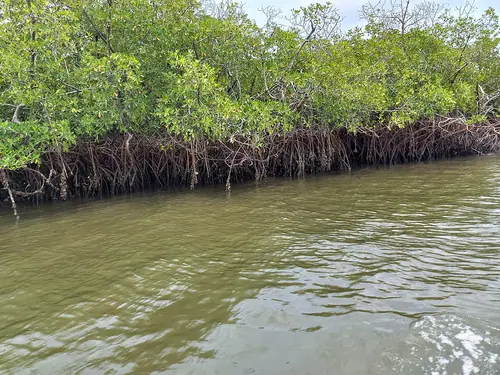
Photo : Mouhamadoulmansour · CC BY-SA 4.002Pirogue through the bolongsGlide at high tide through the mangrove channels of the Sine-Saloum, past oysters clinging to the roots and herons taking flight.
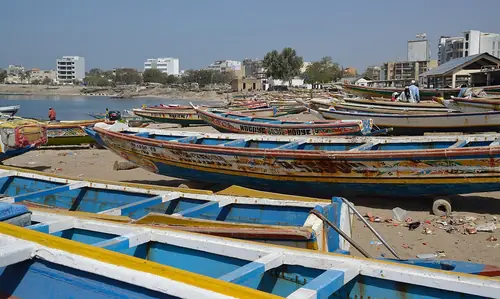
Photo : Olivier Dugornay (Ifremer) · CC BY 4.003The catch comes in at SoumbédiouneLate in the afternoon in Dakar, the painted pirogues run up onto the beach and the fish is sold straight off the sand.
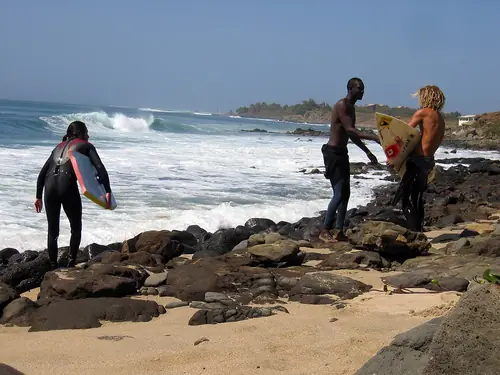
Photo : Manuele Zunelli · CC BY 2.004Surfing at Les Almadies and NgorThe waves on the western point can be surfed almost all year round, and several schools welcome beginners.
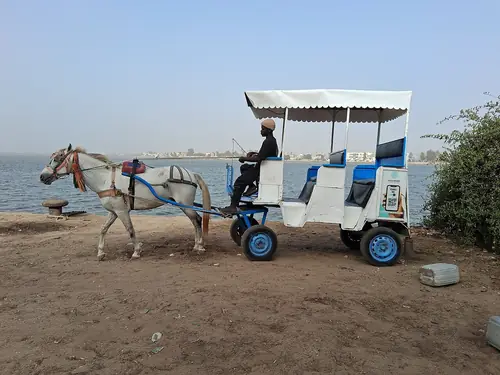
Photo : Adjoajo · CC BY 4.006Horse and cart around Saint-LouisTour the island by horse-drawn calèche, then walk across to Guet Ndar, the fishermen's quarter, just as the pirogues return.
07Senegalese wrestlingWatch a laamb bout, wrestling with strikes and the national sport, preceded by songs, protective rituals and stadium-level fervour.
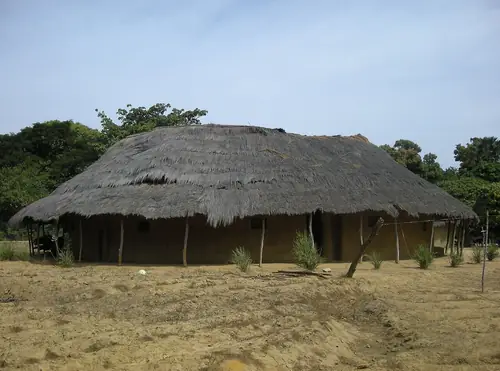
Photo : Ji-Elle · Public domain08Jola villages of CasamanceNear Oussouye and Enampore, discover the impluvium houses and the workings of the Jola kingdoms and sacred groves.
When to go to Senegal
The best time to go is from November to May, during the long dry season. From December to February the nights are cool on the coast, the air is clear and it's the ideal time for the birds of Djoudj and the Saloum. March to May grows hotter inland, while the trade winds keep Dakar and Saint-Louis pleasant. The harmattan, a dry, dust-laden wind, can haze over the sky on some winter days. The hivernage, the rainy season, runs from July to October: violent but brief downpours, humid heat, landscapes that turn suddenly green and gentler prices, but some tracks become difficult, especially in Casamance and the Saloum.
Getting around
Blaise Diagne International Airport is at Diass, about an hour from Dakar on the toll motorway; the TER commuter train now links central Dakar with the new town of Diamniadio. Between cities, the most common option is still the sept-places, a shared estate car that leaves the gare routière once it's full: fast and cheap, but book your seat in advance if you want some comfort. Air-conditioned coaches are spreading on the main routes. For Casamance, the overnight ferry from Dakar to Ziguinchor is a lovely experience, and there are domestic flights too. In town, agree the taxi fare before getting in; ride-hailing apps work in Dakar.
Etiquette and customs
Greetings are never rushed: people ask after your family, your health, your work, and a “Nanga def?” in Wolof (“how are you?”) will earn you plenty of smiles. You eat, give and receive with your right hand. Around the communal bowl, keep to your own section in front of you and wait for your host to push the best pieces your way. Senegal is overwhelmingly Muslim and organised around its brotherhoods: dress modestly in mosques and in holy cities such as Touba, and be discreet during Ramadan. Always ask before photographing someone, and accept that they may say no. Haggling is expected at the market, but always with good humour.
Food and drink in Senegal
Thieboudienne, rice with fish cooked in a tomato sauce with cassava, carrot, cabbage and aubergine, is the national dish and is on UNESCO's intangible heritage list; the best bit is the xoon, the crust of toasted rice at the bottom of the pot. Yassa, chicken or fish marinated in lemon with slow-cooked onions, and mafé, a peanut-butter stew, complete the trio. Try thiou, soupou kandja with its okra sauce, the dibiteries where lamb is grilled over a wood fire, and a street breakfast of pain-thon (tuna sandwich) or ndambé, spiced beans. To drink: hibiscus bissap, ginger juice, bouye made from baobab fruit and café Touba, scented with Guinea pepper.
The must-sees: Gorée Island, Lake Retba (Pink Lake), Saloum Delta, Djoudj National Bird Sanctuary.
Which cities should I visit in Senegal?
Dakar, Saint-Louis, Ziguinchor. The capital is Dakar.
How much should I budget for a trip to Senegal?
Mid-range: around €60–120 per person per day, excluding flights. This is only a guide and depends above all on the accommodation and activities you choose.
What currency and languages are used in Senegal?
Currency: West African CFA franc (XOF). Languages: French, Wolof.
How do I get to Senegal?
The main international airport has the code DSS. Compare flights with the ‘Flights’ button on this page.
Do I need a visa to visit Senegal?
Entry requirements depend on your nationality and change regularly. Check them on the country's official website or with your foreign ministry before booking, and make sure your passport is valid.
What should I eat in Senegal?
Dishes to try while you're there: Thieboudienne, yassa, mafé.
Map
Senegal on the map
Cities Places to see · Approximate positions
On the ground
Getting around and staying healthy
Getting around
The TER commuter train links central Dakar with Diamniadio and, since late September 2026, with Blaise Diagne airport; in town, the BRT and Dakar Dem Dikk buses round out the network. To reach Saint-Louis, Touba or the Sine-Saloum, take a sept-places shared bush taxi or a coach. Casamance can be reached by boat (Dakar–Ziguinchor service calling at Carabane, a few departures a week), by road through The Gambia, or by air with Air Sénégal to Ziguinchor and Cap Skirring; Gorée is a twenty-minute ferry ride away. In Dakar, the Yango and Heetch apps work; driving is on the right.
Health and safety
Yellow fever
Certificate required only if you arrive from, or transited through, a country with a risk of yellow fever (from 9 months, incl. airport transits over 12 h); vaccine recommended for the whole country (from 9 months).
Malaria
Present throughout the country: ask a doctor about preventive medication and protect yourself from mosquitoes.
Water and food
Unless your accommodation says otherwise, drink sealed bottled or filtered water, and wash your hands often.
Source: US CDC, November 2026. Rules change: see a travel health clinic before you leave, and the UK Foreign Office travel advice for safety.
Useful numbers
Local emergency numbers
Police: 17 Ambulance: 15 Fire: 18 Gendarmerie (military police), often more responsive in rural areas: 123 (FCDO). France Diplomatie: police and gendarmerie 17 or 18, national gendarmerie +221 800 00 20 20.
Sources: France Diplomatie, Viaggiare Sicuri, Belgian Foreign Affairs, GOV.UK, checked in November 2026. All 54 countries
Entry requirements (visas, vaccinations) and security conditions change regularly: check them with the official authorities before booking. Official tourism website: Agence sénégalaise de promotion touristique.
Affiliate cookiesWe would like to load a script from our partner Travelpayouts. It may set cookies so that we receive a commission when you book through our links, at no extra cost to you. If you decline, the site works in exactly the same way. Find out more
 AfriqueUnie
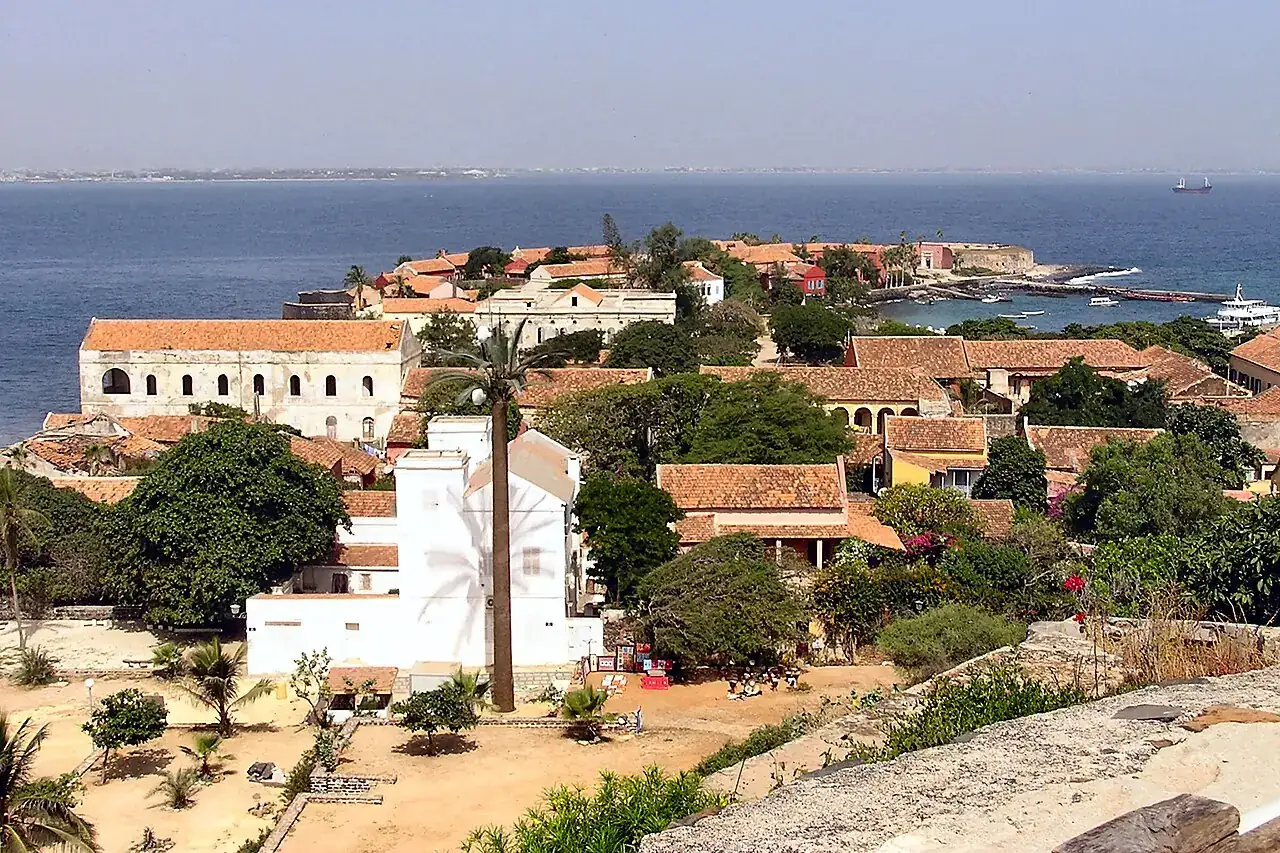 Photo: Manu25 · CC BY-SA 4.0
 Senegal

 Senegal or Cape Verde



 Senegal or Gambia
 Benin
 Burkina Faso
 Guinea
 Guinea-Bissau
 Liberia
 Mali
 Mauritania
 Niger
 Nigeria
 Sierra Leone
 Togo