 AfriqueUnie
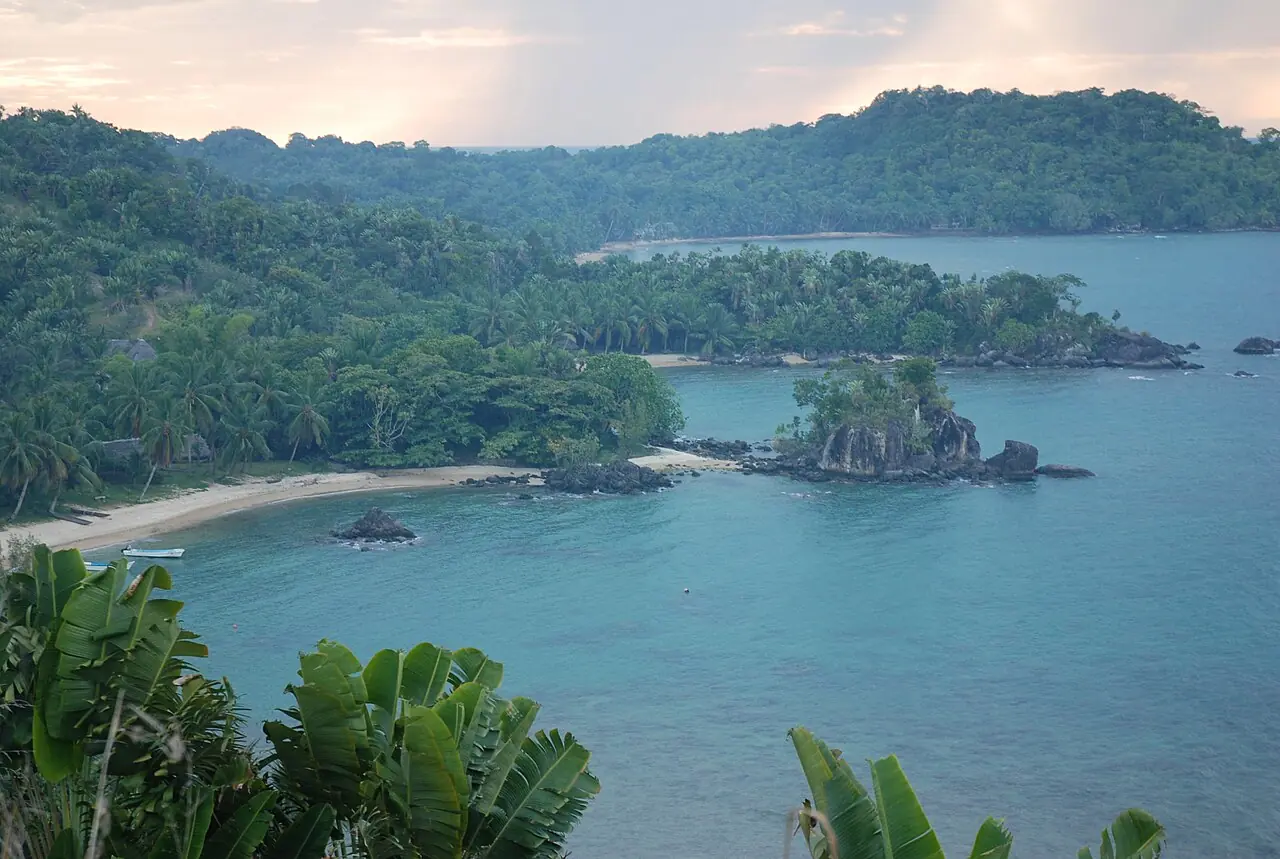 Photo: M worm · Public domain
Every year, humpback whales leave the cold waters of Antarctica to calve and mate in the warm waters off Africa. Breaches, fin slaps, singing males and mothers with their calves: watching from a boat, or sometimes even from the beach, is spectacular.
In the Indian Ocean, Île Sainte-Marie in Madagascar, Mohéli in the Comoros, the Bazaruto Archipelago in Mozambique and Mauritius are the best-known sites. On the Atlantic side, the coasts of Gabon and São Tomé and Príncipe host the same Southern Hemisphere whales, while Cape Verde welcomes a small North Atlantic population in a different season.
Where to see them
- 1
Île Sainte-Marie ·
 Madagascar
The channel between the island and the Malagasy coast is one of the Indian Ocean's best sites: breaches, song and mothers with calves, sometimes visible from the beach.
- 2
Mohéli Marine Park ·
 Comoros
Humpbacks come to calve in the park's calm, shallow waters, explored by small boat from coastal villages.
- 3
Pointe Denis ·
 Gabon
Across from Libreville, the coast off Pointe-Denis hosts humpback whales, seen mainly on boat trips.
- 4
Loango National Park ·
GabonAlong this wild coast, humpbacks pass offshore from beaches where elephants and buffalo roam.
- 5
Praia Banana (Príncipe) ·
 São Tomé and Príncipe
The waters around Príncipe are a calving and resting area for humpback whales, seen on boat trips.
- 6
Bazaruto Archipelago ·
 Mozambique
Humpbacks travel past the islands of the archipelago during their migration, in the heart of a marine national park.
- 7
Le Morne Brabant ·
 Mauritius
Off Mauritius's west coast, humpbacks are mostly seen on boat trips in August and September.
- 8
Boa Vista beaches ·
 Cape Verde
Sal Rei Bay is the main humpback breeding area in the eastern North Atlantic.
When to go
For Southern Hemisphere whales, the season runs from July to September, sometimes into October, when tropical waters become breeding grounds during the southern winter. Cape Verde is the exception: North Atlantic humpbacks visit from February to May, peaking in March and April.
Our tips
- Choose an operator that follows local regulations: a minimum distance (often 100 metres), a slow approach from the side and limited viewing time.
- Never chase a pod and never get between a mother and her calf.
- Only get in the water with whales where it is permitted and supervised; elsewhere, watch from the boat.
- No drones without a permit: the noise and closeness disturb the whales.
- Bring seasickness tablets, a windproof jacket and binoculars, and go out in the morning, when the sea is usually calmer.
Frequently asked questions
Where can you see humpback whales in Africa?
The best places are Île Sainte-Marie (Madagascar), Mohéli (Comoros), the coast of Gabon, São Tomé and Príncipe, the Bazaruto Archipelago (Mozambique), Mauritius and, from February to May, Boa Vista in Cape Verde.
When can you see humpback whales in Madagascar?
From July to September, sometimes into October, especially in the channel between Île Sainte-Marie and Madagascar's east coast.
Can you see humpback whales from the beach?
Yes, at some sites such as Île Sainte-Marie, the coast of Gabon or Mohéli you can sometimes see blows and breaches from the shore, but a boat trip is more reliable.
When can you see whales in Cape Verde?
From February to May, peaking in March and April, mainly around Boa Vista, the main humpback breeding area in the eastern North Atlantic.