 AfriqueUnie
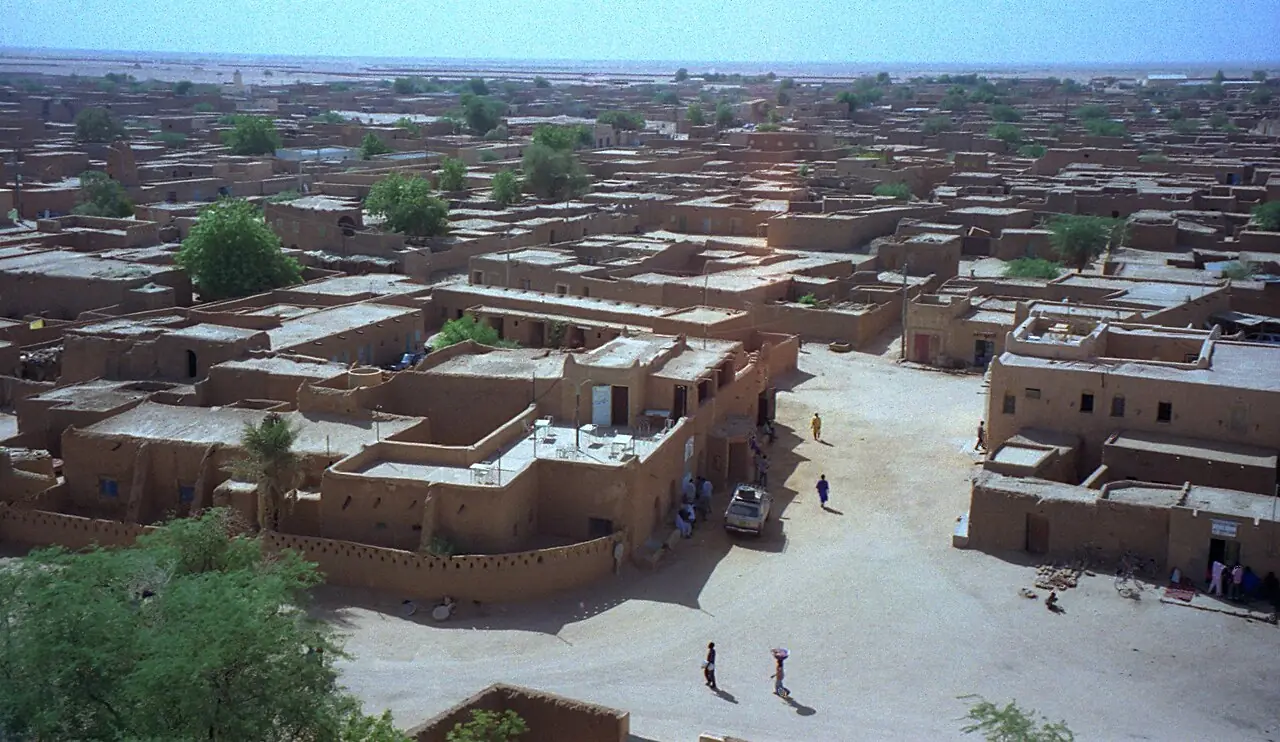 Photo: Dan Lundberg · CC BY-SA 2.0
Published by Adama Doumbia, founder of Afrique Unie · updated 28 November 2026 · our method and sources
Why visit Agadez?
Agadez lies in northern Niger, a region where European authorities advise against all travel because of the risk of kidnapping and insecurity. It is not reasonable to consider going there at present: check your government's official travel advice. But the city deserves to be known.
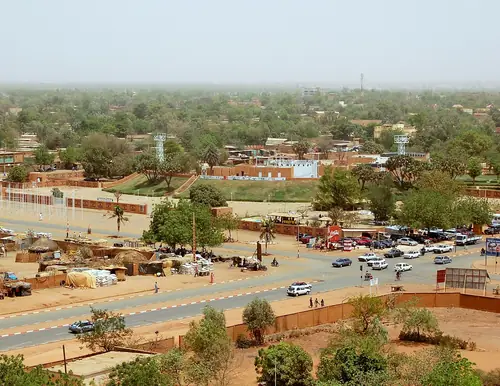
Gateway to the Sahara, at the foot of the Aïr Mountains, Agadez was for centuries one of the great staging posts on the caravan routes linking West Africa to the Maghreb. Its Grand Mosque, whose pyramid-shaped earthen minaret bristling with wooden stakes rises more than twenty-five metres, is considered one of the tallest mud-brick structures in the world. It towers over a historic centre of lanes and banco houses, some decorated with patterns in relief, inscribed as a World Heritage Site in 2013.
Seat of a sultanate that still exists today, the city is also a heartland of Tuareg culture: smiths and jewellers craft the famous Agadez cross here, and camel drivers used to stop here before heading off into the Ténéré. A few hours away, the Cure Salée festival at Ingall brought Tuareg and Fulani herders together every year.
Things to do in Agadez: 6 ideas
- 01The Grand MosqueAdmire the earthen minaret and, in the past, climb it for a view over the rooftops of the old town.
- 02The Sultan's PalaceA banco residence in the heart of the city, seat of an ancient customary authority.
- 03The jewellers' workshopsWatch the smiths working silver into crosses, bracelets and earrings.
- 04The camel marketOn the outskirts, a lively trading place for desert herders.
- 05The Baker's HouseAn old house in the old town, often visited for its interior architecture.
- 06Gateway to the desertIn the past, set off for the Aïr and the Ténéré, Agadez being the base for every expedition.
Where to stay in Agadez
The old town, around the mosque and the Sultan's Palace, is home to the earthen lanes, the workshops and the few guesthouses and inns that welcomed travellers in traditional banco houses. Newer districts spread out towards the edges. No accommodation recommendation makes sense until the security situation has improved for good.
 Niger