 AfriqueUnie
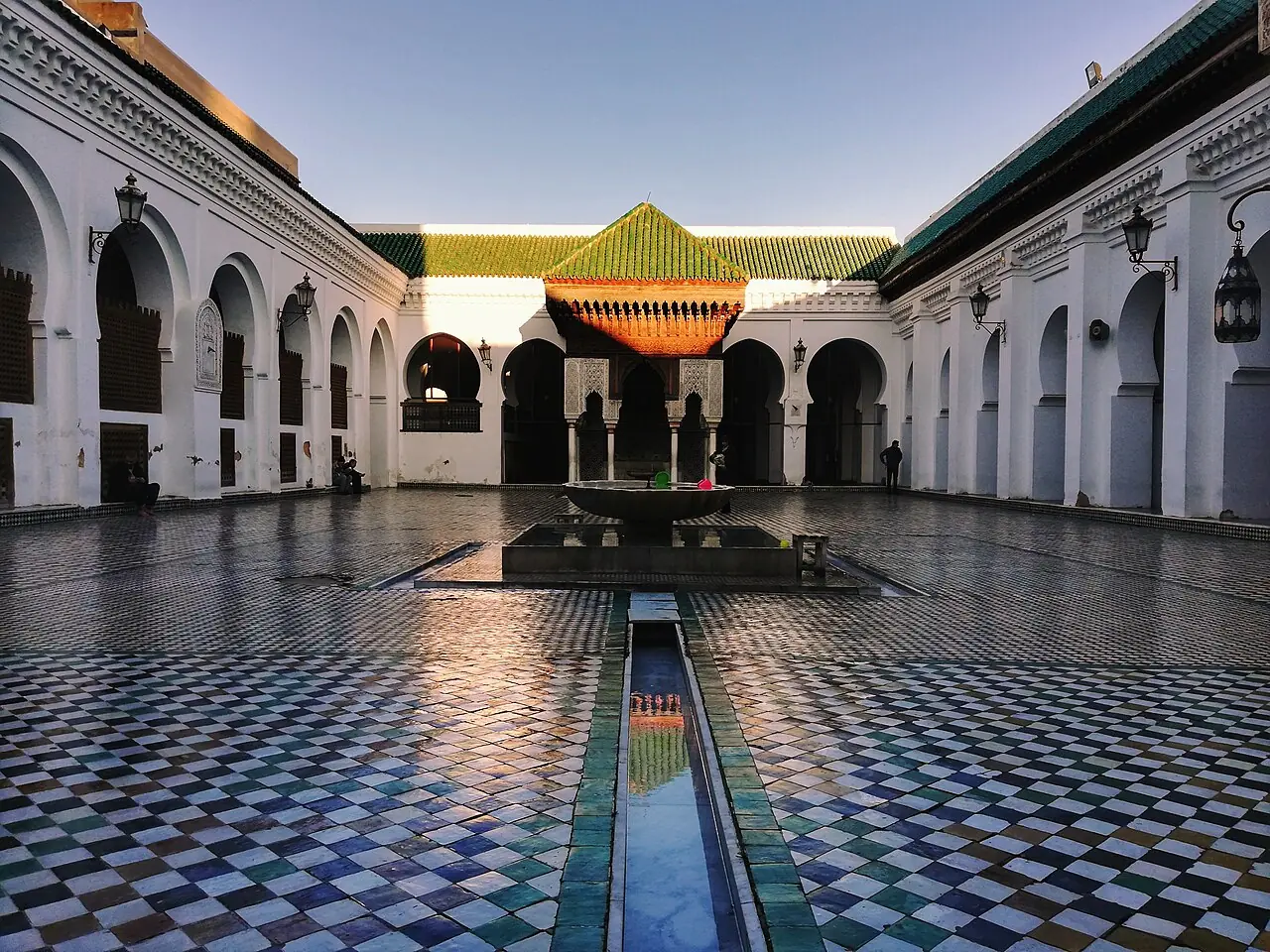 Photo: Momed.salhi · CC BY-SA 4.0
Published by Adama Doumbia, founder of Afrique Unie · updated 28 November 2026 · our method and sources
Day 1: Fes el-Bali, from Bab Boujloud to the tanneries
- 01MorningEnter the medina through Bab Boujloud, the Blue Gate, ideally with an official badge-wearing guide booked through your accommodation. Walk down Talaa Kebira to the Bou Inania Madrasa, one of the few with a minaret, and admire its zellige tilework, carved plaster and sculpted cedar. Opposite, look up at the Marinid water clock fixed to the facade.
- 02LunchCarry on down Talaa Kebira, past stalls selling babouches, spices and pastries, towards the Qarawiyyin quarter. Have lunch on a medina terrace: harira, tagine or pastilla, the great sweet-and-savoury speciality of Fes. On Fridays, many shops close around the main midday prayer, so plan a longer break.
- 03AfternoonVisit the Al-Attarine Madrasa, then glimpse the Qarawiyyin Mosque through its doorways, as it is closed to non-Muslims. Detour via Place Seffarine and its coppersmiths before reaching the Chouara tanneries, viewed from the terraces of the surrounding leather shops. Accept the sprig of mint you are offered and politely decline if you do not wish to buy.
- 04EveningClimb back up to Bab Boujloud along Talaa Seghira, the parallel street and often quieter, before nightfall: the lanes empty quickly and you should not venture into deserted alleys. Have dinner near your riad, then enjoy the roof terrace as the calls to prayer echo across the sea of white rooftops.
Day 2: Fes el-Jdid, the mellah and the viewpoints
- 01MorningTake a red petit taxi to the Royal Palace, Dar el-Makhzen, whose monumental brass doors framed by zellige can only be admired from outside. Then walk through the old mellah, the Jewish quarter, with its houses and carved balconies: the restored Ibn Danan Synagogue and the Jewish cemetery with its whitewashed tombs can be visited with a caretaker.
- 02LunchWalk up the Grande Rue of Fes el-Jdid, a working street far less touristy than the old medina, and stop for a simple lunch along the way. Then take a break in Jnan Sbil, the garden between Fes el-Jdid and Bab Boujloud, with its avenues of palms and bamboo, its pools and its large waterwheel: a breath of fresh air between two medinas.
- 03AfternoonHead back into Fes el-Bali for the Nejjarine Museum, devoted to woodwork and crafts, in a beautifully restored 18th-century fondouk next to the fountain of the same name. From the roof terrace, the view stretches across the medina. Then wander through the little henna souk, shaded by old trees, next to the old Sidi Frej maristan.
- 04EveningAt sunset, take a taxi up to the Marinid Tombs on the hill north of the medina, or to nearby Borj Nord. The view takes in the whole of Fes el-Bali just as the calls to prayer rise. Go in a group and leave before it gets fully dark: the French authorities advise against walking in deserted places after nightfall.
Day 3: Day trip to Volubilis and Meknes
- 01MorningSet off early by car with a driver or by grand taxi for Volubilis, about an hour and a half away. Visit the Roman city, a UNESCO World Heritage Site, before the heat: the Arch of Caracalla, the basilica, the decumanus maximus and mosaics still in place, such as those in the House of the Labours of Hercules. Bring a hat and water, as shade is scarce.
- 02LunchThen drive up to Moulay Idriss Zerhoun, a holy town spread over two hills facing the ruins, where the founder of the Idrisid dynasty is buried. The shrine is closed to non-Muslims, but the steep lanes offer lovely views. Have a simple lunch in town, then take the road to Meknes, about half an hour away.
- 03AfternoonIn Meknes, the former capital of Moulay Ismail, admire Bab Mansour, one of the finest gates in Morocco, then Place el-Hedim and the medina beside it. Continue to the vast royal granaries and stables of Heri es-Souani and the Agdal Basin, which once served as a water reservoir. Half a day covers the highlights.
- 04EveningReturn to Fes in the late afternoon by motorway, in about an hour, or by train from Meknes station: the French authorities advise against travelling on Moroccan roads at night. On your last evening, treat yourself to a traditional hammam or a dinner of Fassi cooking in the medina, close to where you are staying.
Practical tips
- 01Getting aroundThe medina can only be explored on foot; red petit taxis, which use meters, link its gates with Fes el-Jdid and the new town. For the day trip, book a car with a driver. If you get lost, ask a shopkeeper rather than the young men offering to guide you.
- 02Where to stayA riad in Fes el-Bali offers the most immersive experience, as long as it is close to Bab Boujloud or a gate reachable by taxi. The Batha area is a good compromise. The new town suits a late arrival by train or anyone who prefers conventional hotels.
- 03When to goSpring, from March to May, and autumn, from September to November, are the most pleasant seasons. Summer is very hot, often above 35 °C in the afternoon, and winter can be cool and wet. During Ramadan, opening hours change and some places close earlier.
- 04Safety and etiquetteTurn down fake guides firmly but politely, and check that official guides wear their badge. Keep your bag and phone close in crowds. Wear clothes that cover your shoulders and knees, ask before photographing craftsmen and respect the fact that mosques are closed to non-Muslims.
Frequently asked questions
Are 3 days enough for Fes?
Yes: two days for Fes el-Bali, Fes el-Jdid and the viewpoints, then a third for Volubilis and Meknes. If you would rather stay in town, spend that last day on a cooking class, a hammam and a second, more relaxed exploration of the souks without a guide.
Do you need a guide for the Fes medina?
It is not compulsory, but an official guide, booked through your accommodation and wearing a badge, makes the first day in this maze much easier. After that, the two main streets, Talaa Kebira and Talaa Seghira, are enough to find your own way around.
What can you do in Fes when it rains?
The Bou Inania and Al-Attarine madrasas, the Nejjarine Museum and the partly covered souks remain enjoyable. Wear good shoes, as the cobbled lanes of the medina get slippery. A traditional hammam is also a good way to warm up in winter.
How do you get from Fes to Volubilis?
By car with a driver or by grand taxi, allow about an hour and a half for roughly 85 km. Alternatively, take the train to Meknes, then a grand taxi to Volubilis and Moulay Idriss Zerhoun. Either way, plan to be back before dark.