AfriqueUnie
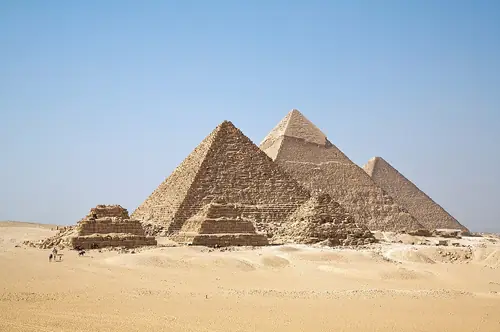
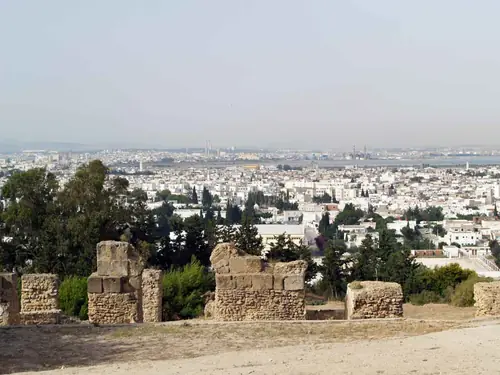
 Photo: Ricardo Liberato · CC BY-SA 2.0
Published by Adama Doumbia, founder of Afrique Unie · updated 28 November 2026 · our method and sources
Why this eclipse is exceptional
A total solar eclipse happens when the Moon passes exactly between the Earth and the Sun and hides the whole solar disc. Totality can only be seen from a narrow strip, the path of totality; for thousands of kilometres around it, people see only a partial eclipse. On 2 August 2027 the Moon will be close to perigee, so it will look slightly larger than usual, which makes the total phase markedly longer.
The result: up to about 6 minutes and 23 seconds of darkness at the best spot, in Upper Egypt, not far from Luxor. According to NASA calculations cited by Wikipedia, it is the second-longest total eclipse of the 21st century, after that of 22 July 2009, whose maximum fell over the Pacific. Above all, it is the longest of the century on easily accessible land: nothing longer will happen until 3 June 2114. The media have already nicknamed it the 'eclipse of the century'.
By comparison, most total eclipses are much shorter, often lasting only a few minutes. Six minutes gives you time to watch the corona spread around the black disc, spot the brightest planets and stars, feel the temperature drop and take photographs calmly, without chasing every second.
The path of totality, country by country
The Moon's shadow will first touch the Atlantic Ocean, then cross the Strait of Gibraltar: the far south of Spain and Gibraltar will be in the path, as will northern Morocco. It will then race east across Algeria, Tunisia, Libya and Egypt, before crossing the Red Sea to Saudi Arabia, Yemen and the north-eastern tip of Somalia.
In Morocco, totality covers the north of the country: Tangier and Tetouan (about 4 minutes 50 seconds) and Nador (about 4 minutes 15 seconds). Casablanca lies outside the path and will only see a deep partial eclipse (about 97% of the Sun covered).
In Algeria, the path covers the west and north, including Oran (about 5 minutes 8 seconds), Ain Temouchent, Sidi Bel Abbes and Tlemcen, then further east M'Sila and Bou Saada (more than 5 minutes), Setif, Batna and Biskra. Algiers and Constantine sit right next to the northern limit: in Algiers the Sun will not be completely covered and a thin crescent will remain. It is better to head a few dozen kilometres towards the centre of the path.
In Tunisia, the shadow crosses the centre and south-east of the country: Kasserine, Gafsa, Sidi Bouzid, Kairouan, Sfax, Gabes and the island of Djerba. The Tunisian maximum, about 5 minutes 48 seconds according to Wikipedia, lies just south of the Kerkennah Islands. Tunis is outside the path. It will be the first total eclipse visible in Tunisia since 30 August 1905.
In Libya, Benghazi lies almost on the centre line, with more than 6 minutes of totality. However, Libya is subject to very strong warnings from foreign ministries: France and the UK advise against all travel to most of the country, and against all but essential travel to Benghazi itself. We do not recommend it for the eclipse.
Finally, in Egypt, the path crosses Siwa Oasis and then the Nile Valley: Minya, Asyut, Sohag, Nag Hammadi, Qena, Luxor and Edfu. This is where totality is longest. Cairo, outside the path, will see only a partial eclipse. Aswan does not appear among the towns in the path in the published tables: if you are staying there, plan to travel north to Edfu or Luxor.
Where to stand: towns and sites in the path
- Luxor (Egypt): The best balance of duration and comfort: about 6 minutes 20 seconds of totality, with the total phase starting at around 13:02 local time according to the published tables. Temples, an airport and plenty of accommodation.
- Sohag and Nag Hammadi (Egypt): In the heart of the path, with about 6 minutes 23 to 6 minutes 24 seconds according to the tables. Less touristy than Luxor, but closest to the maximum.
- Qena and Edfu (Egypt): Qena, next to the Dendera temple, gets about 6 minutes 12 seconds; Edfu, further south, about 5 minutes 33 seconds, with its great Temple of Horus.
- Asyut (Egypt): About 6 minutes 7 seconds of totality, in Middle Egypt, in the Nile Valley.
- Siwa Oasis (Egypt): About 5 minutes 33 seconds, amid desert and palm groves, far from the big cities.
- Sfax and the Kerkennah Islands (Tunisia): Sfax gets about 5 minutes 41 seconds, with totality at around 10:09 local time. The Tunisian maximum lies just south of Kerkennah.
- Djerba (Tunisia): In Houmt Souk, about 4 minutes 43 seconds of totality: a beach option, ideal for families.
- Kasserine and Gafsa (Tunisia): More than 5 minutes of totality, but check official advice: some mountain and border areas of western Tunisia are subject to warnings.
- Oran (Algeria): About 5 minutes 8 seconds, with totality at around 09:51 local time. A large, well-connected coastal city.
- Tangier and Tetouan (Morocco): About 4 minutes 50 seconds of totality in mid-morning, overlooking the Strait of Gibraltar. The closest gateway from Europe.
What weather to expect on 2 August
August generally brings clear skies across most of the path, and Upper Egypt offers the best chances: Luxor is one of the sunniest and driest cities in the world. The downside is the heat. In summer, average highs exceed 40°C in both Luxor and Aswan, and the eclipse will happen there in the early afternoon, at the hottest time of day.
On the coasts of Morocco, Algeria and Tunisia, the eclipse will take place in the morning and the heat will be less punishing, but the sea can bring haze or cloud. Wherever you are, stay flexible: check the forecast the day before and be ready to move a few dozen kilometres to find clear skies.
Planning your trip
- Book very early: Crowds are expected from all over the world, especially in Luxor and around the Strait of Gibraltar. Book flights, accommodation, Nile cruises and transfers as early as possible, ideally with flexible cancellation terms.
- Arrive early: Aim to be there at least the day before, or several days ahead. On the morning itself, roads and sites may be congested.
- Cope with the heat: In Upper Egypt, take plenty of water, a hat, light covering clothes and sun cream, and find some shade while you wait. Avoid alcohol and exertion during the partial phase, which lasts more than an hour before and after totality.
- Know the timings: The whole eclipse, partial phases included, lasts from about two and a quarter hours in Morocco to nearly two and three-quarter hours in Egypt. The local-time tables published on Wikipedia are a guide: confirm them for your exact site and check the official time in force in the country, which may change in summer.
- Entry rules and safety: Visas, health, areas to avoid: read your government's travel advice before booking and again before you leave. Some border and desert areas of Algeria, Tunisia and Egypt are subject to specific warnings.
- Insurance: Take out travel insurance covering medical care and repatriation, which is useful in case of heatstroke.
Protecting your eyes: the golden rules
Looking at the Sun, even when it is almost completely covered, can burn the retina permanently, with no pain at the time. During all the partial phases, use only eclipse glasses that meet the ISO 12312-2 standard, bought from a reliable supplier and in good condition, with no scratches or holes. Beware of counterfeits: the American Astronomical Society publishes a list of reputable suppliers.
Sunglasses, however dark, offer no protection at all. Never look at the Sun through binoculars, a telephoto lens or a telescope without a proper solar filter fitted to the front of the instrument: the concentrated light would damage your eye instantly, even through eclipse glasses.
Only during totality, when the solar disc is completely hidden, is it safe to look with the naked eye and admire the corona. As soon as the first ray of sunlight reappears, put your glasses back on. Keep a close eye on children, and have them practise beforehand.
Photographing the eclipse
For the partial phases you need a solar filter designed for cameras or telescopes, fitted to the front of the lens. A smartphone without a filter may be damaged if pointed at the Sun for long, and it will not do the event justice. During totality, and only during totality, remove the filter to capture the corona, the prominences and, just before and just after, the famous 'diamond ring'.
A sturdy tripod, a remote release and settings tested several days in advance are essential; the heat can make equipment overheat, so keep it in the shade. Six minutes is long, but emotion makes time fly. Seasoned observers' advice: set up an automatic sequence of shots and keep at least a minute simply to look.
What to do around the eclipse
- Luxor: Karnak, Luxor Temple, the Valley of the Kings and the west bank of Thebes: enough for several days, ideally early in the morning or late in the day to avoid the heat.
- Dendera, Edfu and a Nile cruise: The Temple of Hathor at Dendera, near Qena, and the Temple of Horus at Edfu combine well with a cruise between Luxor and Aswan.
- Tangier and Tetouan: Tangier's medina and kasbah, Cape Spartel, then the medina of Tetouan, a UNESCO World Heritage Site. Chefchaouen is not far away.
- Djerba and southern Tunisia: Beaches, Houmt Souk, the El Ghriba synagogue, then Matmata or Tataouine for the landscapes of the south.
- Sfax, Kairouan and El Jem: The medina of Sfax, the Great Mosque of Kairouan and the Roman amphitheatre of El Jem, all in the centre-east of the country.
- Oran and western Algeria: Oran's seafront, Santa Cruz fort, then Tlemcen and its monuments.