 AfriqueUnie
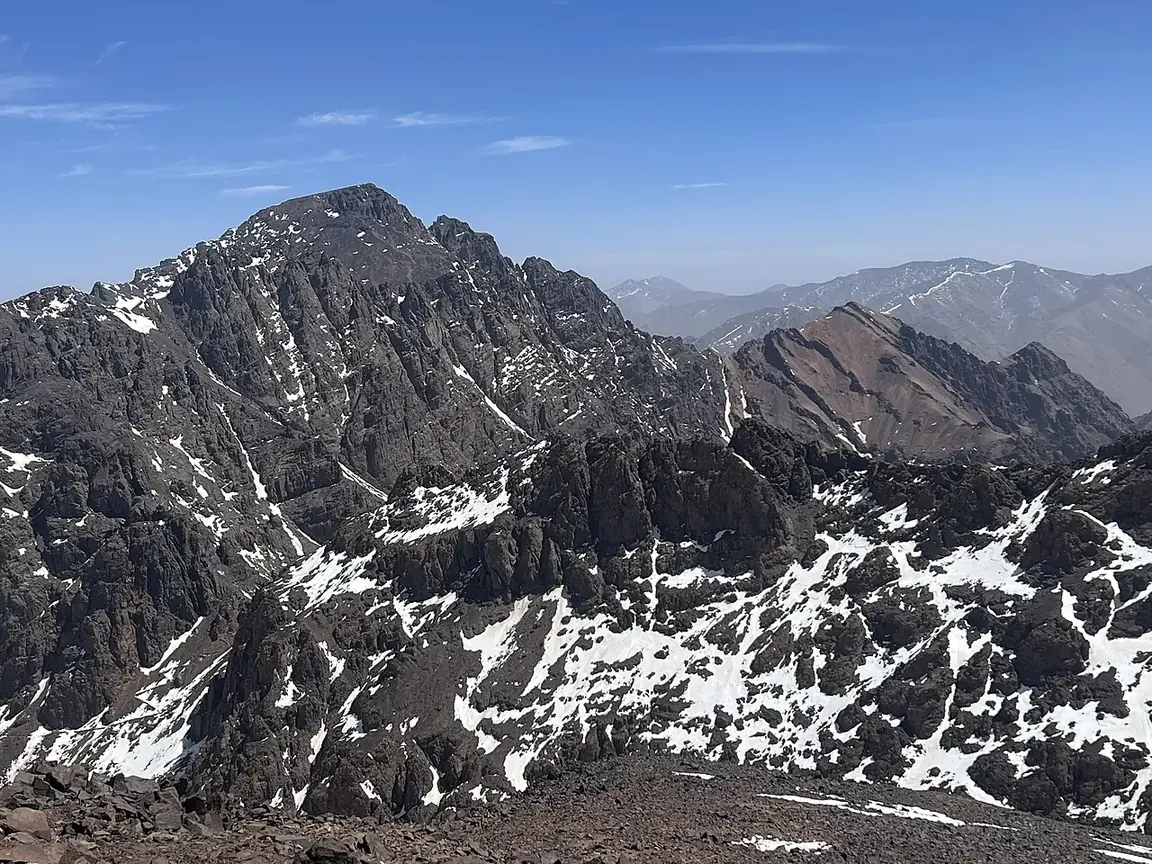 Photo: SimonKing74 · CC0
Published by Adama Doumbia, founder of Afrique Unie · updated 28 November 2026 · our method and sources
- Days 1-2
Marrakech, medina and gardens
Land in Marrakech and give yourself time to settle into the rhythm of the medina. On the first evening, head up to a rooftop above Jemaa el-Fna square to watch the grill stalls light up and the circles of storytellers and musicians form. The next morning, focus on the monuments: the Ben Youssef Madrasa and its carved stucco, the Bahia Palace, then the Saadian Tombs. In the afternoon, lose yourself in the souks before heading to the Majorelle Garden, outside the walls, for a break in the shade of the bamboo. Stay in a riad inside the medina: it is central, quieter than you might think, and part of the experience.
- Day 3
A day in the High Atlas
Before the long road south, treat yourself to a day in the mountains, an hour or two from Marrakech. There are two options: the Ourika Valley, with its Berber villages clinging to the slopes and small waterfalls around Setti Fatma, or the village of Imlil, the starting point for walks towards Toubkal. Without aiming for the summit, which takes at least two days and a guide, a few hours' walk among walnut trees, terraced fields and mud-brick houses gives a fine taste of the Atlas. Have a tagine lunch in a local home, then return to Marrakech for the night. In winter, pack warm clothes: snow is common on the ridges.
- Day 4
The Tizi n'Tichka pass and Aït Benhaddou
Leave Marrakech early to cross the High Atlas by the Tizi n'Tichka pass, at over 2,200 metres, on a winding but paved road. Allow around four hours to Aït Benhaddou, not counting the photo stops, of which there will be many. The UNESCO-listed ksar rises in tiers on a hill above the riverbed: cross the river, climb to the fortified granary crowning the village, then wander back down through lanes where a few families still live. The site has served as a backdrop for many films. Sleep nearby or in Ouarzazate, about thirty kilometres away, to enjoy the evening light on the earthen walls.
- Day 5
The Dades Valley and the Todra Gorge
Head east along the so-called road of a thousand kasbahs. Beyond Ouarzazate, the Dades Valley alternates between palm groves, earthen villages and rocks in shades of red and ochre. In spring, the rose harvest scents the area around Kelaat M'Gouna. Drive up into the Dades Gorge for its spectacular hairpin bends, then continue to Tinghir and the Todra Gorge, where walls more than a hundred metres high leave only a narrow passage. Walk through the gorge late in the day, once the tour groups have left. Spend the night in the Dades Valley or near Tinghir, in a guesthouse on the edge of the palm grove.
- Day 6
A night in the Erg Chebbi dunes
Another three to four hours on the road, via Erfoud and Rissani, and the horizon fills with sand: this is Erg Chebbi. Leave the car in Merzouga in mid-afternoon and reach your camp by camel or by 4x4. Sunset from the top of a dune is one of the highlights of the trip, as is the starry night far from any light. Camps range from the very simple to the comfortable, with private bathrooms. Get up before dawn to watch the sun rise over the crests. If time allows, stop in Khamlia, a village where Gnawa music is kept alive.
- Days 7-8
Through the Middle Atlas to Fez
Day 7 is the longest: eight to nine hours on the road to Fez, through the gorges and palm grove of the Ziz, then the Middle Atlas. After Midelt, the cedar forest around Azrou is home to Barbary macaques, and Ifrane surprises with its steep, almost Alpine roofs. The next day, hire an official guide to explore Fes el-Bali, the vast UNESCO-listed medina: the Bou Inania Madrasa, the Nejjarine fountain, the surroundings of the Al Quaraouiyine mosque and the Chouara tanneries, seen from the terraces of neighbouring shops. Late in the day, walk up to the Merenid Tombs for the view over the city.
- Days 9-10
Chefchaouen, then home via Tangier
Three to four hours' drive north brings you to Chefchaouen, in the Rif Mountains. The small blue-and-white medina is best explored without a map: climb to the upper districts, wander down to Outa el-Hammam square and the kasbah, then walk to the Spanish Mosque on the facing hill for sunset. Calmer than Marrakech or Fez, the town is the ideal place to wind down. On the last day, drive to Tangier, about two and a half hours away, for your flight home, or return to Fez if your ticket leaves from there.
Getting around
The easiest option is to hire a car in Marrakech or book a private driver for the southern loop: roads are good but long, and you should avoid driving in the Atlas after dark. In the medinas, use the guarded car parks at the entrance. If you drop the car off in Tangier or Fez, check the one-way fees. Without a car, shared tours link Marrakech to Fez via Merzouga in three days, buses serve Chefchaouen, and trains connect Marrakech, Casablanca, Fez and Tangier.
When to do this trip
Spring, from March to May, and autumn, from September to November, are ideal: mild days in the cities and bearable nights in the desert. In summer, the heat becomes overwhelming in Marrakech, Fez and above all Merzouga. Winter is often sunny, but nights in the dunes are freezing and snow can temporarily close the Tizi n'Tichka pass. During Ramadan, the trip remains perfectly doable, with adjusted restaurant hours.
The travel notebook
The itinerary, practical information (entry, health, money, emergencies) and the checklist in a few pages, to print or keep offline on your phone.
Variations
- In 7 days: drop the Atlas day and Chefchaouen, and do the Marrakech, Merzouga, Fez loop with a flight home from Fez.
- In 14 days: start with two nights in Essaouira on the Atlantic coast, and add a day trip from Fez to Meknes and the Roman site of Volubilis.
- Hiking version: swap the Ourika day for a two- or three-day ascent of Toubkal from Imlil with a mountain guide.