AfriqueUnie
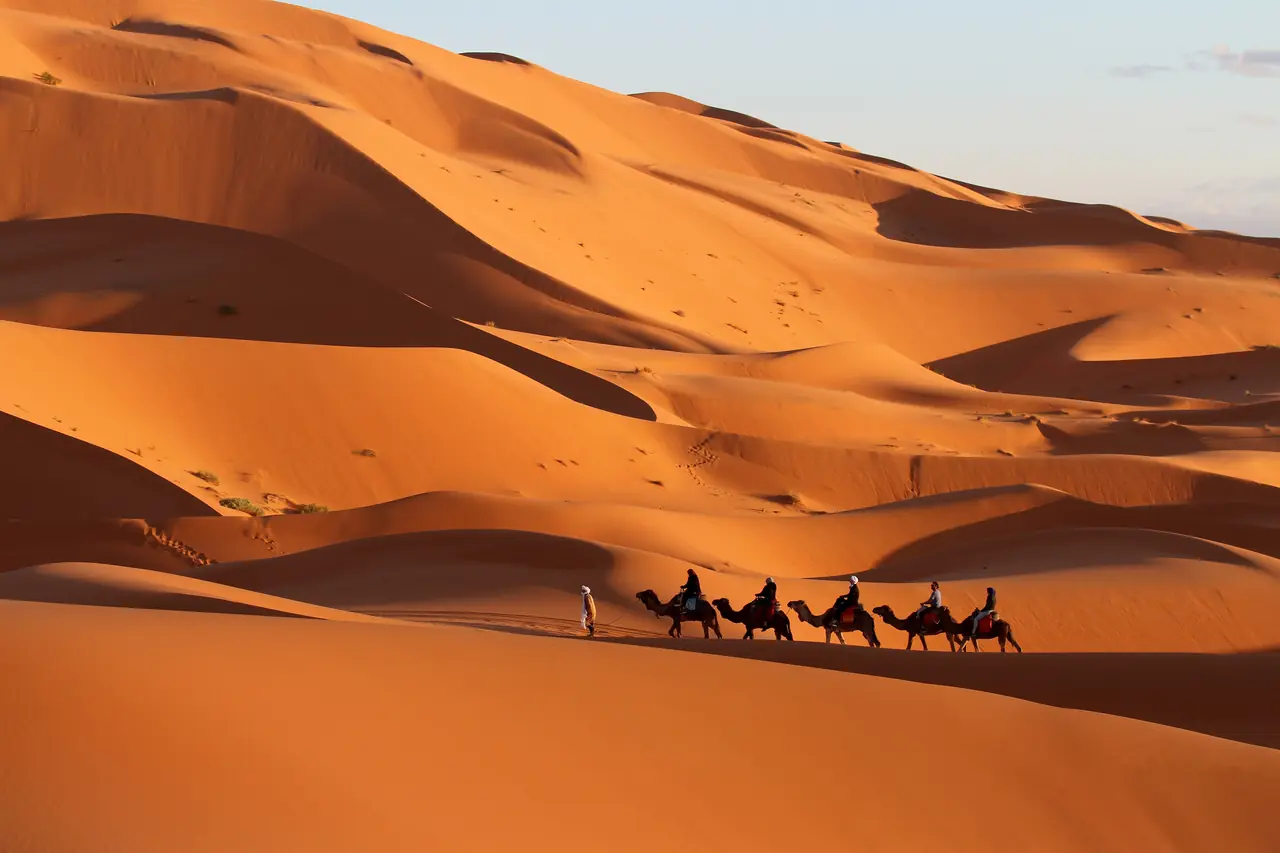 Photo: Merzougaloisirs · CC BY-SA 4.0
Published by Adama Doumbia, founder of Afrique Unie · updated 28 November 2026 · our method and sources
Daily budget
These are rough figures per person per day, excluding the international flight. They cover accommodation (based on two people sharing a room), meals, local transport and a few visits.
On a tight budget, allow roughly €35 to €60, staying in hostels or simple hotels, eating at local canteens and travelling by bus or train. For a comfortable trip, allow about €80 to €150, with a riad or good hotel, restaurants and a few guided excursions. At the top end, allow €250 or more, and considerably more in the grand hotels of Marrakech or on a private tour with a driver.
Prices rise during European school holidays, at the end of the year and in spring.
What is expensive and what costs next to nothing
- Accommodation: This varies the most: from around €20 for a simple room to several hundred euros in a luxury riad.
- Local meals: A tagine, soup or grilled skewers at a neighbourhood place cost a few euros. Restaurants aimed at visitors, and alcohol, push the bill up quickly.
- Transport: Trains and buses between the main cities are cheap. A car with a driver or a private transfer costs far more.
- Sights: Monuments and museums charge modest entry fees, but they add up. Check prices locally, as they change.
- Desert and excursions: A night in a desert camp or a private trip into the Atlas will be your biggest activity cost. Compare what is included.
Money: dirhams, cards and tipping
The currency is the Moroccan dirham (MAD). You mostly get it once you arrive, from cash machines, which are common in towns, or from exchange offices. Keep your exchange receipts and spend your dirhams before you leave, as taking them out of the country is restricted.
Cards are accepted in hotels, supermarkets and many city restaurants. In the souks, taxis, small shops and the countryside you need cash. Ask your bank what it charges for withdrawals abroad.
Tipping is customary: a few dirhams in a café or for a small service, around 10% in a restaurant if you were happy with the service, and an amount agreed in advance for guides and drivers.
Visa and passport
Information checked in November 2026. These rules can change: read the official sources again before you travel.
French nationals do not need a visa for a tourist stay of up to 90 days. A passport is compulsory, including for children and package holidays: a national identity card alone is not enough. According to the French foreign ministry, it must be valid for the whole of your stay. You may be asked for a return ticket and proof of funds.
The UK government gives the same 90 visa-free days for British citizens, but says the passport must expire at least three months after the date you arrive. Other European Union citizens, including Belgians, as well as Swiss and Canadian nationals, are in principle also visa-exempt for 90 days: check with your own foreign ministry.
Morocco has introduced an electronic travel authorisation (AEVM), but it applies to certain nationalities only. We found no official source requiring it of French, EU, British, Swiss or Canadian travellers. On arrival, make sure your passport is stamped.
Health and vaccinations
No vaccine is required on entry for travellers arriving from Europe. The French foreign ministry advises being up to date with routine vaccines (diphtheria, tetanus, polio, whooping cough, measles) and considering hepatitis A and typhoid depending on how you travel. Others, such as rabies or hepatitis B, are worth discussing with a doctor.
Malaria is not a concern for a tourist trip to Morocco. Stomach upsets are the main nuisance: drink sealed bottled water and wash your hands often. See your GP or a travel clinic a few weeks before you leave, and take out insurance covering medical costs and repatriation.
Before you go: the checklist
- Passport: Check the expiry date, including for children. Without a valid passport you will not board.
- Official sources: Read the Morocco page on gov.uk/foreign-travel-advice, or the Maroc page of « Conseils aux voyageurs » on diplomatie.gouv.fr.
- Insurance: Make sure your policy covers treatment in Morocco and repatriation.
- Money: Tell your bank if it asks you to, note your card's withdrawal limit and bring a few euros or pounds in cash to change.
- Bookings: Keep your return ticket and the address of your first night's accommodation to hand: you may be asked for them at the border.
- Copies: Keep a digital copy of your passport and travel documents.