 AfriqueUnie
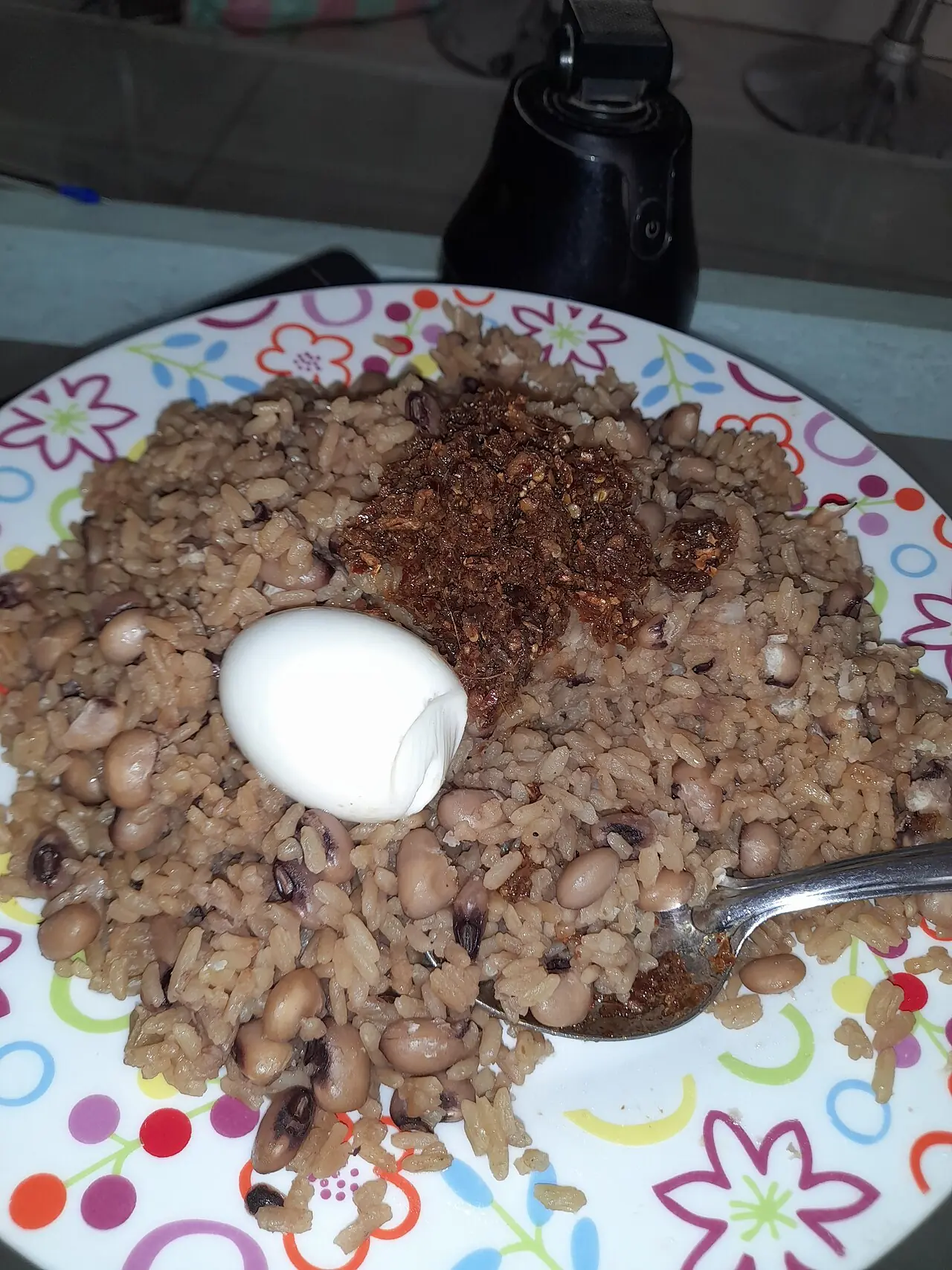 Photo: Akouete · CC BY-SA 4.0
Published by Adama Doumbia, founder of Afrique Unie · updated 28 November 2026 · our method and sources
In Lomé, ayimolou is everywhere: women vendors sell it in the streets and markets from breakfast to dinner, served on a leaf or a plate with a ladle of red sauce. Its name comes from the Ewe and Fon languages, in which "ayi" means beans and "molou" means rice: it is literally "rice with beans". A cheap, popular everyday dish, it is also served at weddings and family celebrations.
The idea is simple: black-eyed beans and rice cooked together in the same pot, until the rice turns brown. It is served with a fiery tomato sauce, oil, boiled eggs, fried fish or meat, as you like. The dish has cousins all over the region, such as waakye in Ghana and atassi in Benin, and is called watchè by the Tem people of central Togo.
Ingredients
For the rice and beans
- 250 g (9 oz) dried black-eyed beans
- 400 g (14 oz) long-grain white rice
- 1.5 litres (2 1/2 pints) water, plus extra for soaking
- 1 pinch of bicarbonate of soda (optional)
- 1 1/2 teaspoons salt
For the spicy tomato sauce
- 120 ml (4 fl oz) vegetable oil
- 2 onions, sliced
- 4 ripe tomatoes, blended
- 2 tablespoons tomato purée
- 1 or 2 fresh chillies, blended with the tomatoes
- 2 garlic cloves and a 2 cm (3/4 in) piece of ginger, crushed
- 1 stock cube, salt
To serve
- 6 hard-boiled eggs, peeled
- 6 small fried fish (horse mackerel or mackerel), or fried chicken
- Gari (cassava granules), optional
Method
- The day before or in the morning, pick over the black-eyed beans and soak them for at least 4 hours in plenty of cold water. Drain and rinse.
- Put the beans in a large pot with 1.5 litres (2 1/2 pints) of water and the bicarbonate of soda. Bring to the boil, then cook for 30 to 40 minutes over a medium heat, until almost tender but still whole. The water will turn brown.
- Meanwhile, rinse the rice several times in cold water until the water runs almost clear.
- Add the rice and salt to the beans. There should be about 2 cm (3/4 in) of water above the mixture: add hot water if needed. Stir once.
- Cover and cook for 20 minutes over a low heat without stirring, until the rice has absorbed all the water and turned brown. Turn off the heat and leave to rest for 10 minutes, covered.
- While the rice cooks, make the sauce: heat the oil in a saucepan and fry the onions for 5 minutes. Add the garlic and ginger, then the tomato purée, and fry for 2 minutes.
- Add the tomatoes blended with the chilli, and the stock cube. Simmer for 20 to 25 minutes over a low heat, stirring often, until the sauce thickens and the oil rises to the surface. Season with salt.
- Add the boiled eggs to the sauce for a few minutes to warm them through.
- Fluff up the ayimolou with a fork and serve it on plates, topped with tomato sauce, with an egg, a fried fish and a little gari if you like.
Tips and variations
- Black-eyed beans are sold in supermarkets and African grocers. For a quick version, use 2 x 400 g tins of cooked black-eyed beans, drained, and simply cook them with the rice.
- In Togo, a little potash is sometimes added to speed up the cooking of the beans and colour the rice. A pinch of bicarbonate of soda does the same job; do not use more, or it will affect the taste.
- For a milder sauce, deseed the chillies or add one whole chilli and remove it at the end of cooking.
- Ayimolou keeps for 2 days in the fridge. Reheat it, covered, with 2 tablespoons of water until piping hot all the way through.
To serve with it: Serve with spicy tomato sauce, boiled eggs, fried fish, meat or local cheese, and sometimes a sprinkling of gari on top.
Have you tried this recipe?
Be the first to rate it.
Thank you for your rating!
Frequently asked questions
What does ayimolou mean?
The word comes from the Ewe and Fon languages: "ayi" means beans and "molou" means rice. Ayimolou therefore means "rice with beans".
What is the difference between ayimolou and Ghanaian waakye?
They are two very similar dishes of rice and beans cooked together. In Ghana, waakye is traditionally coloured with dried sorghum leaves, which give it a deep reddish-brown colour.
Which beans should I use?
Black-eyed beans (cowpeas) are the most common. Red kidney beans also work, but need longer soaking and cooking.
When is ayimolou eaten?
At any time of day. In Togo it is bought from street vendors for breakfast as well as for lunch or dinner.
Another recipe from Togo: Fufu with peanut sauce