 AfriqueUnie
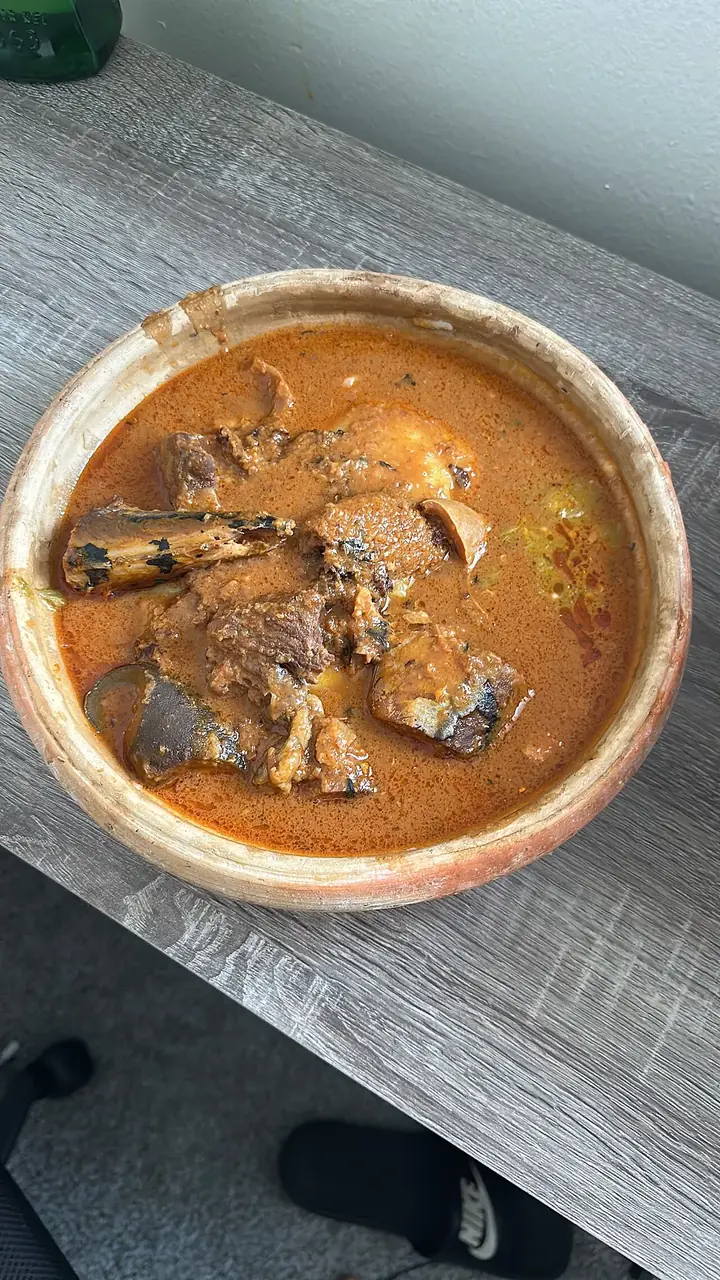 Photo: Rberchie · CC BY-SA 4.0
Published by Adama Doumbia, founder of Afrique Unie · updated 28 November 2026 · our method and sources
In Togo, you hear fufu before you see it: the steady thud of the pestle in the mortar sets the rhythm of late mornings in Lomé's neighbourhoods. Fufu is boiled yam pounded until smooth and stretchy. It is eaten all over West Africa, and in Togo people love to eat it hot and freshly pounded in small, popular eateries.
We chose fufu rather than gboma dessi, the much-loved sauce made with gboma leaves. Gboma dessi is a sauce usually eaten with akoume, a maize dough, or with rice; fufu is a complete meal, shared from the south to the north of the country, and it is often the first dish Togolese people abroad mention when they talk about food from home.
Fufu is always eaten with a sauce: a light soup with meat or fish, palm nut sauce, or peanut sauce, called azin dessi or azin'g déssi in Togo (dessi means sauce). Creamy, gently spiced and cooked with chicken or meat, it is the most comforting pairing. You pinch off a piece of fufu with your fingertips, dip it in the sauce and swallow it without chewing, as tradition has it.
Ingredients
For the peanut sauce (azin dessi)
- 1.5 kg (3 lb 5 oz) chicken legs and thighs, cut into pieces
- 2 onions, 1 blended and 1 sliced
- 4 garlic cloves and a 3 cm (1 1/4 in) piece of ginger, blended together
- 2 tablespoons vegetable oil
- 3 ripe tomatoes, blended
- 2 tablespoons tomato purée
- 250 g (9 oz) pure peanut paste (unsweetened, unsalted peanut butter)
- 1.2 litres (2 pints) hot water
- 1 or 2 fresh chillies, whole or chopped, to taste
- 1 stock cube or 1 teaspoon stock powder, salt and pepper
For the fufu
- 2 kg (4 lb 8 oz) white yam (from African grocers), about 1.5 kg (3 lb 5 oz) once peeled
- A few spoonfuls of the cooking water
- 1 bowl of cold water to wet your hands
Method
- Make the sauce: season the chicken pieces with salt and pepper and rub them with half the garlic and ginger paste and the blended onion. Leave to marinate for 15 minutes.
- In a large casserole, heat the oil and brown the chicken for 8 to 10 minutes on all sides. Add the sliced onion and the rest of the garlic and ginger paste and fry for 3 minutes.
- Add the blended tomatoes and tomato purée. Cook for 10 minutes over a medium heat, stirring, until the sauce has reduced and a little oil rises to the surface.
- In a bowl, whisk the peanut paste with 500 ml (18 fl oz) of the hot water until smooth and creamy. Pour it into the pan with the rest of the water, the stock and the chillies. Stir well.
- Simmer gently, half covered, for 40 to 45 minutes, stirring often so the peanut does not catch on the bottom. The sauce is ready when it has thickened, a thin layer of red oil has risen to the top and the chicken is cooked through, with no pink near the bone.
- Meanwhile, make the fufu: peel the yam (wear gloves if you have sensitive skin, as the peel can itch), cut it into large chunks and rinse. Boil them in a large pan of unsalted water for 20 to 25 minutes, until a knife slides in easily.
- Drain the yam, keeping a little of the cooking water. Pound it while still hot, in small batches, in a large mortar. Wet the pestle and add a spoonful of cooking water from time to time. Turn the dough over by hand between strokes. Without a mortar, use a stand mixer with the dough hook or a powerful food processor, in small batches.
- Keep going for 10 to 15 minutes until you have a smooth, lump-free, stretchy and slightly sticky dough. Wet your hands and shape it into balls the size of a large fist.
- Serve each ball of fufu in a deep plate, surrounded by peanut sauce and pieces of chicken. Eat straight away: fufu hardens as it cools.
Tips and variations
- Use real yam, with white flesh and rough brown skin, not sweet potato. If you cannot find it, instant fufu flour from African grocers can be made in minutes with boiling water.
- The peanut paste must be pure. Sweetened peanut butter would give a confusing taste and is more likely to burn.
- Peanut sauce can also be made with beef, lamb, smoked fish or crab. Always cook meat until tender and cooked through.
- The sauce keeps for 3 days in the fridge and freezes well; fufu is best eaten on the day. To reheat it, wrap it in heatproof cling film and steam it for a few minutes.
- Fancy trying gboma dessi? Simmer spinach with tomato, smoked fish, dried shrimp and a little palm oil, and serve it with akoume or rice.
To serve with it: Enjoy it with a glass of tchoukoutou, the sorghum beer of northern Togo, or a well-chilled hibiscus drink (bissap).
Have you tried this recipe?
Be the first to rate it.
Thank you for your rating!
Frequently asked questions
Why is fufu not chewed?
Traditionally, fufu is rolled with the fingertips, dipped in sauce and swallowed without chewing. There is nothing to stop you chewing it, especially the first time.
Can I make fufu without a mortar and pestle?
Yes. A stand mixer with a dough hook or a powerful food processor works very well, as long as you work in small batches while the yam is still hot. Instant fufu flour is the quickest option.
How is Togolese fufu different from Ghanaian fufu?
They are very close. In Ghana, cassava and plantain are often pounded together; in Togo, pure yam fufu is the favourite. The neighbours love to argue about the best version, and everyone is right at their own table.
Isn't gboma dessi more typically Togolese?
Gboma dessi is a much-loved Togolese sauce, but it is mostly eaten with akoume or rice. We chose fufu because it is a complete meal, shared across the country and a fixture of Lomé's small, popular eateries.
Another recipe from Togo: Ayimolou