 AfriqueUnie
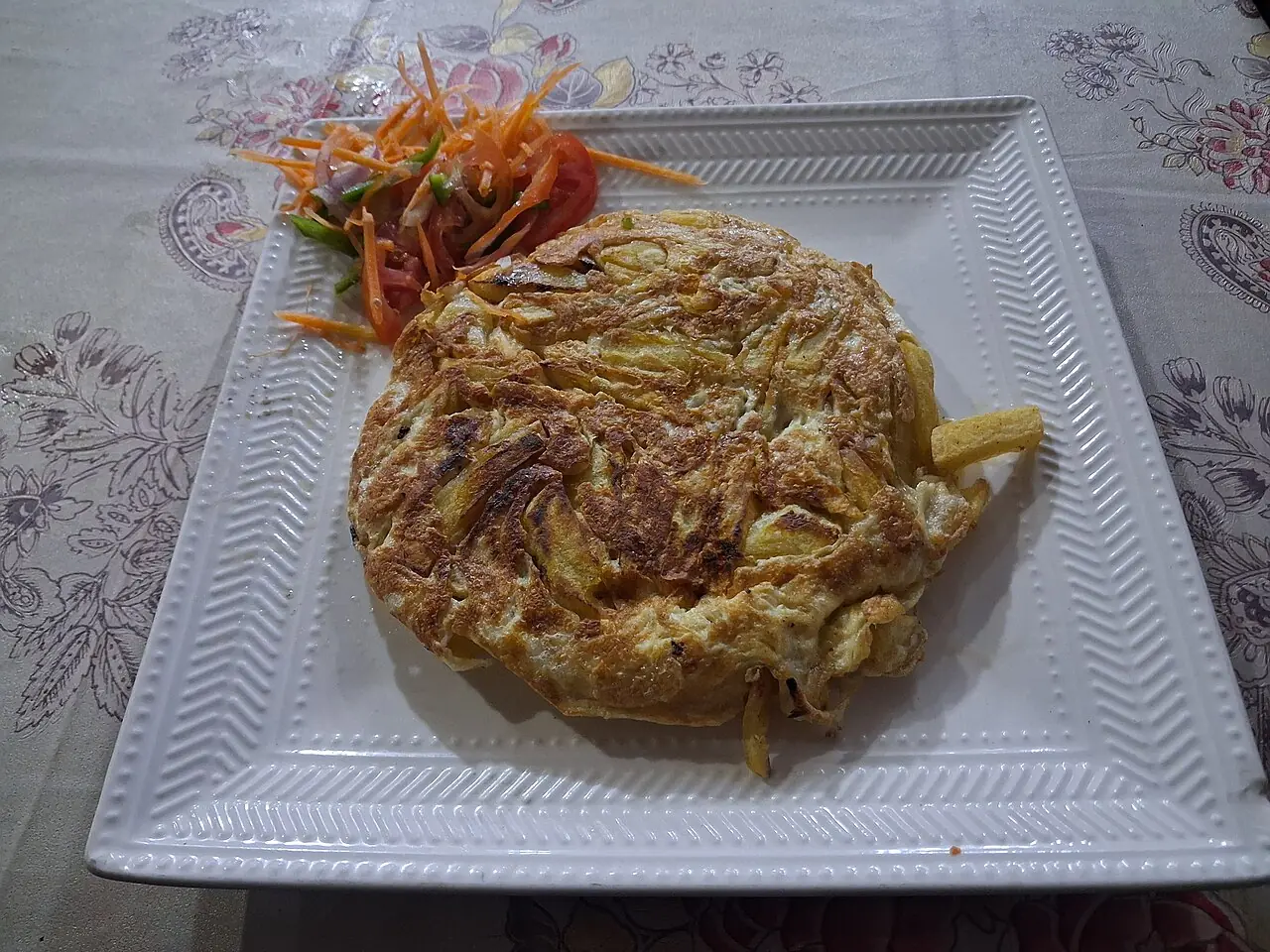 Photo: Josefito123 · CC0
Published by Adama Doumbia, founder of Afrique Unie · updated 28 November 2026 · our method and sources
In the streets of Dar es Salaam, Arusha or Zanzibar, you cannot miss it: over small charcoal stoves, vendors fry potatoes, pour beaten eggs over them and flip the lot in one swift move. This is chipsi mayai, literally "chips and eggs" in Swahili, also known as zege. It is often described as Tanzania's unofficial national dish.
It is generally said to have been born on the streets of Dar es Salaam, but today it is found all over the country, from big cities to small villages. Cooked to order, it is eaten hot at any time of day, with kachumbari (a fresh tomato and onion salad), ketchup or pili-pili, the local chilli sauce. A simple, cheap and wonderfully comforting dish.
Ingredients
For the omelette
- 500 g (1 lb 2 oz) floury potatoes, such as Maris Piper or King Edward
- Sunflower or groundnut oil for deep-frying
- 4 large eggs
- 1 small onion, finely chopped (optional)
- 1/2 green pepper, finely diced (optional)
- Salt and pepper
For the kachumbari
- 2 tomatoes, finely diced
- 1/2 red onion, very thinly sliced
- 1/2 cucumber, diced (optional)
- 1 small handful of fresh coriander, chopped
- Juice of 1/2 lime and 1 pinch of salt
To serve
- Ketchup
- Chilli sauce (pili-pili) or 1 small fresh chilli, chopped
Method
- Make the kachumbari first: mix the tomatoes, red onion, cucumber and coriander, add the lime juice and salt, and keep in the fridge.
- Peel the potatoes and cut them into fairly thin chips, about 1 cm (1/2 in) thick. Rinse them in cold water, then dry them thoroughly in a clean tea towel.
- Heat the frying oil to 170 °C (340 °F). Fry the chips in two batches for 8 to 10 minutes, until tender and golden. Drain them on kitchen paper and season with salt.
- In a bowl, beat the eggs with a pinch of salt and pepper. Add the onion and green pepper if using.
- Heat 1 tablespoon of oil in a 20 to 22 cm (8 to 9 in) non-stick frying pan. Add half of the chips in an even layer and let them sizzle for 1 minute.
- Pour half of the beaten eggs over the chips, making sure they are well covered. Cook for 3 to 4 minutes over a medium heat without stirring, until the underside is golden and the edges have set.
- Turn the omelette over using a plate (slide it onto the plate, cover with the pan and flip). Cook for another 2 minutes, until the egg is fully cooked through.
- Slide the chipsi mayai onto a plate and repeat with the remaining chips and eggs.
- Serve straight away, piping hot, with the kachumbari, ketchup and chilli sauce on the side.
Tips and variations
- To save time, you can use frozen chips cooked in the oven or a fryer: the result is very close to what street stalls serve.
- A small frying pan is the key: the omelette should be thick, with the chips held firmly in the egg. In a large pan it will be too thin and will break when you turn it.
- If you have no coriander, use flat-leaf parsley. For a milder kachumbari, soak the sliced onion in cold water for 10 minutes, then drain.
- Chipsi mayai should be eaten at once: reheated, it loses its crispness. Fry the chips in advance if you like, but cook the omelettes at the last minute.
To serve with it: Serve with kachumbari, ketchup and pili-pili, often with a cold drink or a fresh fruit juice.
Have you tried this recipe?
Be the first to rate it.
Thank you for your rating!
Frequently asked questions
What does chipsi mayai mean?
It is Swahili: "chipsi" means chips (French fries) and "mayai" means eggs. The dish is also called zege.
How is it different from a Spanish tortilla?
A tortilla is made with sliced potatoes cooked gently in oil, then mixed with the eggs. Chipsi mayai uses chips that are already fried and crispy, simply set in beaten eggs in the pan.
Can I make chipsi mayai without a deep-fat fryer?
Yes. Toss the chips in 1 tablespoon of oil and bake them at 220 °C (425 °F) for 25 to 30 minutes, turning them halfway through.
Is chipsi mayai spicy?
No, the omelette itself is not. The heat comes from the pili-pili sauce, which everyone adds to taste.
Another recipe from Tanzania: Zanzibar pilau