AfriqueUnie
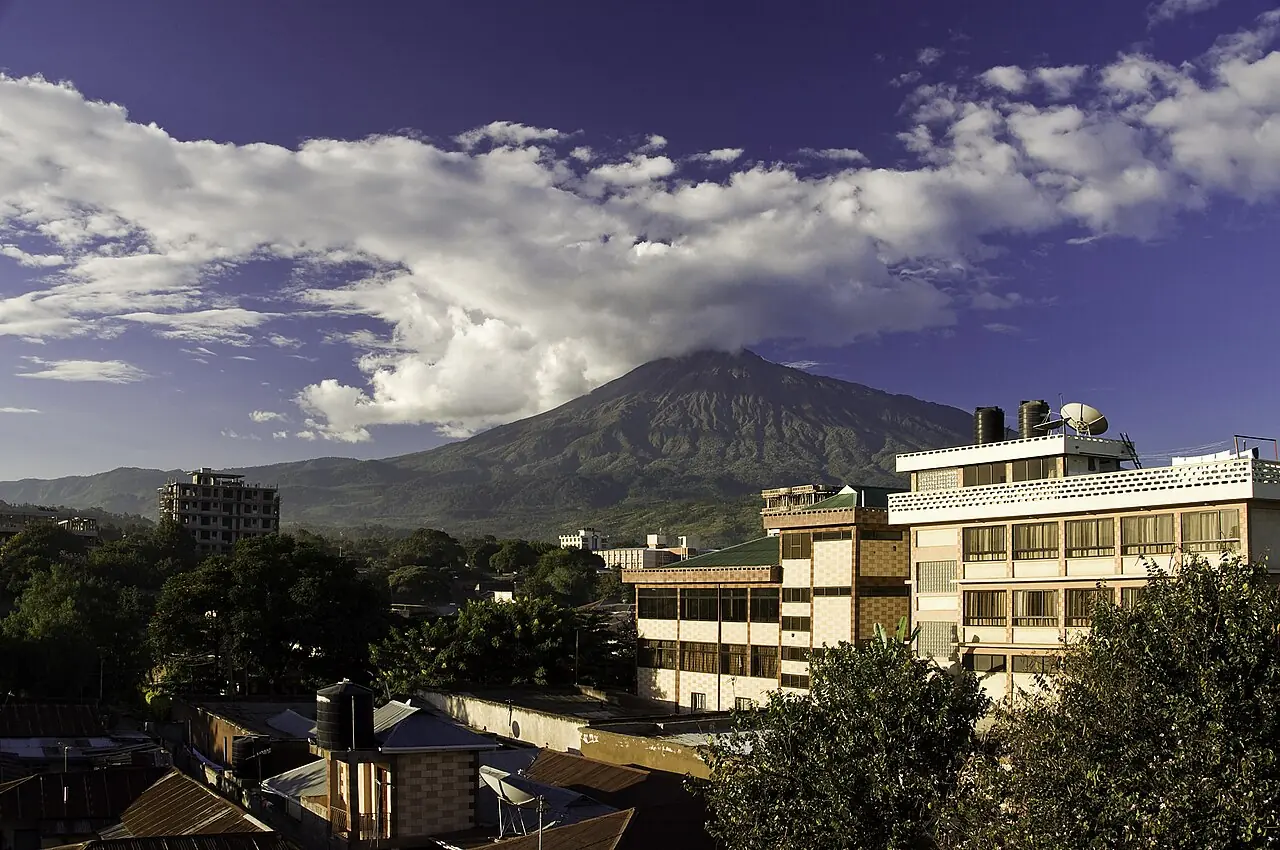 Photo: Phase9 · CC BY-SA 3.0
Published by Adama Doumbia, founder of Afrique Unie · updated 28 November 2026 · our method and sources
Why visit Arusha?
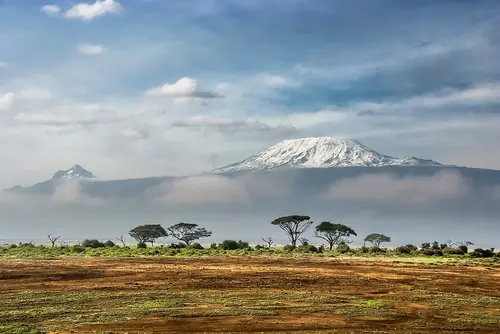
Arusha is the gateway to every safari in northern Tanzania. Nestled at around 1,400 metres above sea level, at the foot of Mount Meru, a volcano over 4,500 metres high that is often hidden in cloud, it enjoys a mild climate and fertile land where coffee, bananas and vegetables grow. Every morning dozens of 4x4s set off from here for Tarangire, Lake Manyara, Ngorongoro and the Serengeti, and this is where most travellers spend their first and last nights.
The town itself is lively, dusty and commercial. Around the Clock Tower, which is said to symbolically mark the halfway point between Cape Town and Cairo, the streets buzz with bajajs, SIM-card sellers and touts offering safaris and souvenirs. The big central market overflows with fruit, spices, fabrics and hardware. Arusha is also home to international institutions, including the headquarters of the East African Community.
But it is when you leave the centre that the region reveals its charm: coffee plantations on the slopes of Meru, Chagga and Meru villages, forests, waterfalls, and the small Arusha National Park with its giraffes, colobus monkeys and the Momella Lakes, where flamingos sometimes gather.
Things to do in Arusha: 6 ideas
- 01Arusha National ParkGo on a walking safari with a ranger at the foot of Meru, among giraffes, buffalo, colobus monkeys and the Momella Lakes.
- 02A coffee plantationFollow the bean's journey on the slopes of Meru, from picking to roasting and tasting.
- 03The central marketDive into the aisles crammed with fruit, dried fish and baskets, keeping your belongings close.
- 04The Cultural Heritage CentreBrowse this vast gallery of East African art and crafts at the western entrance to town.
- 05Lake DulutiWalk around this small forested crater lake, or paddle across it by canoe, a few kilometres from town.
- 06The Meru waterfallsHike with a local guide to the falls and villages in the foothills of the volcano.
Arusha in one day
- 01MorningStart at the Clock Tower, then walk to the National Natural History Museum, housed in the old German boma, a fort from the early twentieth century: early humans, regional wildlife and the history of the town. Politely ignore the touts offering safaris in the street.
- 02LunchEat at a small local canteen in the centre: spiced pilau, rice and beans, or ugali with vegetables and meat stew. Lunchtime is also a good moment to try fresh fruit juice pressed in front of you, mango or passion fruit depending on the season.
- 03AfternoonVisit the small Arusha Declaration Museum beside the Uhuru monument, devoted to the 1967 text that founded Tanzanian socialism. Then browse the central market with your bag zipped, and take an official taxi to the Cultural Heritage Centre, at the western edge of town, for its art gallery.
- 04EveningHave dinner at your lodge or somewhere nearby and avoid walking the streets after dark, as the French foreign ministry advises for Arusha. Use the evening to confirm the next day's safari departure time and itinerary with your operator.
A second day in Arusha
- 01MorningLeave early for Arusha National Park, under an hour's drive away, by 4x4 with a guide. Climb to the rim of Ngurdoto Crater, then drop down to the Momella Lakes, where you can see giraffes, buffaloes, black-and-white colobus monkeys and, depending on the season, flamingos.
- 02LunchPicnic at one of the park's designated sites, facing Mount Meru when the clouds lift. Never feed the monkeys and stay close to the vehicle: French advice is not to leave it without permission and to follow rangers' instructions to the letter.
- 03AfternoonArusha National Park is one of the few in the north where you can walk: take a short walk with an armed ranger at the foot of Meru, towards a waterfall or the meadows where buffaloes graze. It is a rare experience and a complete change from a game drive.
- 04EveningLeave the park in the late afternoon so you are back in Arusha before dark: driving at night outside towns is strongly advised against in Tanzania. Enjoy a quiet dinner where you are staying and keep valuables in the safe.
What to eat in Arusha
Food in northern Tanzania is simple and generous. Nyama choma, grilled goat or beef, is shared with ugali, a stiff maize porridge, and kachumbari, a tomato and onion salad. Also try spiced pilau, mishkaki skewers, chipsi mayai, a chips omelette, and mtori, the plantain soup of the Chagga people of Kilimanjaro.
Coffee from the slopes of Meru is drunk locally, as is chai, spiced milky tea, with mandazi, soft fried buns. To eat like a local, look for nyama choma grills, the popular canteens run by "mama lishe" cooks and the stalls around the central market. Choose food cooked in front of you and drink bottled water.
Where to stay in Arusha
The town centre, around the Clock Tower, suits tight budgets and transit nights, but it is noisy and not very pleasant in the evening. Many travellers prefer the lodges and guesthouses set in greenery, among the coffee plantations and gardens towards Usa River, to the east, on the road to Kilimanjaro Airport, or on the slopes of Meru. Njiro and Sakina, residential districts, offer quieter guesthouses. If you arrive late or leave early, staying near Kilimanjaro Airport saves you an hour's drive.
Getting there and getting around
Most travellers land at Kilimanjaro International Airport (code JRO), about 50 kilometres east, between Arusha and Moshi: allow roughly an hour by road. The transfer is usually arranged by your lodge or safari operator; otherwise use only an official taxi. The small Arusha Airport (code ARK), west of town, handles domestic flights to the parks and Zanzibar.
In town, the centre is walkable by day. Official taxis carry a coloured band and a circle showing their district and number; never get into an unofficial taxi. The Bolt app works in Arusha, but check it is available when you travel. Avoid dala-dala shared minibuses and motorbike taxis, which are often involved in accidents. Keep away from any demonstrations: those that followed the October 2025 elections left people dead, and it is illegal to photograph them.
Frequently asked questions
How many nights should I spend in Arusha?
Usually one night on arrival and one after your safari, plus a spare day in case of delays on the tracks. An extra day lets you visit Arusha National Park, a coffee farm or Lake Duluti.
How do I get from Kilimanjaro airport to Arusha?
Kilimanjaro International Airport is about 50 km east of Arusha, roughly an hour's drive. Arrange the transfer with your accommodation or safari operator and never get into an unofficial taxi; driving at night outside towns is strongly advised against. Arusha's small airport, west of town, is mainly used for domestic flights to the parks.
Is Arusha safe?
The region is under heightened vigilance, and France reports a sharp rise in crime in Tanzania. Avoid walking around at night, use only official taxis and don't show off money or valuables. The French authorities also advise following your tour operator's instructions carefully.
When is the best time for a safari from Arusha?
The dry season, from June to October, offers the best game viewing in northern Tanzania. From December to February, the short dry season coincides with the wildebeest calving in the southern Serengeti. The long rains, from March to May, make some tracks difficult.
Can you climb Mount Meru from Arusha?
Yes, the climb starts in Arusha National Park and usually takes three to four days, always with an armed ranger and a guide. France points out that it requires good physical and medical preparation, guides from reputable agencies and insurance that covers mountain rescue.
What can you do in Arusha without going on safari?
One or two days are enough for the Natural History Museum, the Arusha Declaration Museum, the central market and the Cultural Heritage Centre, followed by Lake Duluti, a coffee farm or a guided walk in nearby Arusha National Park.
What is there to do in Arusha in the evening?
Evenings mostly revolve around lodges and restaurants in the residential areas, over dinner or a cup of Meru coffee. Avoid walking the streets at night, as French authorities advise, and travel only by official taxi or one booked through your accommodation.
 Tanzania