 AfriqueUnie
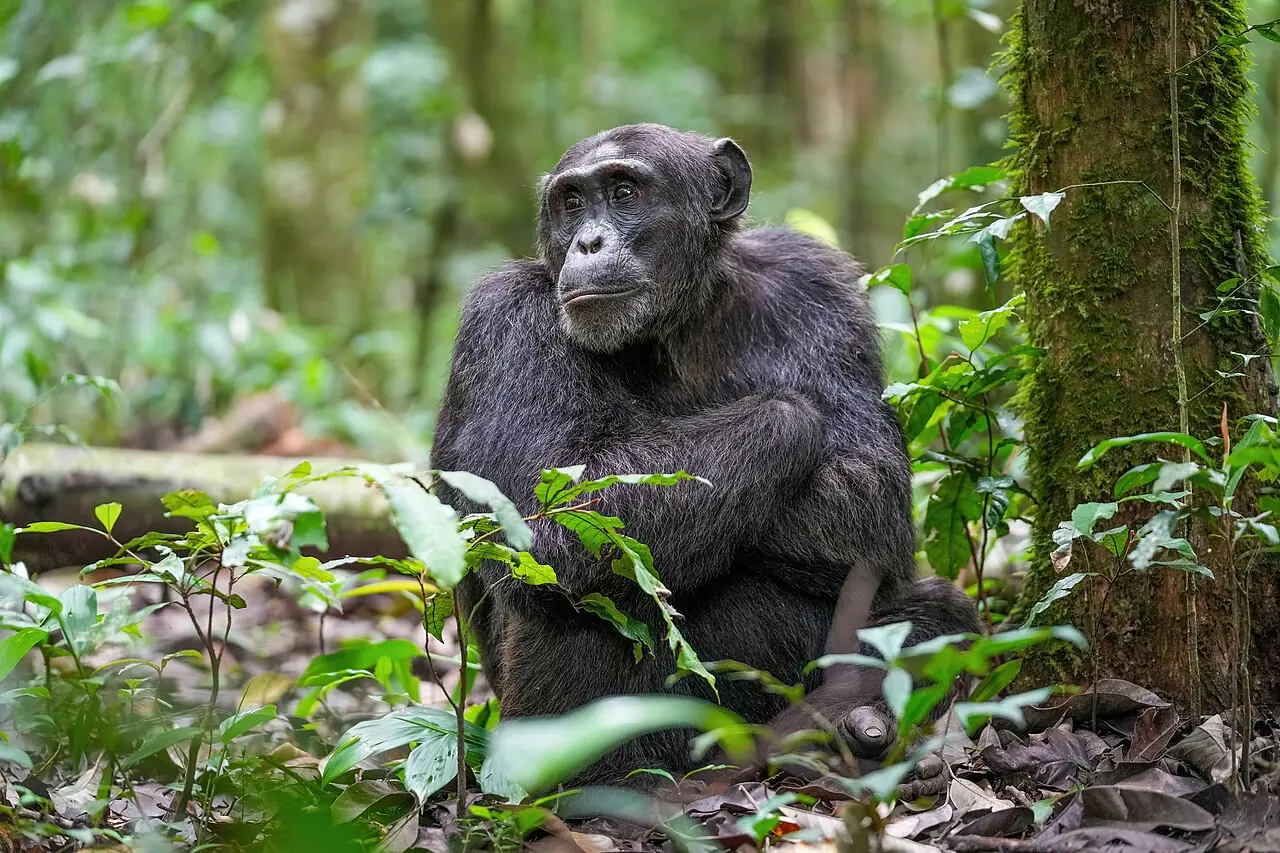 Photo: Giles Laurent · CC BY-SA 4.0
Loud, fast and often high in the canopy, chimpanzees are, together with bonobos, our closest living relatives. Seeing them in the forest takes patience, but a few communities have been habituated to people and can be followed on foot with guides, mainly in Uganda and Rwanda.
Kibale Forest in Uganda is the benchmark, with one of the highest primate densities in Africa. Nyungwe in Rwanda, Budongo Forest near Murchison Falls and Kyambura Gorge complete a circuit that combines easily with gorilla trekking. In Tanzania, Gombe and the Mahale Mountains on Lake Tanganyika are also famous, though harder to reach.
Where to see them
- 1
Kibale Forest National Park ·
 Uganda
Africa's best forest for tracking habituated chimpanzees, with 13 primate species; the chances of an encounter are very high.
- 2
Nyungwe Forest ·
 Rwanda
One of Africa's oldest montane forests, where chimpanzees are tracked in the Uwinka area, alongside colobus monkeys and the canopy walkway.
- 3
Murchison Falls ·
UgandaBudongo Forest, on the park's southern edge, has habituated chimpanzees that you can track before visiting the falls and the savannah wildlife.
- 4
Queen Elizabeth National Park ·
UgandaIn Kyambura Gorge, a sunken forest in the middle of the savannah, lives a small chimpanzee community; sightings are less certain than in Kibale.
- 5
Tacugama Chimpanzee Sanctuary ·
 Sierra Leone
This sanctuary near Freetown takes in orphaned or confiscated chimpanzees, which you watch in large enclosures on guided visits.
When to go
Chimpanzees can be seen all year. The dry seasons, June to September and December to February, make trails easier, and chimps often gather around fruiting trees. In the rainy season the forest is more slippery, but treks still go ahead. Start early in the morning, when chimpanzees are most active.
Our tips
- Book your tracking permit with the park authority; visitor numbers per group are limited and a minimum age applies.
- Keep at least 8 metres away, stay no more than one hour and do not eat near the chimpanzees.
- Do not go if you are ill: chimpanzees easily catch human respiratory infections. Wear a mask if your guide asks.
- Choose recognised sanctuaries over places that let you touch or hold young chimpanzees: that contact harms the animals.
- Bring closed shoes, long trousers and binoculars: chimps move fast and often stay high in the trees.
Frequently asked questions
Where can you see wild chimpanzees in Africa?
The best places are Kibale Forest (Uganda), Nyungwe Forest (Rwanda), Budongo Forest near Murchison Falls and Kyambura Gorge (Queen Elizabeth National Park). In Tanzania, Gombe and the Mahale Mountains are also renowned.
Are chimpanzees endangered?
Yes: the chimpanzee is listed as Endangered on the IUCN Red List. The western subspecies, for example, was estimated at about 52,800 individuals in a study published in 2019.
How long do you spend with the chimpanzees?
Usually one hour, after a walk of one to several hours. Kibale also offers a full-day habituation experience alongside researchers and trackers.
Where can you see chimpanzees in West Africa?
Tacugama Sanctuary, near Freetown (Sierra Leone), cares for rescued orphan chimpanzees; guided visits fund their care and conservation education.