 AfriqueUnie
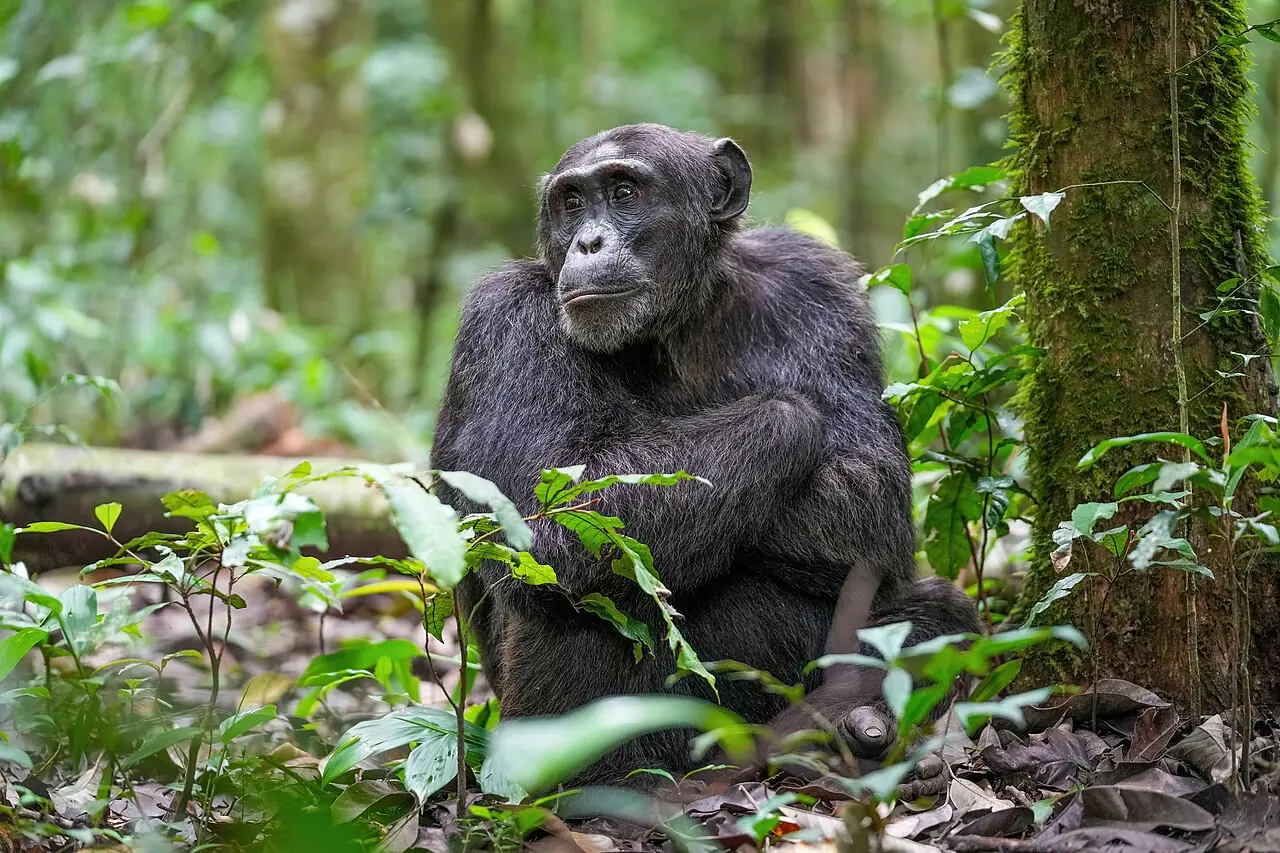 Photo: Giles Laurent · CC BY-SA 4.0
Published by Adama Doumbia, founder of Afrique Unie · updated 28 November 2026 · our method and sources
Why go
South of Fort Portal, in western Uganda, Kibale National Park protects about 770 square kilometres of tropical rainforest, between 1,100 and 1,600 metres above sea level. A former forest reserve created in the 1930s and later logged for timber, it became a national park in 1993. It is one of the last large forests in East Africa to combine lowland and montane forest. To the south, it forms a continuous corridor with Queen Elizabeth National Park, used in particular by elephants.
Kibale has one of the highest densities and diversities of primates in Africa, with thirteen species. The star is the chimpanzee: several communities are habituated to people, making it one of the best places on the continent to see them in the wild. You may also meet the endangered Ugandan red colobus, the black-and-white guereza colobus, L'Hoest's monkey, the Uganda mangabey and the blue monkey. More than 300 bird species have been recorded.
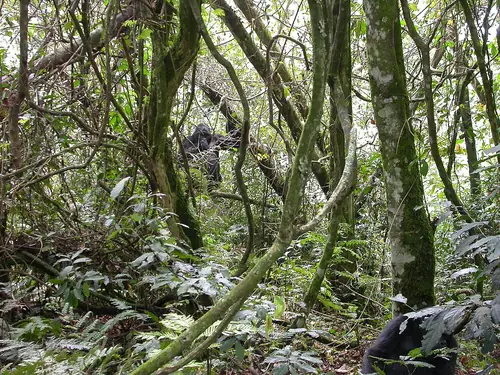
Chimpanzee tracking starts from the Kanyanchu visitor centre, run by the Uganda Wildlife Authority: small groups led by a ranger walk beneath giant fig trees until they find a community, then spend about an hour with it. Keen visitors can join a full-day habituation experience alongside researchers and trackers. The forest has also been home for decades to a Makerere University research station, and studies carried out here have greatly advanced knowledge of chimpanzees.
Getting there
The Kanyanchu centre is about thirty kilometres south-east of Fort Portal, on a mostly tarred road. Fort Portal is about five to six hours by road from Kampala. Kibale fits naturally into a circuit of western Uganda, between Murchison Falls to the north and Queen Elizabeth National Park and Bwindi to the south, usually with a driver-guide.
Frequently asked questions
Are you sure to see chimpanzees in Kibale?
The chances are very high, as the tracked communities are habituated and trackers locate them early in the morning, but no sighting of wild animals is ever guaranteed. Chimpanzees move around a lot and sometimes spend time high up in the trees. The morning trek usually offers the best conditions.
What is the difference between chimpanzee tracking and habituation?
Standard tracking lasts a few hours, including about an hour with the chimpanzees, in a small group. The habituation experience lasts a full day: you accompany researchers and trackers with a less habituated community, from waking up to building their nests in the evening. It is more physically demanding and places are very limited.
When is the best time to visit Kibale?
The park can be visited all year round. The dry seasons, from December to February and from June to September, make the trails less muddy and walking more pleasant. During the rainy seasons, from March to May and around October and November, the forest is greener, fruit more plentiful and visitors fewer, but showers are frequent.
Is there a minimum age for chimpanzee tracking?
Yes, the Uganda Wildlife Authority sets a minimum age for chimpanzee tracking, to limit risks for children and the transmission of diseases to primates. Check the rule in force when you book. Visitors who are ill, even with a simple cold, should not take part: chimpanzees are very vulnerable to human diseases.
What else is there to do around Kibale?
Bigodi Wetland, on the edge of the park, can be explored on foot with a guide from the local community to see birds and primates. Around Fort Portal, crater lakes, tea plantations and the Rwenzori foothills offer fine walks. Many travellers then continue to Queen Elizabeth National Park.

 Kenya
 Rwanda