AfriqueUnie
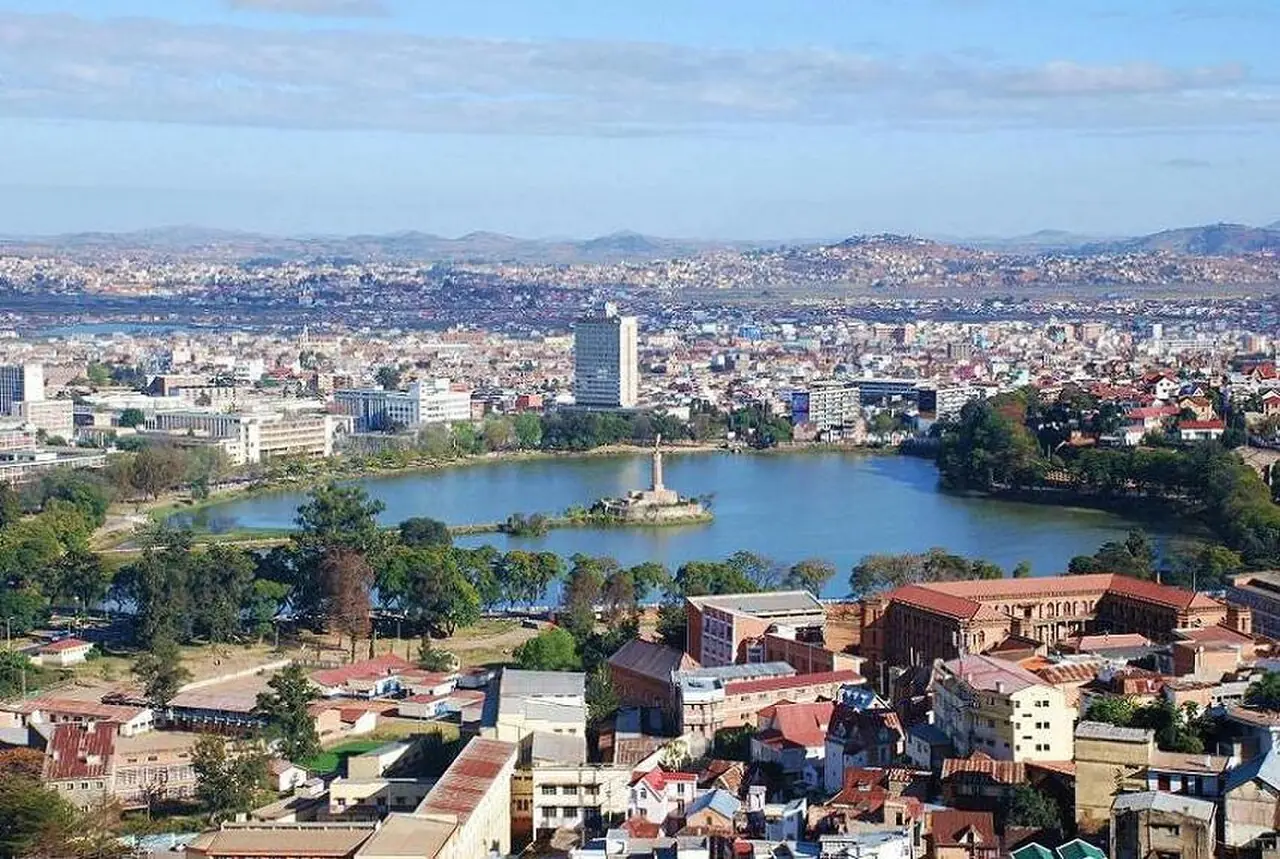 Photo: Sascha Grabow www.saschagrabow.com · CC BY-SA 3.0
Published by Adama Doumbia, founder of Afrique Unie · updated 28 November 2026 · our method and sources
Why visit Antananarivo?
Antananarivo, which everyone calls Tana, spreads across a dozen hills and the rice paddies that surround them. Seen from above, it is a jumble of brick houses with steep roofs, stone stairways, churches and lanes plunging down to the flooded plains. The city is dense, congested and sometimes chaotic, but it has a character unique in Africa, somewhere between Highland architecture and colonial heritage.
On top of the highest hill stands the Rova, the royal compound of the Merina monarchy. The Queen's Palace, Manjakamiadana, gutted by fire in 1995, has been gradually restored and dominates the city with its stone silhouette. Lower down, the upper town lines up its old balconied houses, while the Analakely district and Avenue de l'Indépendance form the lively commercial heart.
Tana is best experienced on foot by day, taking your time. In the morning the markets overflow with vegetables, flowers and leafy greens; at midday the gargotes serve steaming rice and laoka; in the late afternoon golden light bathes the hills. In October the jacarandas bloom around Lake Anosy, tinting the heart of the city purple.
Things to do in Antananarivo: 6 ideas
- 01The Rova and the Queen's PalaceThe former Merina royal estate, at the top of the city, offers a panoramic view over the capital.
- 02Analakely marketShopping streets and fresh-produce stalls in the city centre, a dive into daily life.
- 03Royal Hill of AmbohimangaA sacred UNESCO-listed site some twenty kilometres away, the cradle of the Merina monarchy.
- 04Lake AnosyLined with jacarandas, it surrounds an islet bearing a war memorial and makes for a pleasant stroll in the late afternoon.
- 05La Digue craft marketOn the road to the airport, a large craft market: basketry, embroidery, stones and carved wood.
- 06Tsimbazaza ParkA botanical and zoological garden showcasing lemurs and endemic plants.
Where to stay in Antananarivo
The upper town, around Isoraka and Antaninarenina, offers the most charming setting, with its old houses, small guesthouses and restaurants, while staying close to the centre. Analakely is convenient for shops and transport, but very busy and noisy. For a late arrival or an early departure, accommodation near Ivato airport spares you the capital's legendary traffic jams. The outlying residential districts, such as Ivandry, are quieter and greener.
See places to stay in Antananarivo
Frequently asked questions
How many days should you spend in Antananarivo?
One or two days cover the Rova, the upper town, Lake Anosy and a market, plus half a day at Ambohimanga. Many travellers spend a night on arrival and another before departure, since domestic flights and roads to the parks all start from the capital.
How do you get from Ivato airport to the city centre?
Ivato Airport is about 16 km north of the centre, but the journey can take anything from 40 minutes to over an hour and a half depending on traffic. Arrange a transfer through your accommodation or take a booked taxi; avoid taxi-brousses. For a night-time arrival, staying near the airport saves crossing the city.
Is Antananarivo dangerous?
Crime is high: according to the French government no district is spared and tourist spots are particularly targeted, such as the steps up to the Rova, Avenue de l'Indépendance, Analakely market and restaurants. Walking at night, which falls around 5.30pm, is strongly discouraged, so take an official or pre-booked taxi. By day, go out without jewellery, a conspicuous bag or a phone in your hand, and keep away from demonstrations.
When is the best time to visit Antananarivo?
From April to November the dry season brings sunny days and cool nights, cold from June to August, as the city sits at about 1,300 metres. December to March is very wet, and cyclones, possible from January to April, disrupt roads across the country. October is lovely, with the jacarandas in bloom.
What can you do on a day trip from Antananarivo?
The Royal Hill of Ambohimanga, a UNESCO World Heritage Site, is about 20 km north. Andasibe, known for the indri, is three to four hours' drive east, so it is best to spend at least a night there. The French government recommends a hire car with a driver and strongly advises against driving on national roads at night.
 Madagascar