AfriqueUnie
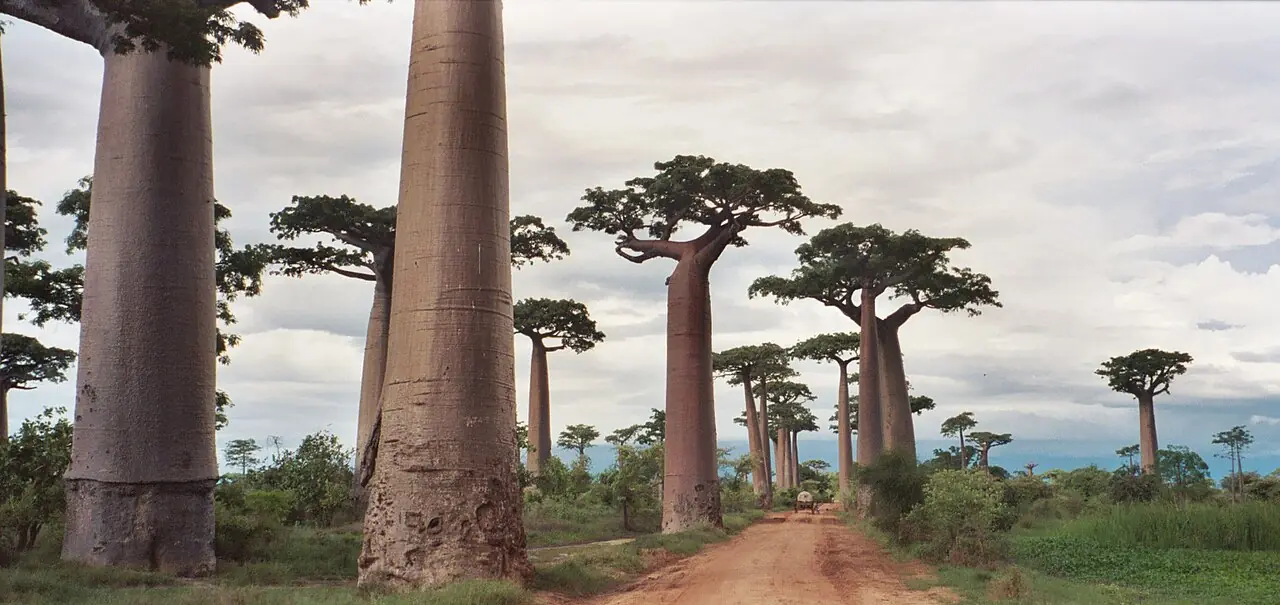 Photo: Pat Hooper from Chicago, IL, USA · CC BY-SA 2.0
Published by Adama Doumbia, founder of Afrique Unie · updated 28 November 2026 · our method and sources
Daily budget
These are rough figures per person per day, excluding the international flight and visa. They cover accommodation (two people sharing a room), meals, local transport and a few visits.
On a tight budget, allow roughly €25 to €45, staying in simple hotels or bungalows, eating in hotely (local eateries) and travelling by taxi-brousse (bush taxi). For a comfortable trip, allow about €70 to €130, with a good hotel, a car with driver, park guides and a few domestic flights. At the top end, allow €200 or more, in an upmarket lodge or beach hotel on a private tour.
A car with driver, almost essential for a comfortable tour, is often the biggest expense. Nosy Be and remote lodges are noticeably more expensive than the rest of the country.
What is expensive and what costs next to nothing
- Transport: The taxi-brousse costs very little but takes a lot of time. A car with driver for the day, or domestic flights, weigh heavily on the budget: share them with others.
- Accommodation: Cheap in most towns. Prices rise sharply on Nosy Be, Sainte-Marie and in the lodges near the parks.
- Local meals: A plate of rice with romazava or zebu in a hotely costs a few euros. Tourist restaurants remain affordable by European standards.
- National parks: You pay an entry fee and, in most cases, a compulsory local guide. Rates vary from park to park: ask locally or check with Madagascar National Parks.
- Sea trips: Boats, diving and whale-watching trips (in season) cost far more than life on land.
Money: ariary, cash and mobile payment
The currency is the ariary (MGA). It floats: in mid-November 2026, €1 was worth a little over 5,000 ariary. Euros are easy to change at banks and bureaux de change, including at Antananarivo airport. Check the day's rate.
Cash machines are found in towns, but not in villages or at many park sites. Withdraw or change money before remote stages. Visa cards are generally more widely accepted than Mastercard. Cards are mainly used in good hotels and restaurants. Everywhere else you pay in cash: keep small notes.
Mobile payment (MVola, Orange Money, Airtel Money) is very widespread among Malagasy people. It requires a registered local SIM card: for a short stay, cash is enough.
Tipping is not compulsory, but it is customary for guides and drivers.
Visa and passport
Information checked in November 2026. These rules can change: read the official sources again before you travel.
According to the UK government, British nationals can visit Madagascar for up to 15 days without a visa, but must pay a 10-euro administration fee on arrival and be ready to show an onward or return ticket. For a longer stay, you can buy a 30- or 60-day single-entry tourist visa on arrival at the airport, in US dollars, euros or ariary, or apply in advance to the Embassy of Madagascar in London. The portal evisamada-mg.com also lets you apply online before you travel; avoid intermediary sites, which add fees.
Either visa can be extended in Madagascar up to a maximum total stay of 90 days; a 90-day visa cannot be bought at the border. The French foreign ministry (page updated on 13 November 2026) gives French nationals the same pattern: a free visa for stays under 15 days with a 10-euro fee, then €35 for 30 days and €40 for 60 days. Overstaying can lead to detention or deportation. These rules change often: check them with the embassy before you leave.
Your passport must be valid for at least six months after your date of entry, with blank pages. You may be asked for a return ticket. Since 2026, a health declaration and health screening on arrival have been introduced in connection with the Ebola outbreak on the continent: check whether these measures still apply.
Health and vaccinations
Yellow fever: the disease is not present in Madagascar. No certificate is required if you arrive directly from Europe. It is required of travellers arriving from a risk country or who have transited through one for more than twelve hours. Check this if you have a stopover in mainland Africa.
Malaria is present in most of the country, especially on the coasts. The risk is lower in the central highlands. Prevention combines protection against mosquito bites and, depending on your itinerary, preventive medication: only a doctor can prescribe it.
Check your routine vaccines too. Hepatitis A and typhoid are often advised. Medical facilities are limited outside Antananarivo: insurance covering treatment and repatriation is essential.
Before you go: the checklist
- Passport: At least six months' validity, with blank pages.
- Visa: None needed for up to 15 days (10-euro fee on arrival); otherwise a 30- or 60-day visa on arrival or from the embassy.
- Vaccinations: Book a travel clinic appointment for malaria prevention, and for yellow fever if you transit through a risk country.
- Official sources: Read the Madagascar page on gov.uk/foreign-travel-advice and the Madagascar page of « Conseils aux voyageurs » on diplomatie.gouv.fr. The political situation and insecurity in some regions call for careful reading before you leave.
- Insurance: Medical costs and repatriation, with emergency numbers noted separately.
- Cash: Euros to change and a Visa card whose foreign fees you know.