From the ochre lanes of Marrakech to the dunes of Merzouga, Morocco packs in imperial cities, the Atlas Mountains, an Atlantic coastline and legendary hospitality over a glass of mint tea.
What makes Morocco so rare is that it changes face every three hours on the road. In the morning you drink coffee facing the Atlantic breakers in Essaouira; by midday you are climbing the hairpin bends of the High Atlas, where mud-brick villages cling to the slopes; by evening you are sleeping in a kasbah on the edge of a palm grove, the first dunes on the horizon. Few countries offer such a variety of landscapes so close to Europe, and with such a well-oiled tourist infrastructure: resurfaced roads, fast trains between the main cities and places to stay for every budget.
But what really captivates travellers is the sheer density of daily life. In the medinas of Fez and Marrakech, craftsmanship is no stage set for tourists: you pass coppersmiths hammering metal, weavers bent over their looms and children carrying bread dough to the neighbourhood oven. On Fridays, the smell of couscous drifts out of the houses. At sunset the call to prayer echoes from one minaret to the next and the rooftop terraces fill up. You are not observing a frozen culture; you are moving through a society in motion, deeply attached to its rituals yet looking firmly towards modernity.
Morocco suits every pace. A long weekend is enough for a taste of Marrakech and its gardens; a week lets you link the imperial cities with the desert; two or three weeks open the doors to the Rif, the Anti-Atlas, the Dadès Gorges and the wild beaches of the south. And everywhere you get the same welcome: a glass of mint tea, poured from a height to make it froth, handed to you before anyone talks business. More often than the monuments, it is that gesture you take home as a memory.
History and culture
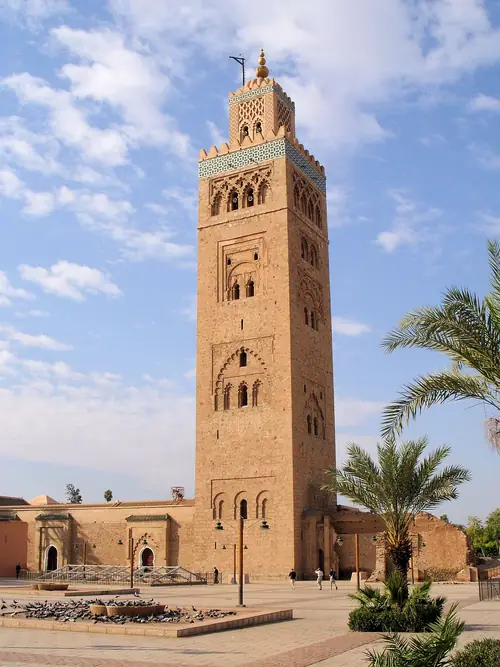
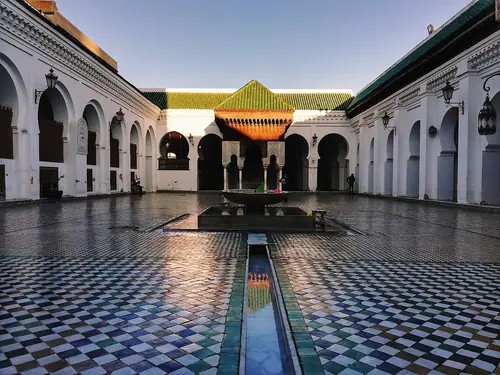
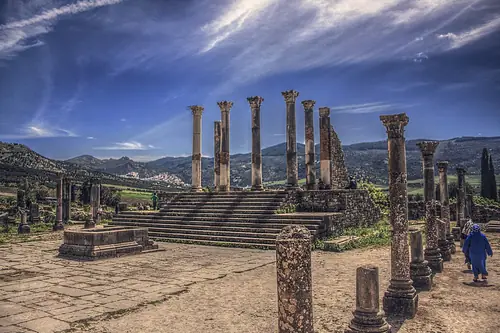
Morocco's earliest known inhabitants are the Amazigh, once called Berbers, who were here long before the Phoenicians and then the Romans arrived; the Roman city of Volubilis, near Meknes, still has superb mosaics. Islam arrived at the end of the 7th century and, in the 9th century, the Idrisid dynasty founded Fez. A succession of great dynasties of Berber origin followed, the Almoravids, Almohads and Marinids, whose empire at one point reached into Andalusia: to them we owe the Koutoubia in Marrakech, the Hassan Tower in Rabat and the madrasas of Fez.
The Saadians and then the Alaouites, the dynasty that has reigned since the 17th century, kept the kingdom independent of the Ottoman Empire. In the 20th century Morocco became a French protectorate, with a Spanish zone in the north, from 1912 until independence in 1956 under Mohammed V. This legacy explains the ville nouvelle built alongside every medina, the place of French in business, and a country that today proudly claims its Arab, Amazigh, Andalusian, Jewish and African identities, all recognised in the 2011 Constitution.
8 experiences not to miss in Morocco
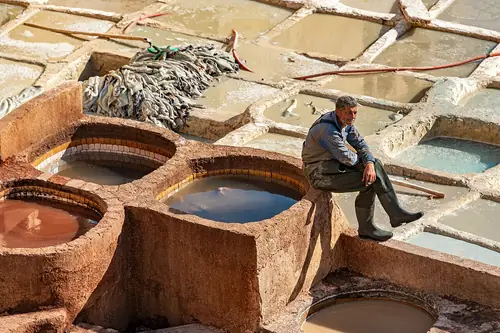
Photo : Jorge Franganillo · CC BY 2.001Getting lost in the Fez medinaPut the map away for half a day in Fes el-Bali: between tanneries, madrasas and fondouks, every dead end hides a workshop or a fountain. An official guide for your first visit will keep the touts at bay.
Photo : Merzougaloisirs · CC BY-SA 4.002A night in Erg ChebbiRide a dromedary to your desert camp in the late afternoon, dine under canvas, then climb the highest dune before dawn to watch the sand turn from grey to pink.
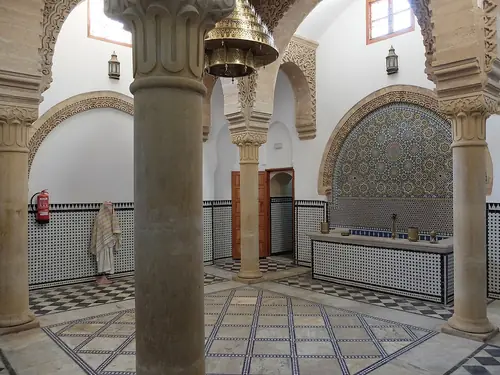
Photo : R Prazeres · CC BY-SA 4.003The neighbourhood hammamRather than a hotel spa, try the public hammam at least once: black soap, a kessa scrubbing glove and buckets of hot water, with separate hours for men and women.
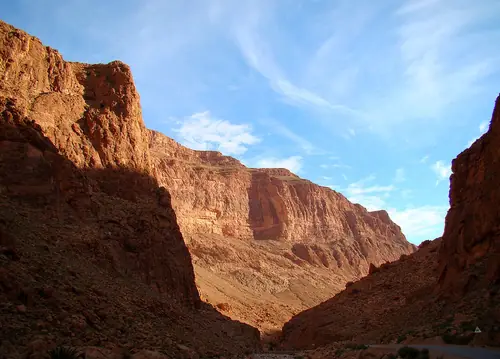
Photo : Bjørn Christian Tørrissen · CC BY-SA 3.004The Dadès and Todgha gorgesOn the Road of the Kasbahs, these narrow gorges can be explored on foot between ochre cliffs and irrigated gardens. The Dadès hairpin roads are just as spectacular to drive.
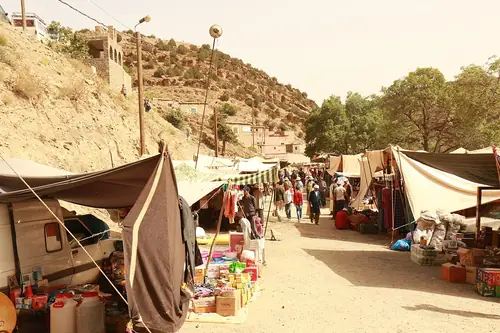
Photo : WanderinGwyneth · CC BY-SA 4.005A village's weekly marketEvery rural souk is named after the day it is held. You will see donkeys being traded, spice stalls and open-air barbers, with nothing staged for visitors.
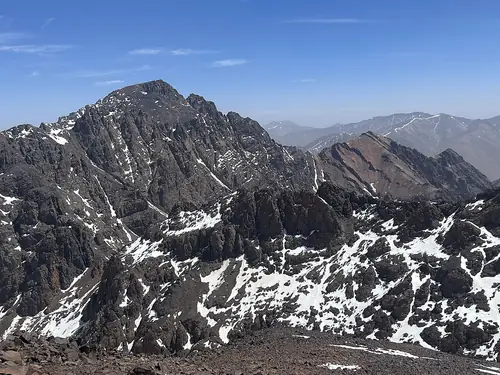
Photo : SimonKing74 · CC006Trekking in the High AtlasFrom the Imlil or Aït Bouguemez valleys, you walk from village to village, sleeping in mountain gîtes and moving at the pace of the muleteers.
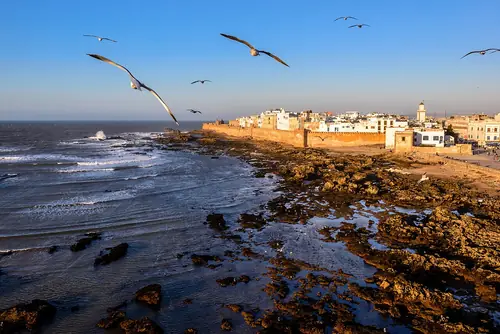
Photo : Sergey Pesterev · CC BY-SA 4.007Sunset on the ramparts of EssaouiraAt the end of the day, golden light falls on the Skala, its cannons and its gulls: a simple, perfect moment before a dinner of grilled fish at the harbour.
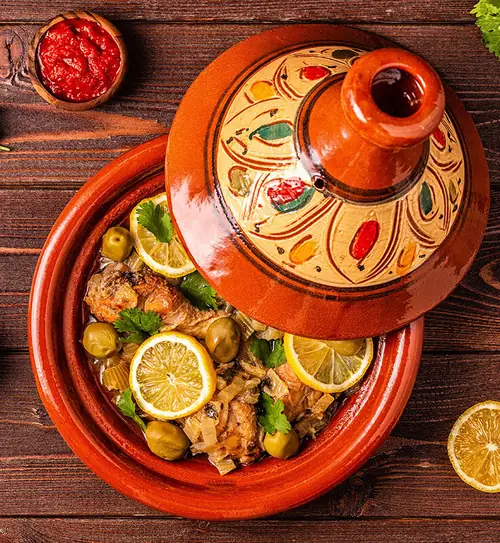
Photo : BBouchra00 · CC BY-SA 4.008Learning to cook a tagineMany riads run classes: a morning trip to the market, preparing the spices, then discovering the slow simmering that makes all the difference.
When to go to Morocco
Spring, from March to May, is the ideal season almost everywhere: the northern hills are still green, the almond trees are in blossom in the Atlas and temperatures are mild in the desert. Autumn, from September to November, brings superb light and a sea that is still warm. Summer is scorching in Marrakech, Fez and the south, often above 40°C, but pleasant on the Atlantic coast, cooled by the trade winds. Winter is sunny by day but freezing at night in the desert and the mountains, where snow can close some passes. Keep an eye on the dates of Ramadan too, which shift every year: the country slows down by day and comes alive at night.
Getting around
The ONCF rail network links Tangier, Rabat, Casablanca, Fez, Meknes and Marrakech, and the Al Boraq high-speed line has brought Tangier to around two hours from Casablanca. For other journeys, the CTM and Supratours coaches are comfortable and punctual. Grands taxis, often shared saloon cars, serve smaller towns from a taxi rank; petits taxis, whose colour varies from city to city, run on the meter within town limits, and you should ask the driver to switch it on. Hiring a car is the best option for the Road of the Kasbahs and the Atlas, but take care at night and on mountain roads.
Etiquette and customs
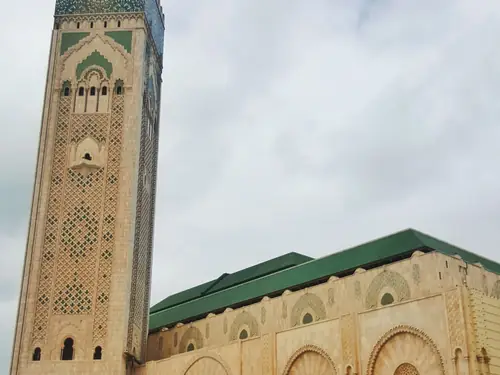
Moroccan courtesy takes time: you greet people, ask after their family and accept the tea. In the souks, haggling is part of the exchange, but do it with a smile and without making the seller lose face. Always ask before photographing anyone, especially women and older people. Clothing that covers shoulders and knees is appreciated outside the beach resorts. Mosques are generally closed to non-Muslims, with the notable exception of the Hassan II Mosque in Casablanca. During Ramadan, avoid eating, drinking or smoking in public during the day. You eat and give with your right hand.
Food and drink in Morocco
Moroccan cooking is built on patience and spices. The tagine simmers for hours: lamb with prunes and almonds, chicken with preserved lemon and olives, kefta with eggs. Friday couscous is shared with the family, topped with seven vegetables. Pastilla, a flaky sweet-and-savoury pie, combines pigeon or chicken with almonds and cinnamon; you will also find a seafood version. Try the harira soup that breaks the Ramadan fast, the snails in spiced broth on Jemaa el-Fna square, Marrakech's tanjia slow-cooked in the embers of the hammam, and breakfast msemen with honey and butter. And everywhere, mountains of almond pastries, led by the cornes de gazelle.
The best time to visit Morocco: March to May, September to November.
What should I see first in Morocco?
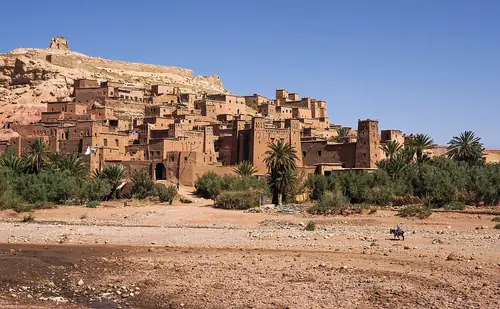
The must-sees: Erg Chebbi (Merzouga), Aït Benhaddou, Ourika Valley and Toubkal, Essaouira, Volubilis, Todra Gorge, Hassan II Mosque.
Which cities should I visit in Morocco?
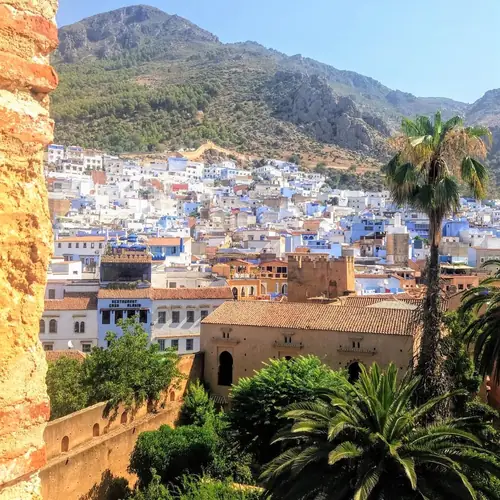
Marrakech, Fez, Casablanca, Chefchaouen. The capital is Rabat.
How much should I budget for a trip to Morocco?
Budget: around €30–60 per person per day, excluding flights. This is only a guide and depends above all on the accommodation and activities you choose.
The main international airport has the code CMN. Compare flights with the ‘Flights’ button on this page.
Do I need a visa to visit Morocco?
Entry requirements depend on your nationality and change regularly. Check them on the country's official website or with your foreign ministry before booking, and make sure your passport is valid.
What should I eat in Morocco?
Dishes to try while you're there: Tagine, couscous, pastilla.
Trains are the best way to travel between major cities: the Al Boraq high-speed line links Tangier with Kenitra, Rabat and Casablanca, and ONCF also runs conventional trains to Marrakech, Fez, Meknes and Oujda (the high-speed extension to Marrakech is under construction, with opening announced for around 2029). Royal Air Maroc flies domestically from Casablanca to Ouarzazate, Errachidia, Laayoune and Dakhla, handy for the south. Elsewhere, CTM and Supratours coaches cover the whole country and shared grands taxis link towns and villages; within cities, use the small petits taxis. Renting a car is straightforward and convenient for the Atlas and the kasbah route; driving is on the right.
Health and safety
Yellow fever
No certificate required on entry; vaccine generally not recommended.
Malaria
No transmission reported.
Water and food
Unless your accommodation says otherwise, drink sealed bottled or filtered water, and wash your hands often.
Sources: France Diplomatie, Viaggiare Sicuri, Belgian Foreign Affairs, GOV.UK, checked in November 2026. All 54 countries
Entry requirements (visas, vaccinations) and security conditions change regularly: check them with the official authorities before booking. Official tourism website: Office national marocain du tourisme (Visit Morocco).
Affiliate cookiesWe would like to load a script from our partner Travelpayouts. It may set cookies so that we receive a commission when you book through our links, at no extra cost to you. If you decline, the site works in exactly the same way. Find out more
 AfriqueUnie
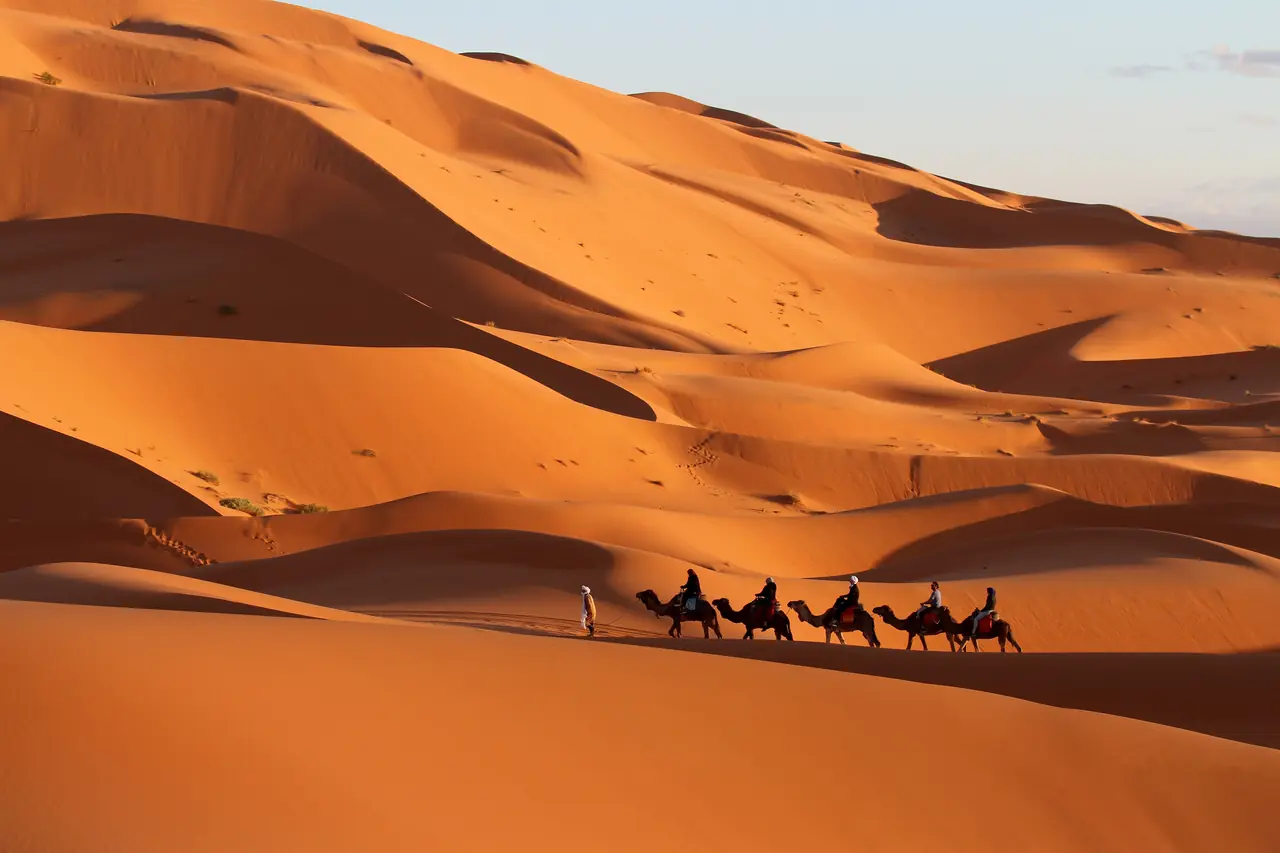 Photo: Merzougaloisirs · CC BY-SA 4.0
 Morocco

 Morocco or Tunisia
 Morocco or Egypt
 Morocco or Senegal
 Morocco or Cape Verde
 Algeria
 Libya
 Sudan