AfriqueUnie
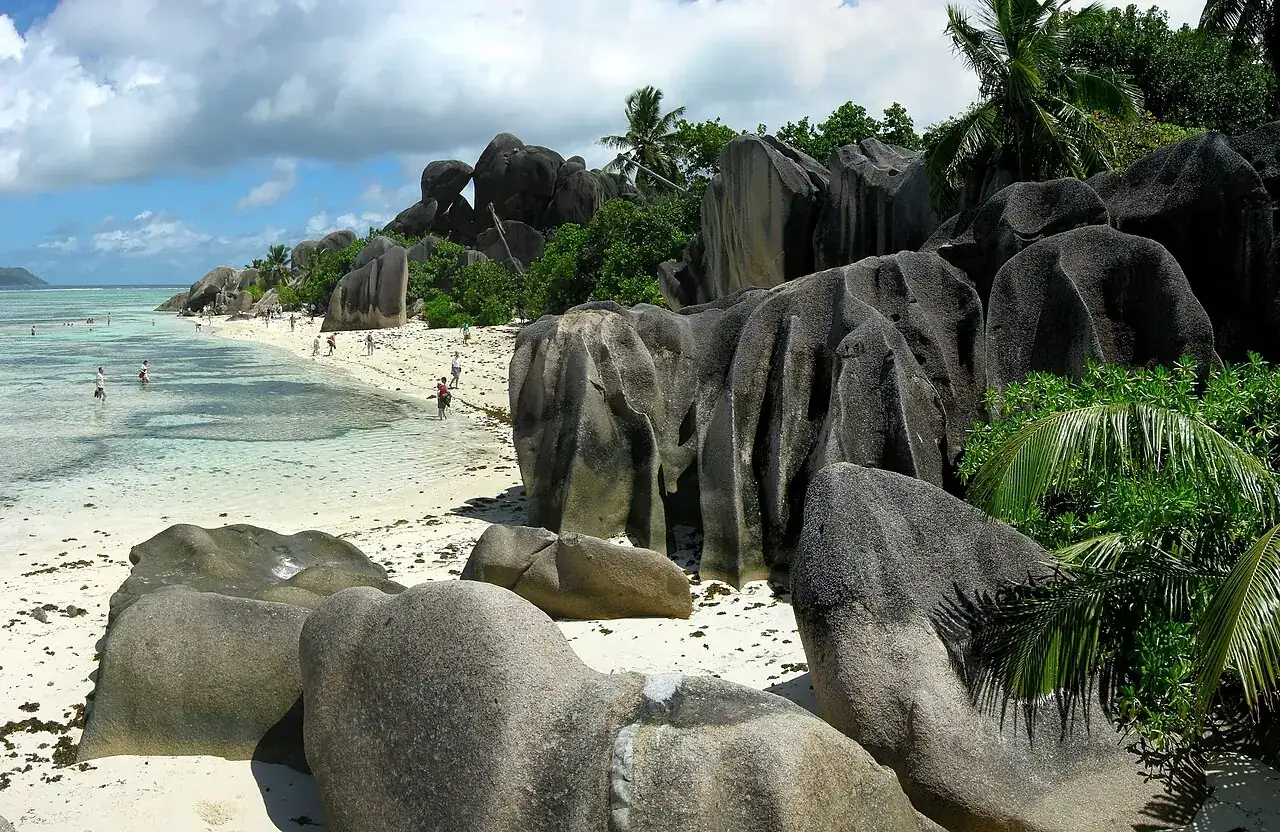 Photo: Tobias Alt, Tobi 87 · CC BY-SA 4.0
Published by Adama Doumbia, founder of Afrique Unie · updated 28 November 2026 · our method and sources
Daily budget
These are rough figures per person per day, excluding the international flight. They cover accommodation (two people sharing a room), meals, local transport and a few visits.
On a tight budget, allow roughly €90 to €150, staying in guesthouses or self-catering flats, cooking for yourself or buying from take-aways, and getting around by bus. For a comfortable trip, allow about €200 to €400, with a good small hotel or villa, a hire car, restaurants and boat trips. At the top end, allow €600 or more, and far more in resorts and on private islands.
Prices are fairly similar from island to island, but La Digue and Praslin involve boat or air transfers that need budgeting for.
What is expensive and what costs next to nothing
- Accommodation: By far the biggest cost. Guesthouses and self-catering flats are the easiest way to cut the bill.
- Meals: Restaurants are expensive. Creole take-aways (curry, grilled fish) and supermarkets let you eat for much less.
- Transport: Public buses on Mahé and Praslin cost very little. Hire cars and taxis are expensive.
- Between islands: Ferries and domestic flights between Mahé, Praslin and La Digue are a major cost: book ahead.
- Sites and beaches: Most beaches are free. A few sites, such as the Vallée de Mai on Praslin or Anse Source d'Argent on La Digue, charge an entry fee.
Money: rupees, cards and tourist levy
The currency is the Seychelles rupee (SCR). It floats: check the rate before you leave. Euros are easy to change at banks and bureaux de change, and some hotels and operators quote their prices in euros.
Cash machines are found on Mahé, Praslin and La Digue. Visa and Mastercard are widely accepted in hotels, supermarkets and restaurants. Carry rupees in cash for buses, take-aways and small shops.
A tourist levy (Tourism Environmental Sustainability Levy) is collected per person per night by accommodation providers. Since 1 January 2026 it has been 75 rupees in medium-sized establishments and 100 rupees in large establishments, island resorts and yachts. It has been abolished for small establishments, and children aged 12 and under are exempt. Ask your accommodation whether it is included in the price.
Tipping is not compulsory. Check whether service is included in the bill before leaving anything.
Visa and passport
Information checked in November 2026. These rules can change: read the official sources again before you travel.
The Seychelles do not require a visa of any nationality. A free visitor's permit is issued on arrival. You must show a return or onward ticket, an accommodation booking and sufficient funds for your stay.
Before you leave, every traveller must obtain a Travel Authorisation on the official portal seychelles.govtas.com or the Seychelles e-Border app. It is not free: a fee of about €10, plus government and bank charges. Several sources give a total of about €12 per person in 2026: the amount shown on the portal is the one that counts. The authorities warn against third-party sites that charge more for the same process.
The UK government says your passport must be valid for the whole of your stay. Other sources advise six months' validity: that is the safest option, especially if you have a stopover elsewhere.
Health and vaccinations
No vaccinations are required if you arrive from Europe. A yellow fever vaccination certificate is required of travellers over one year old who arrive from, or have transited through, a risk country. Sources differ on the length of transit that counts: check if you have a stopover in mainland Africa.
There is no malaria in the Seychelles. Dengue and chikungunya, spread by mosquitoes, circulate in some years: protect yourself against bites. In 2026 the Seychelles also applied Ebola-related entry restrictions to travellers who had recently been in the Democratic Republic of the Congo. Check whether they still apply.
Sun and sea call for care: strong currents on some beaches, especially during the south-east monsoon. Insurance covering treatment and repatriation is essential.
Before you go: the checklist
- Passport: Valid for your whole stay, ideally six months.
- Travel Authorisation: Apply on seychelles.govtas.com a few days before you leave, and keep the confirmation.
- Supporting documents: Return ticket, accommodation booking and means of payment.
- Official sources: Read the Seychelles page on gov.uk/foreign-travel-advice and the Seychelles page of « Conseils aux voyageurs » on diplomatie.gouv.fr.
- Insurance: Medical costs and repatriation, with emergency numbers noted separately.
- Means of payment: A bank card whose foreign fees you know and a few euros to change.