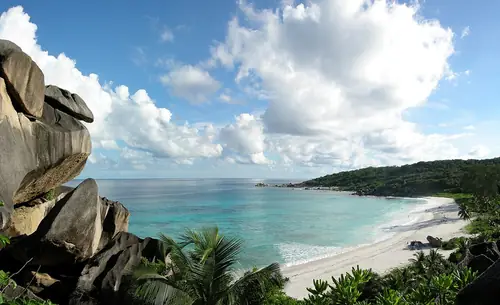
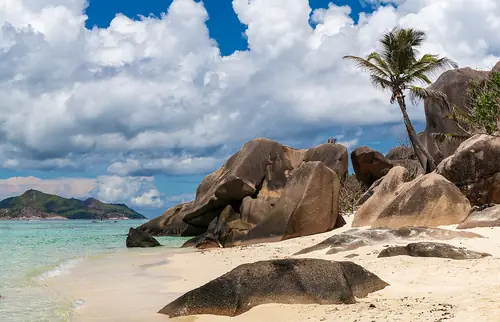
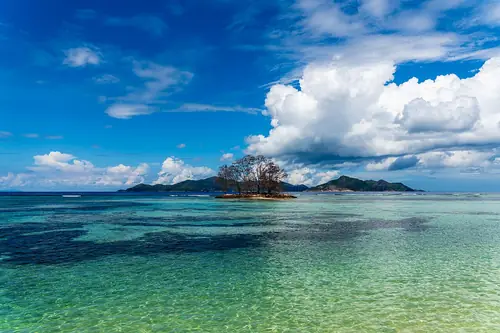
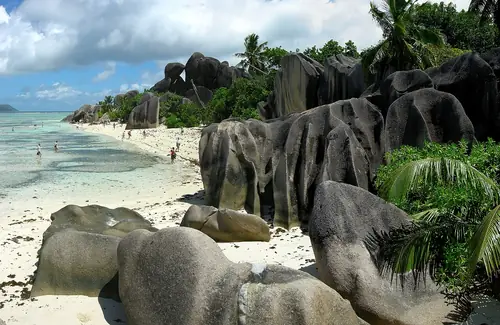
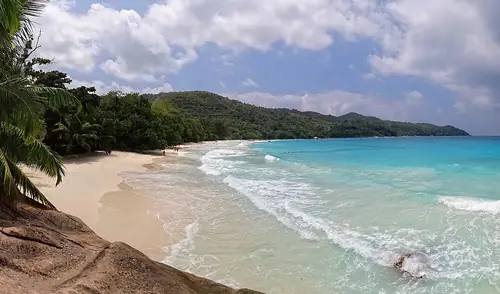
The Seychelles are like no other tropical islands. Their inner islands, Mahé, Praslin, La Digue and their neighbours, are made of granite, a rarity in the middle of an ocean: they are the peaks of an ancient fragment of continent left stranded when India and Madagascar drifted apart. Hence those rounded boulders, polished and grooved, in shades of pink or grey, that frame the beaches like sculptures. The contrast between the stone, the very pale sand, the turquoise water and the forest tumbling down the mountainsides creates landscapes of almost unreal harmony.
This setting has been preserved with remarkable care. A large share of the country is protected as national parks or reserves, and two sites are on the World Heritage List: the Vallée de Mai on Praslin and Aldabra Atoll. Here you will see giant tortoises, endemic birds such as the Seychelles black parrot and the paradise flycatcher, colonies of terns on Bird Island or Cousin, and reefs patrolled by rays, turtles and reef sharks. Conservation here is not a sales pitch but a long-standing national policy, which you can sense in the cleanliness of the beaches and the discretion of the development.
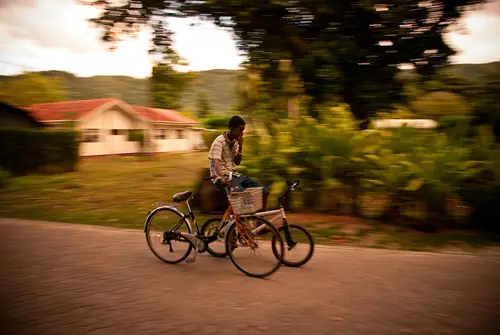
Finally, the Seychelles win you over with their pace. On La Digue you get around by bicycle; on Praslin, small winding roads lead down to the beaches; on Mahé, you hike the ridges of Morne Seychellois before heading back for a fish curry dinner. Creole culture, built on African, French, British, Indian and Chinese heritage, comes through in moutya music, the lilting language and the fragrant cooking. The country is expensive, but by mixing family-run guesthouses, takeaway meals and public transport, it becomes more affordable than you might think.
History and culture
Known to Arab navigators and spotted by the Portuguese, the archipelago remained uninhabited until the 18th century. The French took possession of it in the middle of the century and named it after Jean Moreau de Séchelles, Louis XV's controller-general of finances. The first settlers arrived in 1770 with African slaves to grow spices, cotton and food crops. The islands came under British control at the beginning of the 19th century and were officially ceded in 1814.
After the abolition of slavery, the economy relied on copra, vanilla and cinnamon. Independence was declared in 1976; a coup brought France-Albert René to power the following year, establishing a one-party state until multiparty politics returned in 1993. Since then, changes of government have come through the ballot box. The opening of the international airport in 1971 made tourism the mainstay of the economy.
Photo : Auteur inconnu · CC BY-SA 3.002Walk in the Vallée de MaiA forest of giant palms where the coco de mer grows, with an ear out for the black parrot.
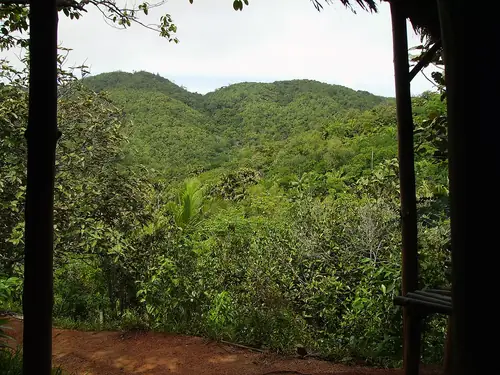
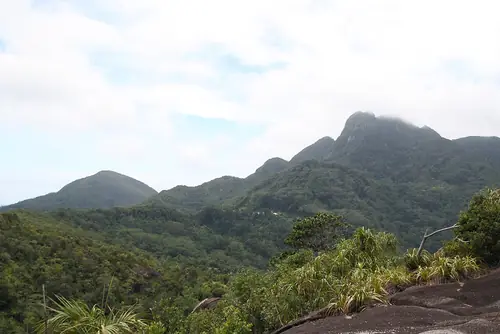
Photo : Remi Jouan · CC BY-SA 3.003Hike Morne SeychelloisOn Mahé, the Copolia and Morne Blanc trails offer views over the coast and the islands.
04Snorkel at Sainte AnneThe marine park off Victoria shelters reefs, turtles and colourful fish.
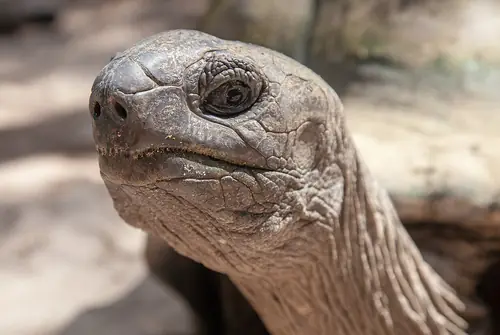
Photo : Yulia Kolosova · CC BY 4.005Meet the tortoises of CurieuseOn this island next to Praslin, giant tortoises roam free near the mangroves.
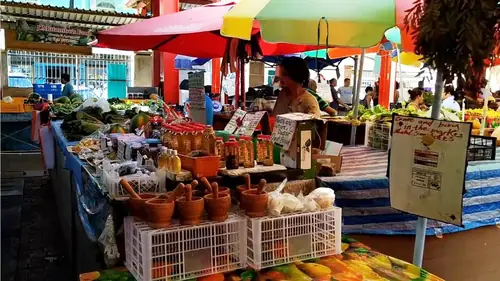
Photo : Radosław Botev · CC008Victoria marketFish, spices and fruit in a colourful market, best on a Saturday morning.
When to go to the Seychelles
The Seychelles are warm all year round, with no cold season. The transition periods, April to May and October to November, bring calm seas, excellent visibility for diving and light winds: these are the best times. From May to September the south-east trade winds blow harder and the sea is rougher on some coasts, but the air is drier. From December to March the north-west monsoon brings heat, humidity and showers. The archipelago lies outside the main cyclone belt, which makes it a reliable destination throughout the year.
Getting around
The international airport is on Mahé, near Victoria. Fast ferries link Mahé to Praslin in about an hour, then Praslin to La Digue in around fifteen minutes; there are also short flights between Mahé and Praslin. On Mahé and Praslin, public buses are cheap and serve most beaches, though timetables can be erratic. Hiring a car is practical, driving on the left along narrow, winding roads. On La Digue, motor traffic is limited and you get around by bike or on foot.
Etiquette and customs
Seychellois people are warm but reserved. A “bonzour” in Creole is always appreciated. Nudity and topless sunbathing are banned on the beaches, and proper dress is expected in town and in churches. Respect for nature is a core value: it is forbidden to take coral, shells or coco de mer nuts without a certificate, and the fines are steep. Respect protected areas and follow the rangers' instructions. Tipping is not compulsory but is appreciated. The local pace is slow: take your time and don't get impatient.
Food and drink in the Seychelles
Seychellois cooking is a Creole cuisine of the sea, fragrant with coconut milk, ginger, turmeric and lemongrass. Fish curry, often made with tuna, red snapper or jobfish, is the everyday dish, served with rice and chutneys. Octopus curry in coconut milk is a much-loved speciality. Try satini reken, a chutney of shredded shark, spice-grilled fish, bringelles, or local aubergines, and breadfruit prepared in a thousand ways. For dessert, ladob, bananas or breadfruit simmered in coconut milk, is the great family classic. To drink, fresh coconut water or the local beer.
The best time to visit the Seychelles: April to May, October to November.
What should I see first in the Seychelles?
The must-sees: Anse Source d'Argent, Vallée de Mai (Praslin), Anse Lazio, Aldabra Atoll.
Which cities should I visit in the Seychelles?
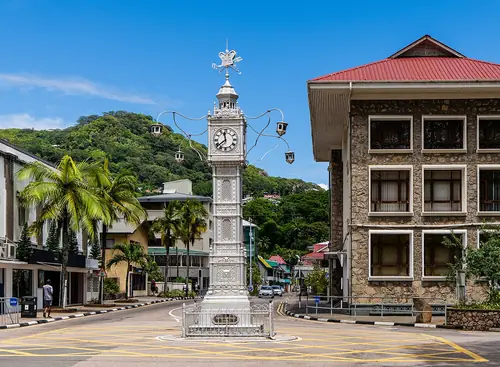
Victoria, La Digue, Praslin. The capital is Victoria.
How much should I budget for a trip to the Seychelles?
High-end: often more than €120 per person per day, excluding flights. This is only a guide and depends above all on the accommodation and activities you choose.
What currency and languages are used in the Seychelles?
The main international airport has the code SEZ. Compare flights with the ‘Flights’ button on this page.
Do I need a visa to visit the Seychelles?
Entry requirements depend on your nationality and change regularly. Check them on the country's official website or with your foreign ministry before booking, and make sure your passport is valid.
What should I eat in the Seychelles?
Dishes to try while you're there: Fish curry, octopus in coconut milk.
Air Seychelles links Mahé with Praslin in about fifteen minutes, with many flights a day. The Cat Cocos catamaran connects Mahé, Praslin and La Digue, and shorter boat crossings link Praslin with La Digue. On Mahé and Praslin, public buses reach most beaches and car rental is common; on La Digue, people mostly get around by bicycle. Traffic drives on the left, on narrow and winding roads.
Health and safety
Yellow fever
Certificate required only if you arrive from, or transited through, a country with a risk of yellow fever (from 1 year, incl. airport transits over 12 h); vaccine generally not recommended.
Malaria
No transmission reported.
Water and food
Unless your accommodation says otherwise, drink sealed bottled or filtered water, and wash your hands often.
Sources: France Diplomatie, Viaggiare Sicuri, Belgian Foreign Affairs, GOV.UK, checked in November 2026. All 54 countries
Entry requirements (visas, vaccinations) and security conditions change regularly: check them with the official authorities before booking. Official tourism website: Tourism Seychelles.
Affiliate cookiesWe would like to load a script from our partner Travelpayouts. It may set cookies so that we receive a commission when you book through our links, at no extra cost to you. If you decline, the site works in exactly the same way. Find out more
 AfriqueUnie
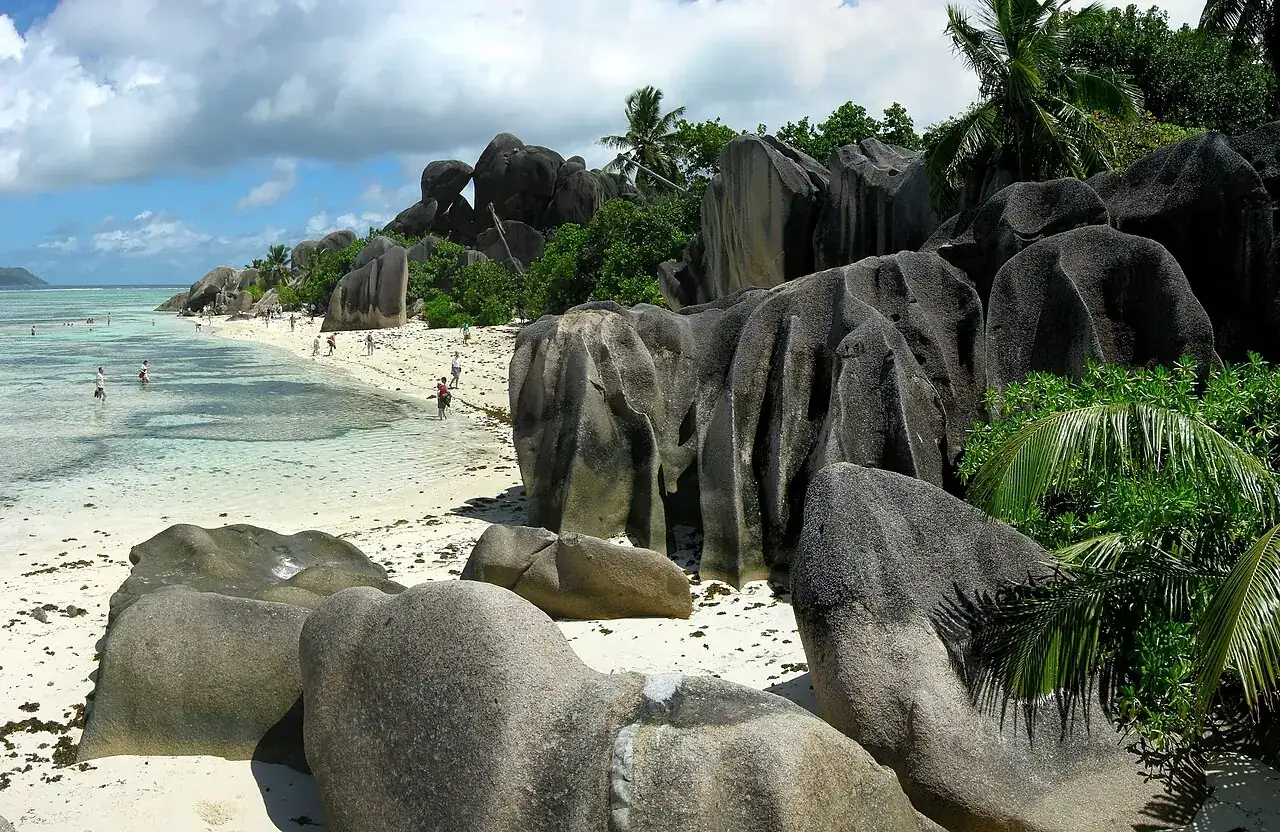 Photo: Tobias Alt, Tobi 87 · CC BY-SA 4.0
 Seychelles

 Comoros