 AfriqueUnie
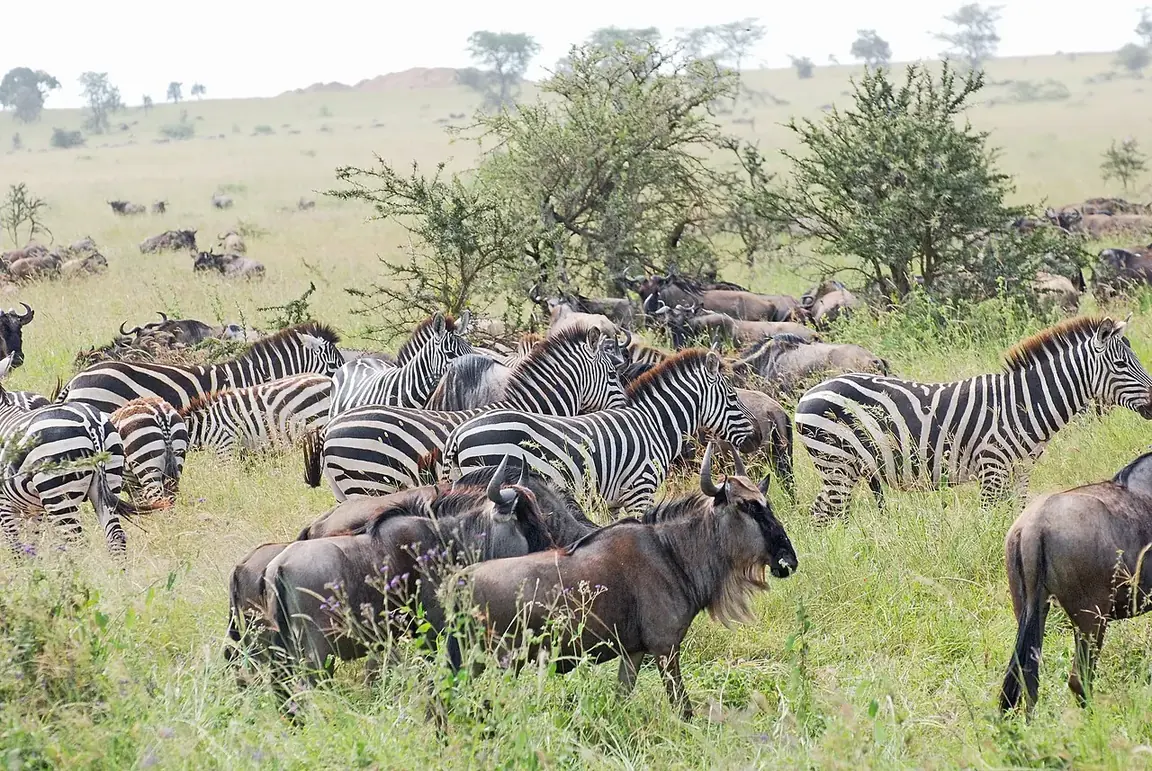 Photo: Harvey Barrison from Massapequa, NY, USA · CC BY-SA 2.0
The great migration is the largest movement of land herbivores on the planet: more than a million wildebeest according to aerial counts, along with zebras and gazelles, circle each year between Tanzania's Serengeti and Kenya's Masai Mara, following the rains and fresh grass. Lions, cheetahs, hyenas and crocodiles follow the herds.
There is no single "best" place: it all depends on the month. Calving takes place in the southern Serengeti and on the Ndutu plains, in the Ngorongoro Conservation Area. The herds then move west and north, where they cross the Mara River between Tanzania and Kenya, one of the most famous wildlife spectacles in the world.
Where to see them
- 1
Serengeti National Park ·
 Tanzania
The herds spend most of the year here: calving in the south, the Grumeti crossing in the west, then the Mara River crossings in the north.
- 2
Maasai Mara ·
 Kenya
From July to October, hundreds of thousands of wildebeest fill the Mara plains and cross the Mara River under the eyes of the crocodiles.
- 3
Ngorongoro Crater ·
TanzaniaThe crater itself is not on the herds' route, but the Ndutu plains, in the same conservation area, host the wildebeest calving; the two are often combined.
When to go
From December to March, the herds are in the southern Serengeti and around Ndutu, with calving peaking in February. In April and May, during the long rains, they move to the centre and west. In June and July, they cross the Grumeti River in the Western Corridor. From July to October, they are in the northern Serengeti and the Masai Mara, with the Mara River crossings. In November, they head back south. These dates shift each year with the rains.
Our tips
- Choose your area according to the month you travel rather than the other way round, and book early for July and August, which are in high demand.
- At river crossings, stay back from the bank and never block wildebeest trying to reach the water: it can make the crossing fail.
- A crossing is never guaranteed: plan at least two or three days in the area to improve your chances.
- Stay on the tracks where off-road driving is banned, and keep your distance from predators.
- Consider the quieter calving season too, when predators hunt newborns on the southern plains.
Frequently asked questions
When can you see the great migration?
All year, as long as you are in the right place: December to March in the southern Serengeti (calving), June–July in the west, and July to October in the northern Serengeti and the Masai Mara.
When are the Mara River crossings?
Mainly from July to September, sometimes into October, in the northern Serengeti and the Masai Mara. Wildebeest cross in both directions, several times, depending on the rains.
How many wildebeest take part in the migration?
Aerial counts by the Tanzania Wildlife Research Institute (TAWIRI), the latest in 2023, put the population at about 1.3 million wildebeest. A satellite study published in 2025 counted fewer than 600,000 in the area and season it covered, so the figure is debated.
Should you go to Kenya or Tanzania?
Both work. Tanzania's Serengeti hosts the herds for most of the year; Kenya's smaller Masai Mara receives them from July to October, with good chances of river crossings.